How to Track Brand Sentiment in AI Answers
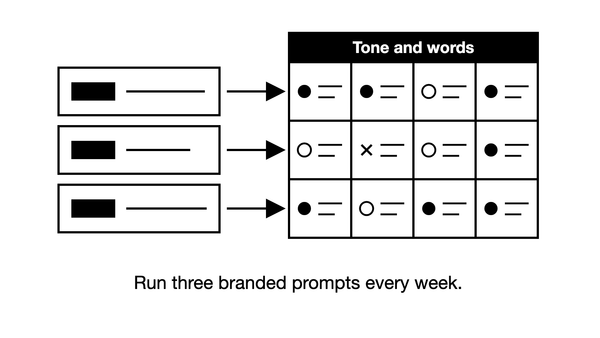
Run three branded prompts every week, such as "What is [brand]?" and "[brand] pros and cons", and record the tone and the words each AI answer uses.
Run three branded prompts every week, such as "What is [brand]?" and "[brand] pros and cons", and record the tone and the words each AI answer uses.
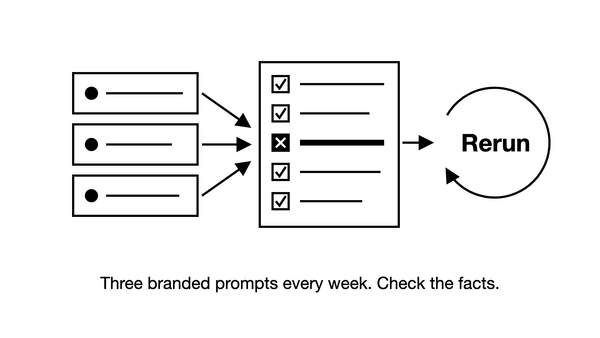
Run three branded prompts every week, such as "What is [brand]?", check the answers against your fact checklist, then rerun to rule out one-off errors.
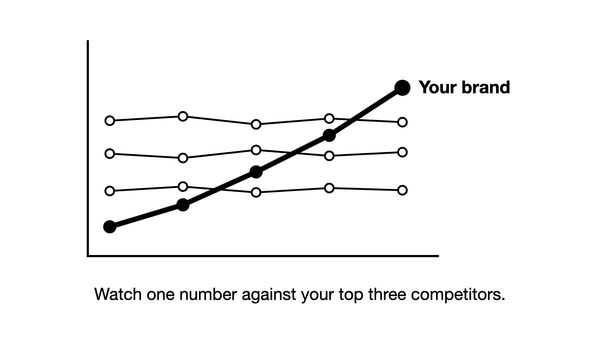
Watch one number, the share of AI answers that mention your brand, and check it rises over about a month against your top three competitors.
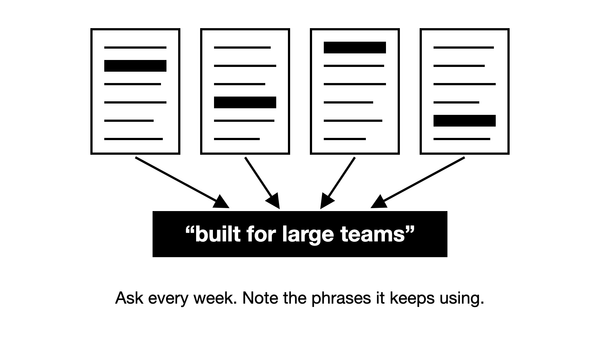
Ask each AI engine every week what your brand is, its pros and cons and whether it suits your use case, then note the phrases it keeps using.
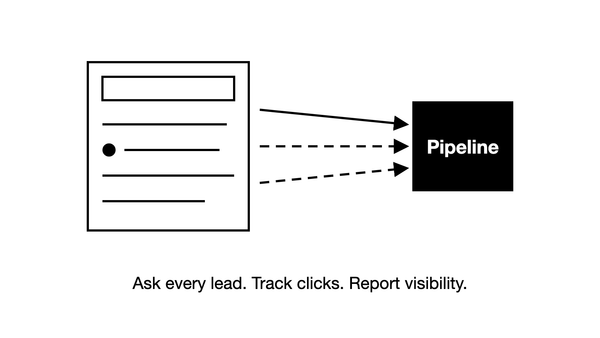
Ask every lead how they heard about you, track clicked AI citations in analytics, and report your visibility against competitors as the leading sign.
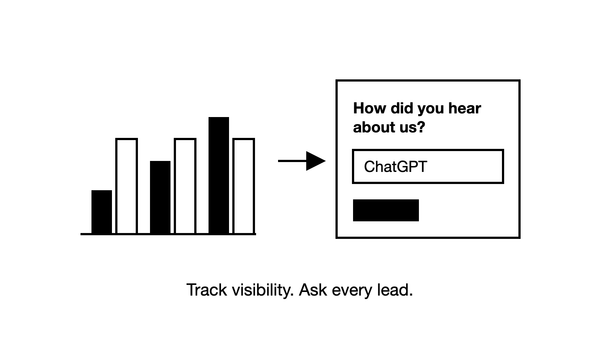
You cannot price each AI mention, so use visibility against competitors as the leading sign and link leads through a "How did you hear about us?" field.
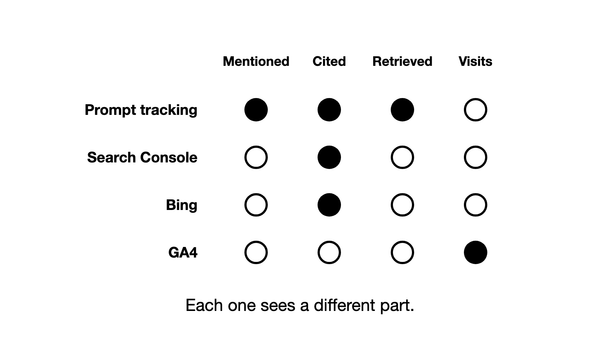
AI search analytics come from tools that count how often answers mention, cite or retrieve you, plus Search Console and GA4, which show only part.
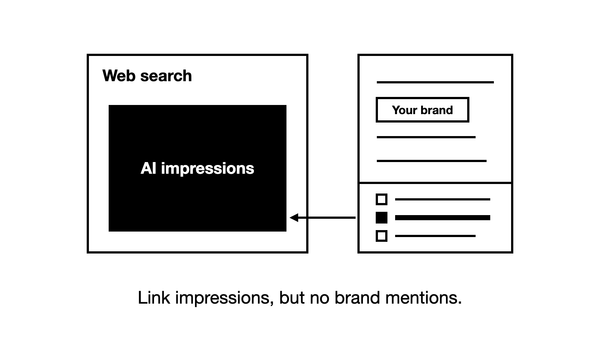
Yes: Search Console counts AI Overviews and AI Mode in Web search, and its AI report shows your link impressions, but no queries or brand mentions.
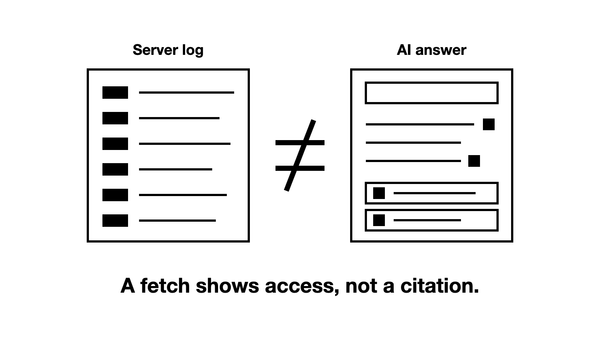
AI crawlers such as GPTBot, ClaudeBot and PerplexityBot show up in your server logs by user agent, but a fetch shows access, not a citation.
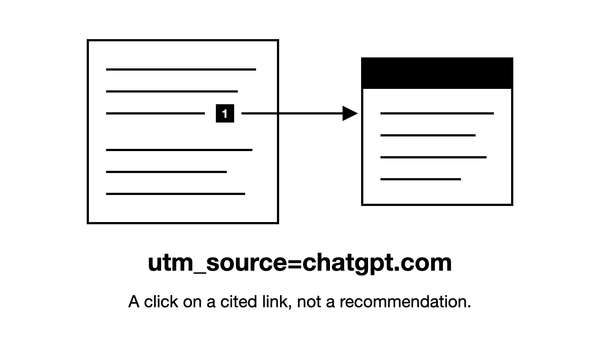
It is a tag ChatGPT adds to the links it cites, so a visit with it means someone clicked your page in a ChatGPT answer, not that ChatGPT recommended you.
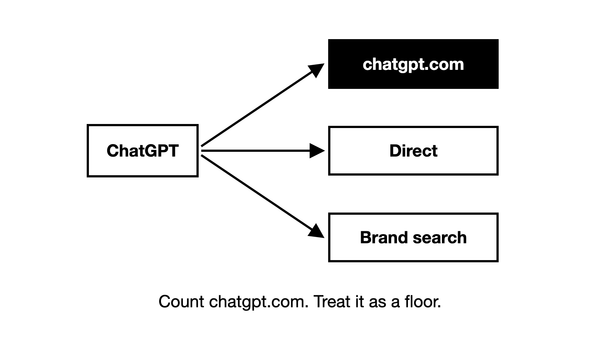
Track ChatGPT traffic in GA4 with a custom channel group for chatgpt.com referrals, and treat it as a floor: many buyers arrive as direct or brand search.
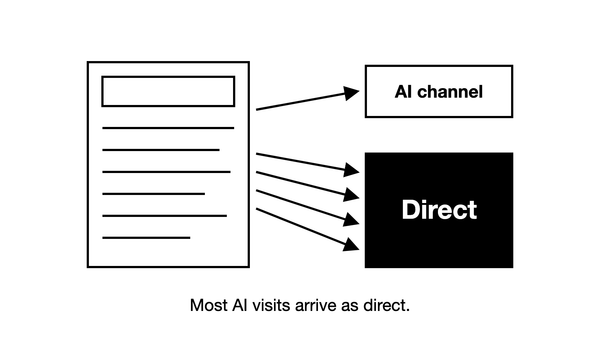
Measure AI search traffic with a custom AI channel group in GA4 and a "How did you hear about us?" field, since most AI visits arrive as direct.
Measuring AI Visibility
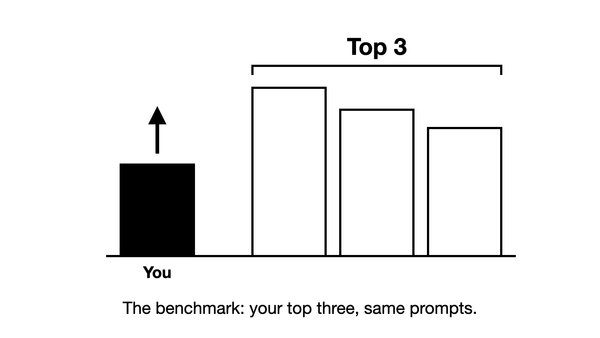
Not reliably: there is no universal good AI visibility score, so benchmark against your top three competitors on the same prompts and watch the trend.
Measuring AI Visibility
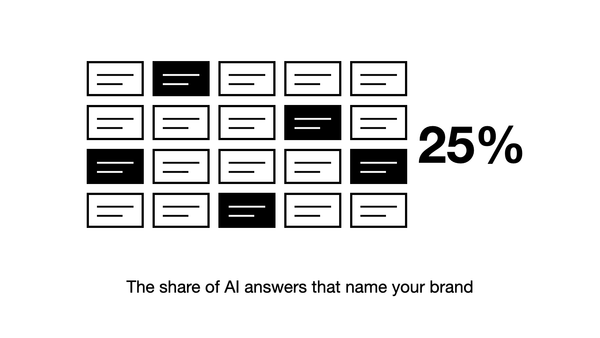
An AI visibility score is the share of AI answers that name your brand, across every answer a tool collected for your unbranded buyer prompts.
Measuring AI Visibility
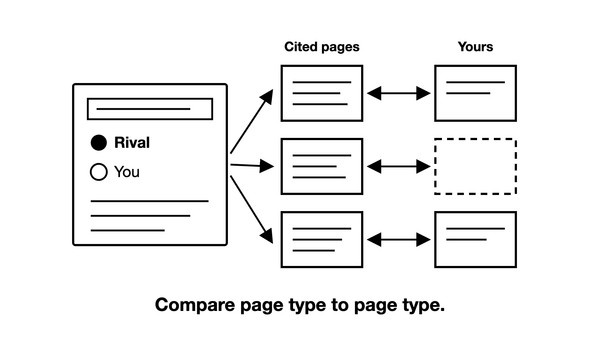
Find the answers to your buyer prompts that name a rival but not you, then compare the pages cited there with yours, page type to page type.
Measuring AI Visibility
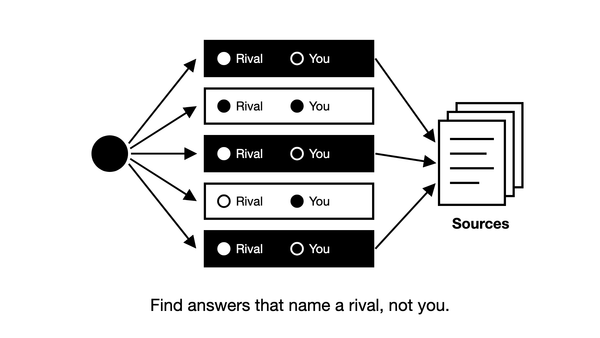
Run your buyer prompts several times on each engine, note answers that name a rival but not you, and read which sources they cite to see why.
Measuring AI Visibility
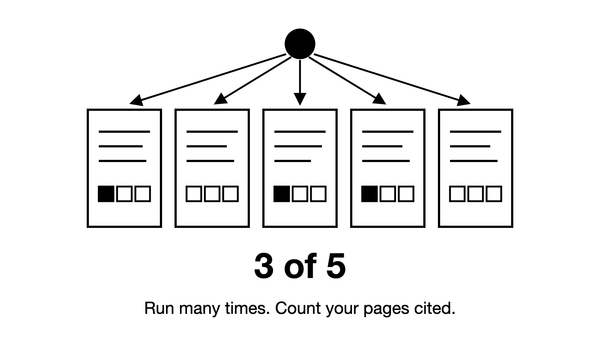
Run your buyer prompts many times and record when your own pages appear as sources in AI answers, kept apart from pages the engine only retrieves.
Measuring AI Visibility
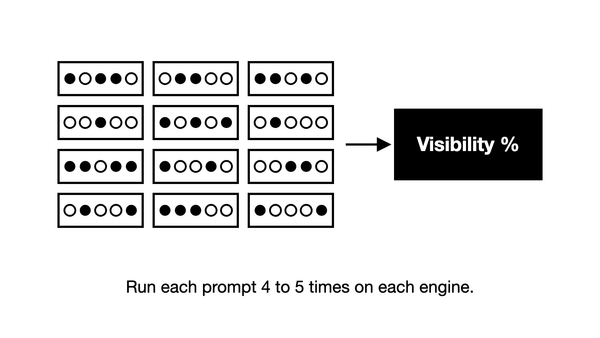
An AI visibility audit runs your buyer prompts 4 to 5 times on each engine and market to measure how often AI mentions and cites your brand.
Measuring AI Visibility
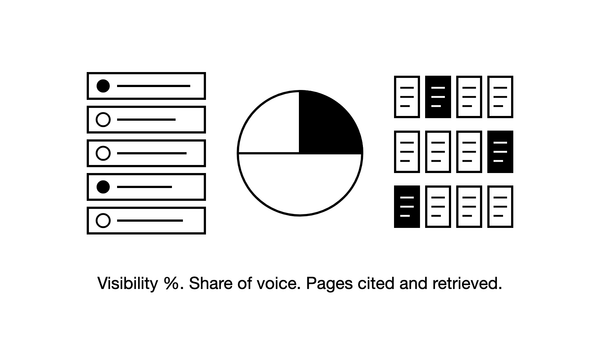
Track visibility % (the share of answers that name you), share of voice against the brands AI names, and how often your own pages are cited and retrieved.
Measuring AI Visibility
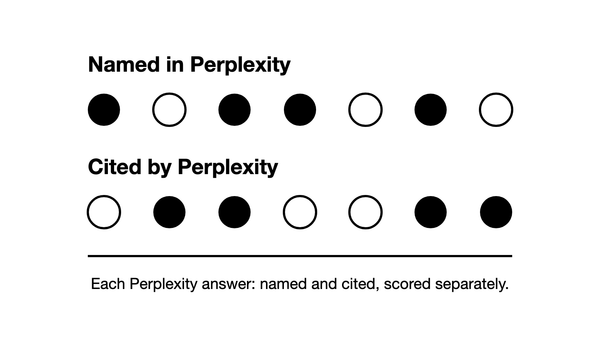
Run unbranded buyer prompts once a day with a tool, and record separately whether Perplexity names your brand and which URLs it cites in each answer.
Measuring AI Visibility
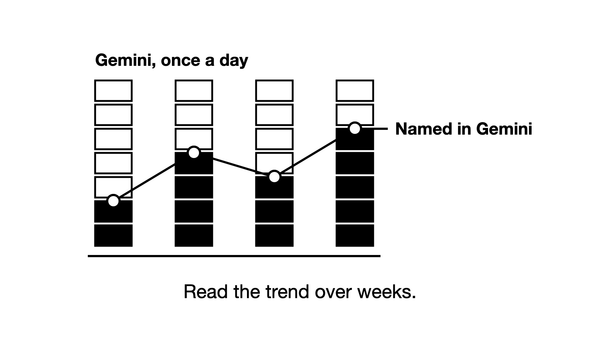
Run buyer questions in the Gemini app every day and record how often the answers mention you and cite your pages, read as a trend over weeks.
Measuring AI Visibility
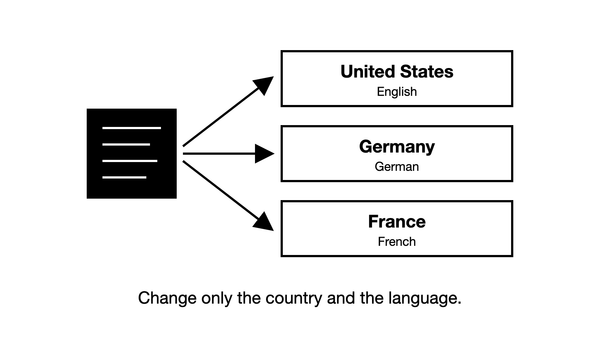
Run the same prompts on the same engines for each market, in that market's language, from an IP address in that country, logged out, every day.
Measuring AI Visibility
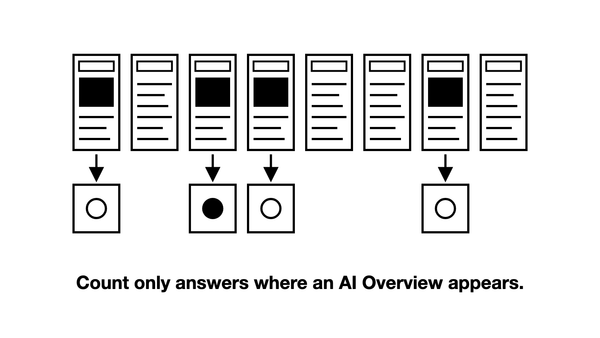
Run your buyer queries daily, count only answers where an AI Overview appears, and measure how often those name your brand and cite your pages.
Measuring AI Visibility
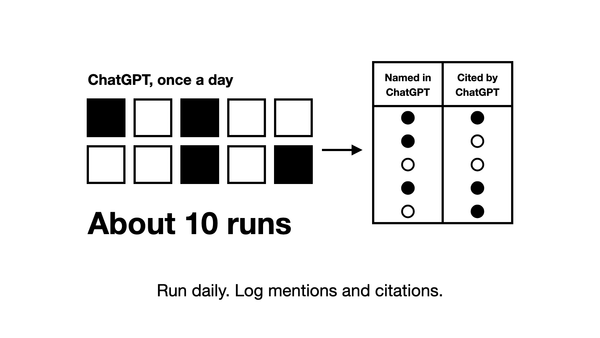
Run unbranded buyer prompts in ChatGPT, each prompt once a day until it has about 10 runs, and log how often ChatGPT names your brand and cites your pages.