How to Measure the ROI of AI Search Visibility
You cannot price each AI mention, so use visibility against competitors as the leading sign and link leads through a "How did you hear about us?" field.
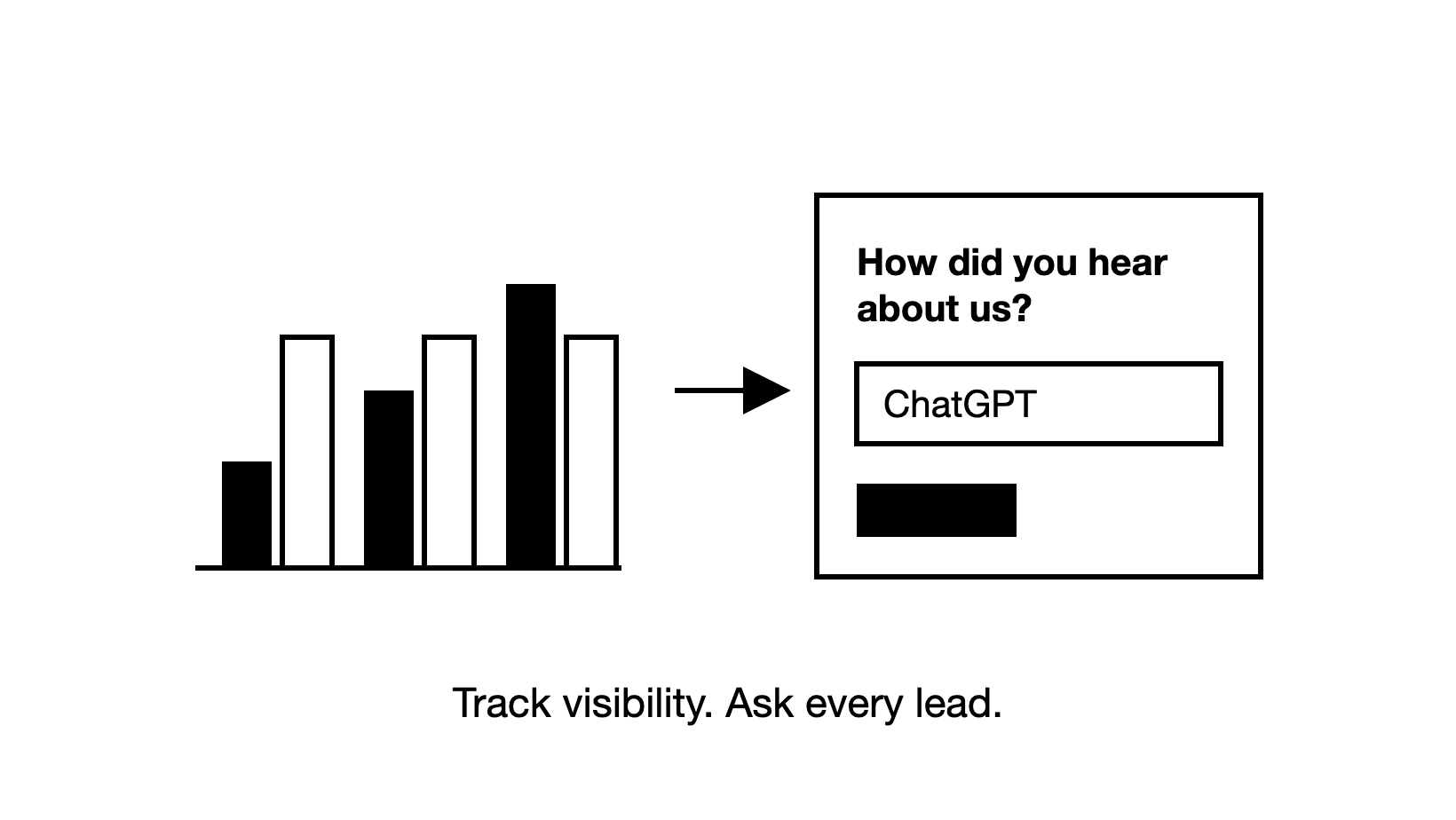
You cannot price each AI mention, so measure your visibility against competitors as the early signal and link leads through a "How did you hear about us?" field.
AI visibility is how often AI engines such as ChatGPT, Gemini and Google AI Overviews name your brand when buyers ask the questions you care about. It is measured as visibility %: the share of answers to your visibility prompts that mention you. Visibility prompts are buyer questions that do not name your brand.
AEO (answer engine optimization) is the work of raising that number across your own site, community and third-party publications. GEO (generative engine optimization) is another name for the same work.
Why is the ROI of answer engine optimization so hard to measure?
Performance marketing ROI traces each buyer from a click to a sale. AI answers break that trace. Buyers rarely click the pages an answer cites, so many journeys are zero-click. Journeys are also fragmented: a buyer who met your brand in an answer often comes back later through another channel.
Attribution is tying AI visibility to visits, leads and revenue. It is hard because most AI-driven visits carry no referral data, so B2B teams confirm it mainly by asking new leads how they heard about them.
AI visibility sits between performance marketing and brand marketing. Treat it like performance marketing, and you expect a dollar value per mention that does not exist. Treat it like brand marketing, and you call it unmeasurable, which is also wrong: you can count how often engines name you, and next to which competitors.
Is an AI citation worth anything if nobody clicks it?
A citation is a page an AI answer shows as a source for what it says. It can be your own page, a third-party page (a competitor's page, a listicle, etc.) or a community page (a Reddit thread, a forum post, etc.). Even when nobody clicks, engines use the cited pages to decide which brands to name. That makes citations the route to being mentioned, named in the answer's text with or without a link.
Most cited pages belong to someone else, so whether an answer names you depends on what other people's pages say about you. We looked at data from the Zadoosh data platform, April to October 2026, B2B brands across software and other fields, all engines. Third-party pages were 80% to 86% of the pages AI answers cited, depending on whether review sites count as third-party or community. The brand's own pages were about 6%, and community pages 8% to 15%.
Citations and mentions can also come apart. Say ChatGPT cites your guide in an answer about the best tools in your category, but names only your competitors.
In the same data, among ChatGPT answers that showed sources, one of the brand's pages was cited without the brand being named in 5.2% of answers. The brand was named without one of its pages cited more often, in 8.1% (April to October 2026).
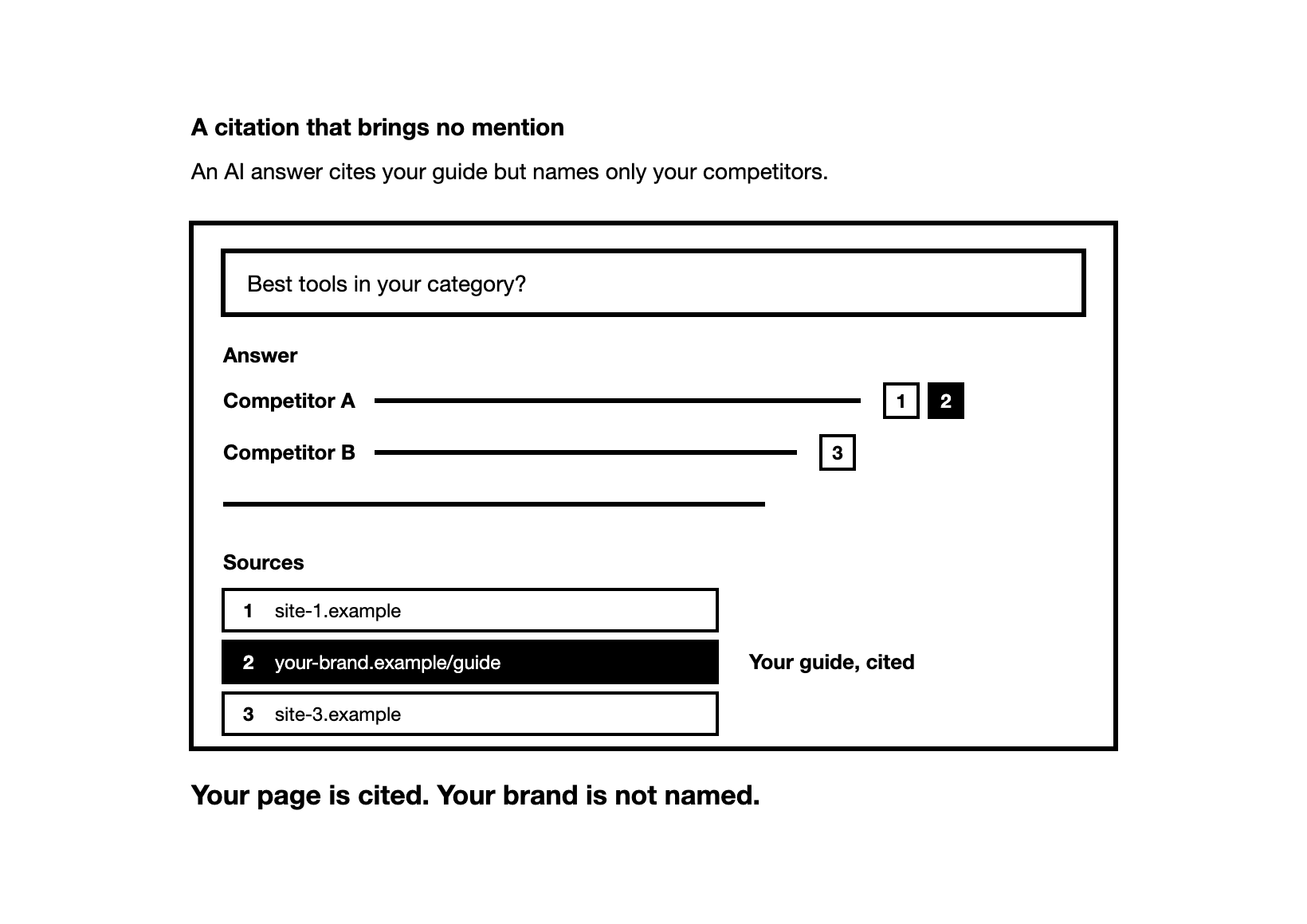
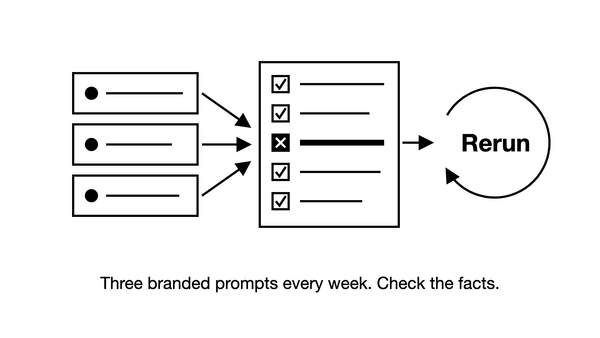
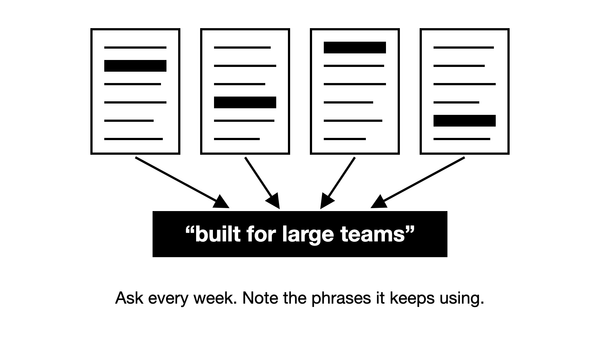
So if more of your pages are cited but conversions stay flat, check whether the answers that cite your pages also name you, and what they say about you. Being cited is usually the way in, and being recommended, named as the best fit and not just listed, is the goal. A mention with the wrong words does not bring demand, because visitors arrive expecting something else.
What should you measure instead of clicks from AI answers?
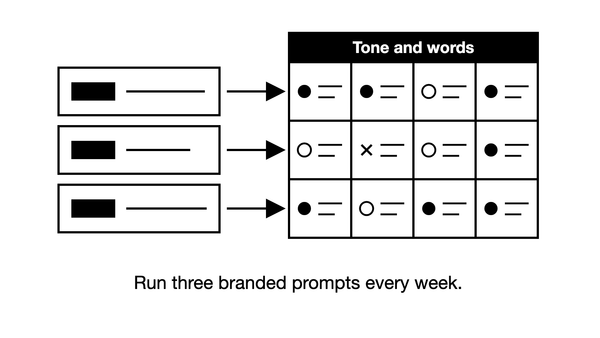
Measure what happens inside the answers. Run the same buyer prompts on each engine every day, as our guide to measuring AI search visibility explains.
As of November 2026, our platform's free trial runs 25 prompts for 7 days, with no card (start a free trial). It runs them every day on ChatGPT, Gemini, Perplexity, Copilot, AI Overviews and AI Mode.
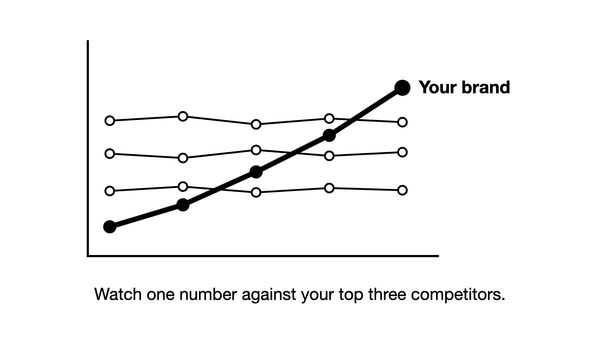
The first sign that your work pays off is usually a page you created or earned being retrieved for your prompts, then cited. Retrieved means an engine pulls the page into the pool of pages it gathers for an answer. Next, look for your visibility % to rise against your top 3 competitors on the same prompts.
How does AI visibility show up later in branded search and direct visits?
A buyer who comes back after an AI answer usually searches your brand on Google or types your address. Analytics logs that visit as Organic Search or Direct, not as AI.
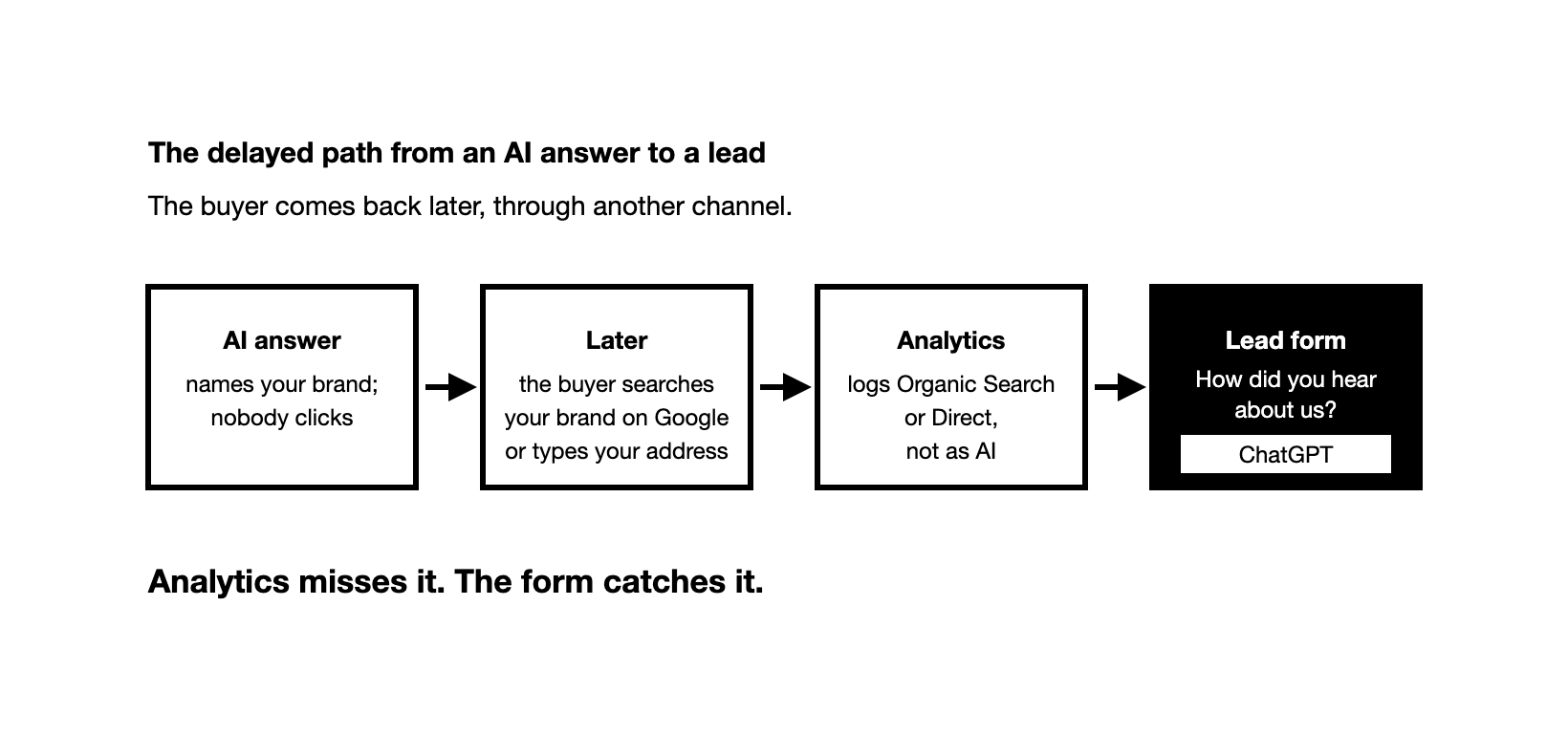
Google Analytics 4 (GA4) sees only the clicks, so an answer that names you but gets no click leaves no trace there. Since 13 May 2026, its AI Assistant channel counts visits from ChatGPT, Gemini, Copilot and other assistants when the referrer matches Google's own list. Visits from AI Overviews and AI Mode count as Organic Search instead.
Read these signals once a month, next to your visibility trend.
| Signal | Where to find it | What it shows, and its limit |
|---|---|---|
| Branded searches | Search Console Performance report, queries that contain your brand name | People looking you up by name; it cannot say what sent them |
| Direct visits | GA4, Direct channel | Visits with no referrer; AI-influenced visits are mixed in |
| Your pages in AI Overviews and AI Mode | Search Console's generative AI performance report | Impressions of your pages; no queries and no clicks |
| Your pages cited in Copilot and Bing | Bing Webmaster Tools, AI Performance report | How often your pages are cited, with a sample of the searches the AI ran |
Bing's sample searches and the long queries in Search Console are your best clue to what buyers ask AI.
Does being cited by AI lift branded search?
It can, but mostly through the mention it leads to. A buyer searches later for the brand an answer named, so look for the lift after your visibility % rises, not after your citations do. If your visibility % and branded searches rise together over a few months, check that the rest of your marketing stayed the same. Then treat it as a directional sign, not proof.
How do you attribute leads and revenue to AI answers?
Add a "How did you hear about us?" field to your demo and contact forms, and ask the same question on every first sales call. Then count the leads who name ChatGPT, Gemini, Perplexity or another AI engine, and watch whether that count rises month by month, next to your visibility %.
The field also lets you count AI as a touch point when it lifts several lead channels at once. AI visibility is narrower than brand marketing. So when revenue jumps after a clear rise in your visibility, and more leads name an AI engine, you can still attribute that jump.
If leadership asks for one ROI number, count only the revenue from deals whose buyers named an AI engine. Much of the revenue that AI answers influence never gets attributed, so present the result as a floor, never as the full return.
How do you prove the value of AI visibility to a skeptical CFO?
Start by explaining where AI visibility sits, between performance and brand marketing, so the CFO does not judge it like paid ads. Then give it its own section and KPI in the monthly report, next to your SEO numbers.
Order the report the way the signs of payoff usually appear. Start with the pages you created or earned that engines now retrieve and cite, and end with revenue.
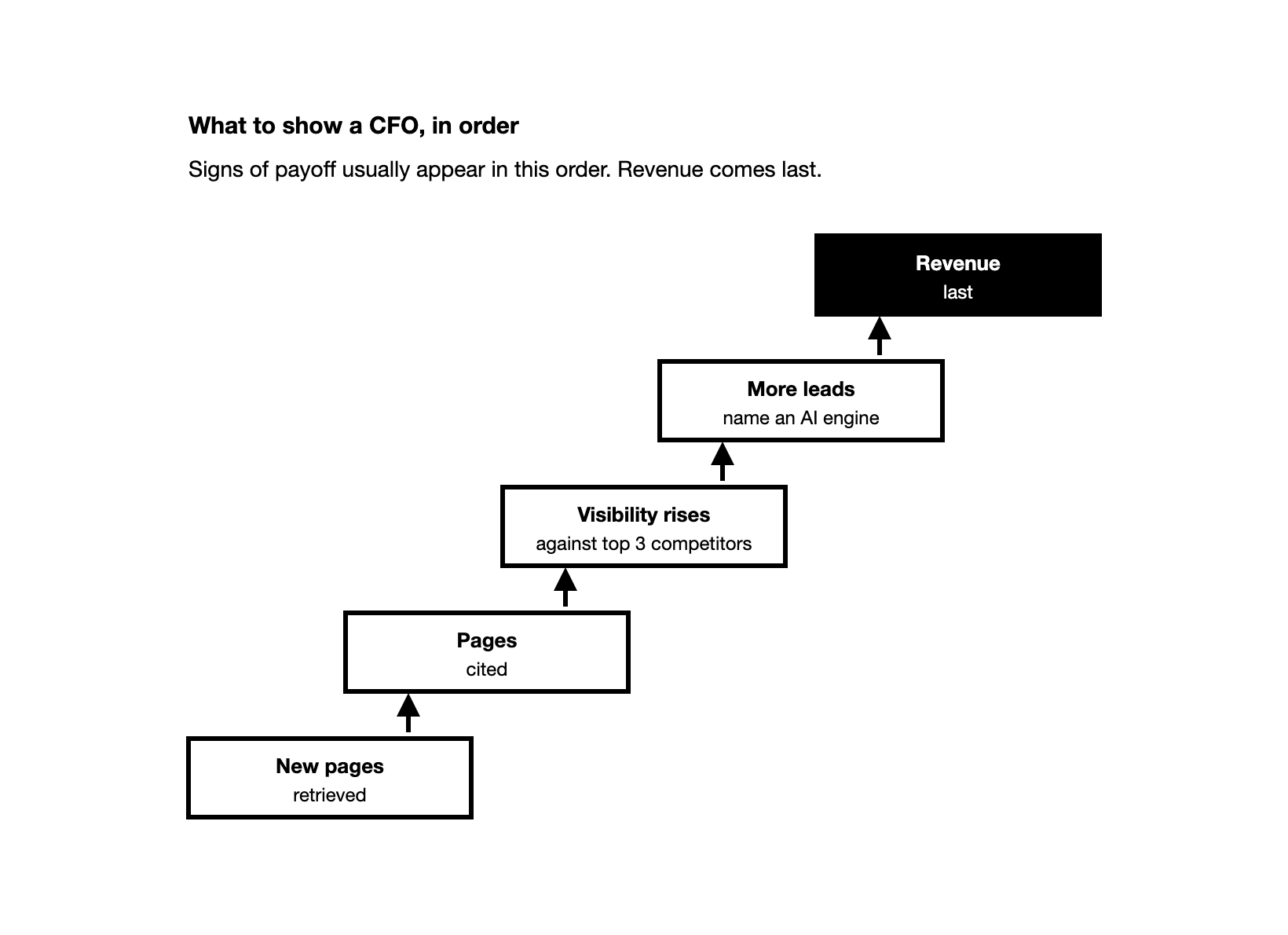
Each quarter, send the CFO a short summary. Set directional targets, not a fixed percentage: rising visibility and a closing gap to your top competitors over the quarter.
What should a CFO expect from AI visibility week to week?
Give the CFO a timeline for first results, for example 2 to 12 weeks. Agree up front on what counts as a real change. Say your visibility rises a few points in one week: that is most likely noise.
We looked at ChatGPT data from the Zadoosh data platform, March to October 2026, B2B brands across software and other fields. Most week-to-week moves in a prompt set's visibility were noise: the median move was about 3 points. Comparing one 4-week block with the next, changes of 3 to 6 points were already likely real.
So act on a weekly change only when it reaches about 10 points or more, on a prompt set with 100 or more answers a week. An answer is one run of one prompt on one engine. Read smaller moves, and smaller sets, month to month (how to tell a real change from noise).
Frequently asked questions
Can a call tracking tool prove that a lead came from AI search? Not on its own. Call tracking credits the visit a call came from, so a buyer who met you in an AI answer and then searched your name shows up as Google. Ask "How did you hear about us?" on the call too, and read the answers as a directional count.
How does a small team measure the ROI of PR and backlinks in AI search? Judge each earned page by whether it starts being retrieved and cited for your prompts. Compare the share of citations from your own site, community and third-party pages before and after the work. The channel that grew is the likely cause of a change in your visibility. Your brand named on a page AI already cites matters more than a backlink.
Can a holdout set of prompts prove that AEO work caused a rise in visibility? Only weakly. Holdout prompts are prompts you track but do not work on. Once you optimize prompt by prompt, they matter less. Engine updates also lift some prompt sets and not others, so a move in untouched prompts proves little.
Can an agency show AEO ROI without the client's CRM data? Partly. A tracking tool shows the client's visibility against its top competitors, and when the pages you created or earned start being retrieved and cited. Leads need the client's side: ask them to add a "How did you hear about us?" field and share how many leads named an AI engine each month.