Tracking AI Traffic: How to Measure Visits From AI Search
Measure AI search traffic with a custom AI channel group in GA4 and a "How did you hear about us?" field, since most AI visits arrive as direct.
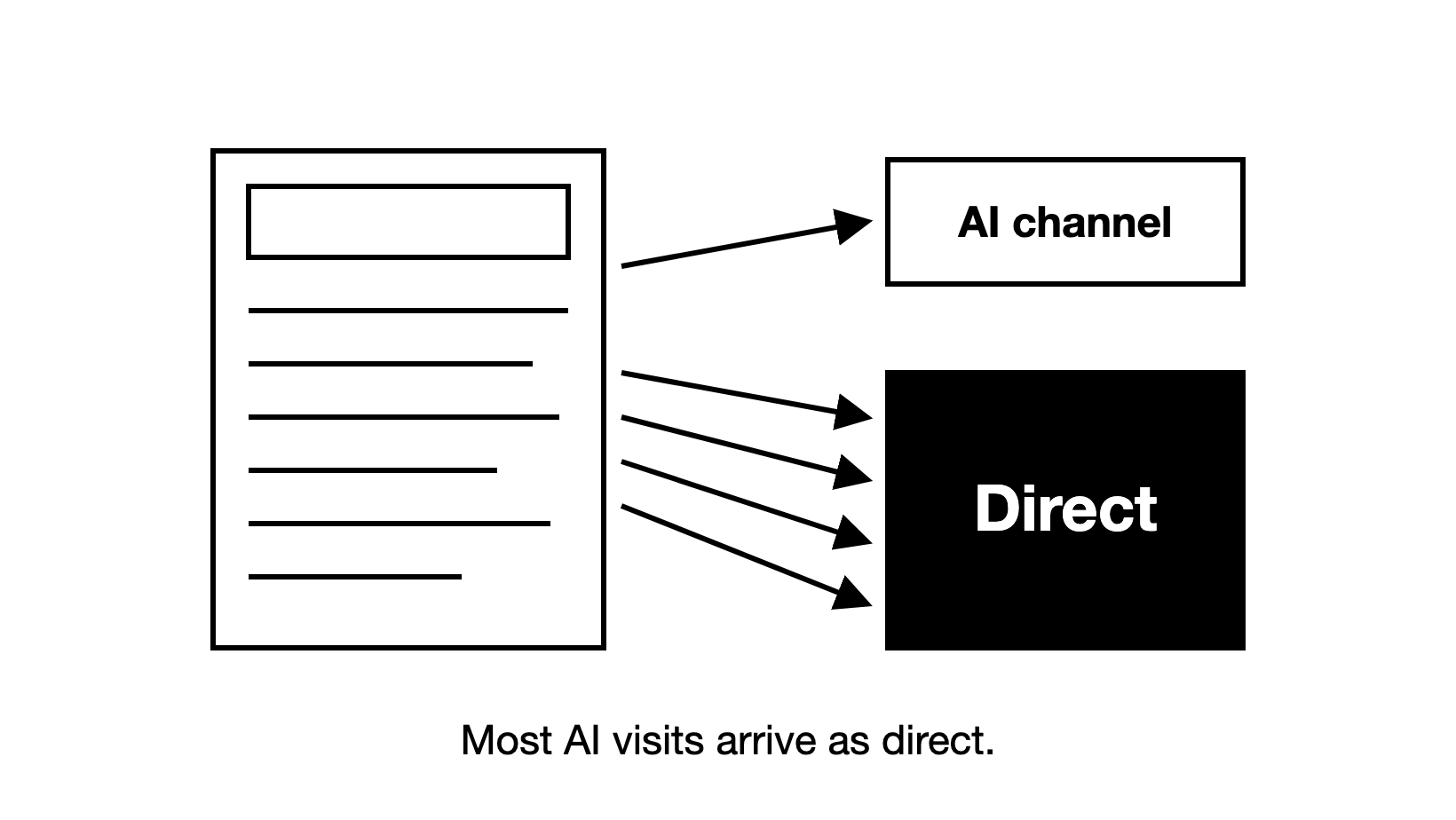
Measure AI search traffic with a custom AI channel in GA4 and a "How did you hear about us?" field, because most AI-driven visits arrive as direct or branded traffic.
AI referral traffic is the visits that reach your site from links in AI answers, such as chatgpt.com referrals.
Is AI search sending your site any traffic yet?
Yes. Since 13 May 2026, Google Analytics 4 (GA4) counts visits from chatbots such as ChatGPT, Gemini and Claude in its own AI Assistant channel. In Seer Interactive's case study of one B2B software client, AI sent just under 11,000 sessions from October 2024 to April 2025. Google organic search sent almost 14 million.
But ChatGPT visitors converted at 15.9%, against 1.76% for Google organic. Demandbase found that ChatGPT referrals to B2B sites grew fast in the year to June 2026, but were still a small share of visits.
What can GA4 see of AI traffic, and what does it miss?
AI Overviews are the AI summaries above some Google results, and AI Mode is Google's chat-style search. GA4 does not count clicks from either as AI traffic. Google's channel definitions put both in Organic Search.
Your page is cited when an AI answer shows it as a source, but buyers rarely click citations, and most citations are not yours. We looked at data from the Zadoosh data platform for B2B brands across software and other fields, April to October 2026. A brand's own pages were about 6% of the pages AI answers cited, across all engines.
Your brand is mentioned when an answer names it, with or without a link. AI visibility is how often AI engines such as ChatGPT, Gemini and AI Overviews name your brand for the questions your buyers ask. A buyer who reads your name and types your address arrives as Direct, GA4's channel for visits with no source. One who searches your name on Google later arrives as Organic Search, and the lead often gets credited to Google.
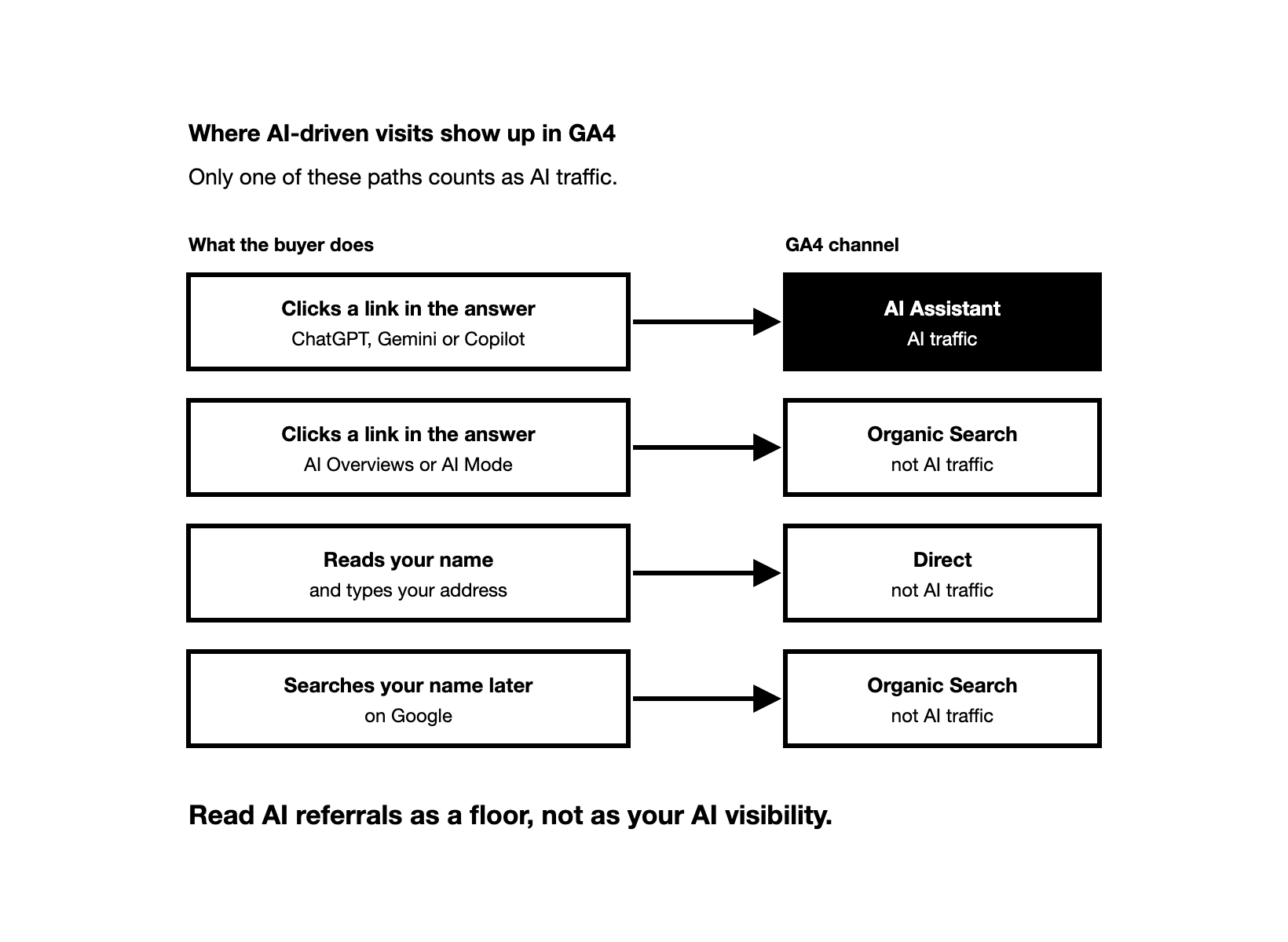
No tool sees a real buyer's conversation, so no report can prove which prompt led to a visit.
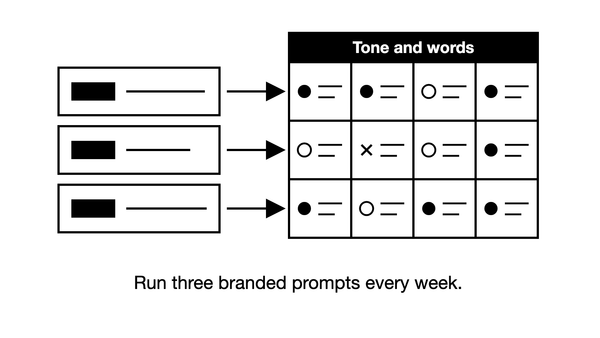
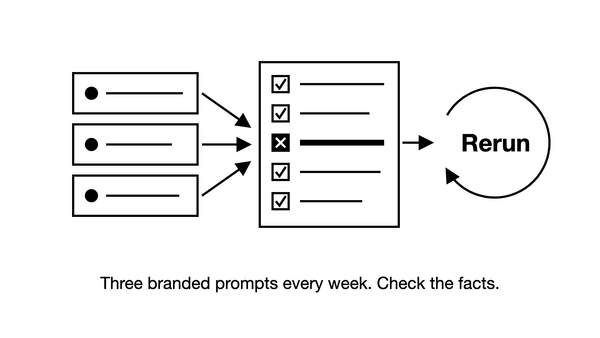
So read AI referrals as a floor, not as your AI visibility. You measure it by running buyer prompts in the engines. As of November 2026, the Zadoosh AEO platform's free trial runs 25 prompts for 7 days, with no card.
What do Search Console and Bing Webmaster Tools show about AI search?
Search Console counts AI Overviews and AI Mode clicks inside its Web search data, with no separate filter. Its long, question-like queries are still the closest clue to what people ask AI. Its Generative AI performance report shows only impressions of your pages in AI Overviews and AI Mode, with no queries. Bing's AI Performance report adds how often Microsoft Copilot and Bing's AI summaries cite your pages, with a sample of the searches the AI ran.
How do you track AI traffic in GA4?
GA4's AI Assistant channel matches referrers, the sites visitors come from, against a list Google does not publish in full. Google's definitions and announcement name ChatGPT, Gemini, Claude, DeepSeek, Copilot and Grok, but not Perplexity. A custom channel group, your own sorting rules, lets you choose the AI sites.
- Go to Admin > Data display > Channel groups and create a new channel group.
- Add a channel named "AI assistants" with the condition Source matches regex (a pattern that matches several sites at once), and paste:
.*(chatgpt\.com|chat\.openai\.com|perplexity\.ai|gemini\.google\.com|copilot\.microsoft\.com|claude\.ai|deepseek\.com|grok\.com).* - Move it above Referral, because GA4 checks channels in order.
- Save, switch the table in Reports > Acquisition > Traffic acquisition to the new group, and save that view as an "AI traffic" report.
Which AI platforms and pages send you traffic?
In your AI traffic report, filter to your AI channel and set Session source as the dimension. In February 2026 we saw ChatGPT add a utm_source=chatgpt.com tag to the links it cites, so those clicks keep their source without a referrer.
We looked at our data for B2B brands across software and other fields, May to October 2026. In answers that cited at least one page, ChatGPT cited 4 to 7.5 pages, depending on the month, and Gemini 3 to 4 (July to October 2026). So a platform sends you visits mostly when your page is one of those few.
Add Landing page + query string to see which pages they reach. In our experience as of October 2026, engines cite vendors' pricing pages, homepages and help docs for narrow buyer questions. Your landing-page report shows only the cited pages someone clicked, so check the answers themselves for the rest.
How do you attribute leads and sales to AI search?
Attribution is tying AI visibility to visits, leads and revenue. It is hard because most AI-driven visits carry no referral data, so B2B teams confirm it mainly by asking new leads how they heard about them.
In GA4, add your demo or sign-up conversion to the AI traffic report to count the leads who clicked. For the rest, ask in two places: a "How did you hear about us?" field on your demo and sign-up forms, and the first sales call.
The field needs no event setup. Then watch whether the share of leads and deals that name an AI assistant rises month by month.
When a lead names no source, read rising Direct traffic and branded searches next to rising AI visibility as a directional sign, not proof. Untracked AI-driven leads make AI's results look smaller than they are.
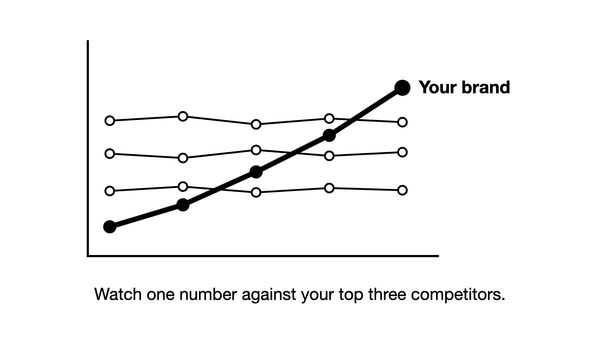
So report your visibility against your top competitors as the early signal, with traffic and leads as support. Give AI search its own section in your monthly report, next to rankings, organic traffic and your other SEO numbers. Do not judge it by a dollar value per mention, as you would performance marketing, and do not treat it as unmeasurable.
How do you tell AI bots and agents from human visitors?
AI bots are the automated visitors AI companies send to your site. Crawlers collect pages for training or search, and fetchers visit a page when a user's question needs it. Bot logs show that a page was accessed, not that it was retrieved for an answer.
An engine cites only a few of the pages it retrieves. So your logs show far more AI requests than GA4 shows AI visits.
OpenAI's bot page describes three of its bots:
| OpenAI bot | What it does | Sent because a user asked? |
|---|---|---|
| GPTBot | Crawls pages that may train OpenAI's models | No |
| OAI-SearchBot | Crawls pages so they can appear in ChatGPT search | No |
| ChatGPT-User | Visits a page when a ChatGPT user's question needs it | Yes |
A rise in GPTBot crawls says nothing about buyer demand. A rise in ChatGPT-User visits can show it.
Filter out your own team's AI tools first. Claude-User is the bot Anthropic sends when someone asks Claude a question.
AI agents browse sites for a person. In August 2025, Simon Willison found that ChatGPT's agent looks like a human visitor in server logs.
As of October 2026, you can spot ChatGPT's agent by its Signature-Agent header, a signed label set to "https://chatgpt.com". You can verify the signature against the keys OpenAI publishes.
Without a signature, use network and behaviour signals.
Frequently asked questions
What is LLM traffic? LLM traffic is another name for AI referral traffic: visits from links in answers by assistants built on large language models (LLMs), such as ChatGPT, Claude and Perplexity. It counts people who clicked, not AI bots fetching your pages.
Why does my GA4 AI channel show no traffic? First check that the condition says "matches regex". With "contains", GA4 reads the whole pattern as one site name. Then check that the channel sits above Referral, and look at Session source in the Referral channel for AI sites your pattern misses. If ChatGPT still sends nothing, check that robots.txt, the file that tells crawlers what they may visit, allows OAI-SearchBot. OpenAI says sites that block it are not shown in ChatGPT search answers.
Does a new AI channel group in GA4 show your past AI traffic? Yes. Google says custom channel groups can be applied to your reports retroactively, so your AI channel also sorts visits from before you created it. Audiences built on a channel group are the exception.
Do AI bots show up in Google Analytics? Not as AI traffic. GA4's AI Assistant channel counts only visits that came from a click in an AI answer. To see AI bots, check your server logs.