What Is an AI Visibility Score?
An AI visibility score is the share of AI answers that name your brand, across every answer a tool collected for your unbranded buyer prompts.
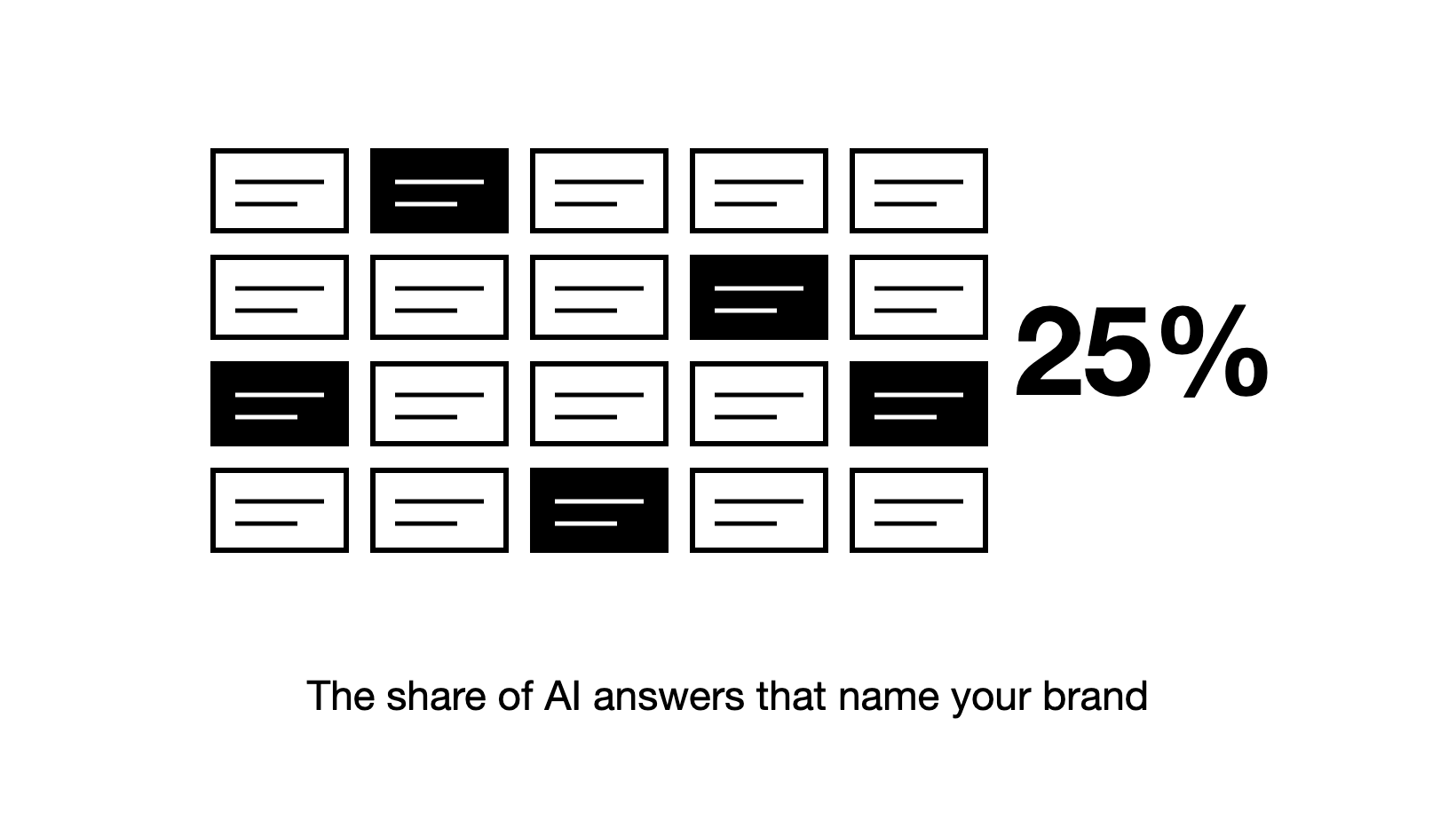
An AI visibility score is the share of AI answers that name your brand, counted across every answer a tool collected for your unbranded buyer prompts, engines and countries.
AI visibility is how often AI engines such as ChatGPT, Gemini and Google AI Overviews name your brand when buyers ask the questions you care about. Those questions are your buyer prompts. An unbranded prompt does not name your brand, so the engine has to choose you on its own.
The score turns this into one number you can track month to month, set against your competitors and report. No standard formula exists yet, so two tools can give the same brand very different scores.
What does an AI visibility score measure?
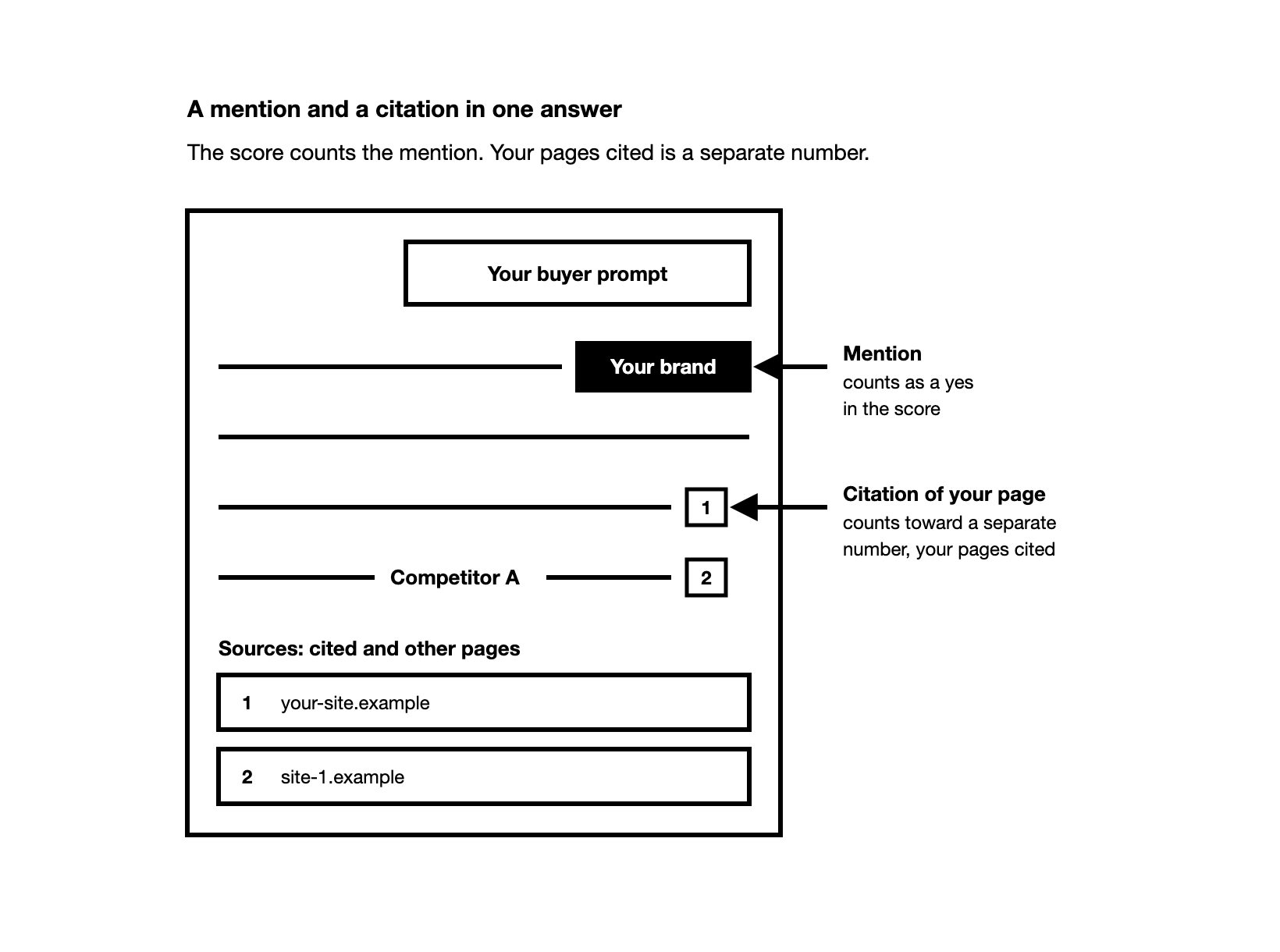
The score is built from single answers. Each answer is one engine's reply to one prompt, in one country, at one time. The tool checks one thing: is your brand named anywhere in the text? If it is, that answer counts as a yes, whether you were named first or fifth, praised or simply listed.
Being named is called a mention. A citation is something else: a page the answer shows as one of its sources, from any site. When the cited page is one of your own, it counts toward a separate number, your pages cited.
Mentions and your pages cited do not always go together.
We looked at data from the Zadoosh data platform, April to October 2026, B2B brands across software and other fields. Among answers that showed sources, ChatGPT named the brand without citing one of its pages in 8.1% of answers. It cited one of the brand's pages without naming the brand in 5.2%.
When you are named without your page cited, the engine usually cited other pages that talk about you. Those are third-party pages (a listicle, a review article, etc.) or community pages (a Reddit thread, a forum post, etc.). It can also name you from what it learned in training, with no page cited at all.
Four more numbers sit next to the score and stay out of it.
| Number | What it counts | Why it stays out of the score |
|---|---|---|
| Share of voice | Your mentions as a share of all brand mentions in the answers, yours plus each tracked competitor's | It compares you with your competitors, not with every answer collected |
| Position | Where your brand appears among the brands an answer names | It moves a lot between runs, so track it once you are named often |
| Sentiment | The tone the answer takes about you | It shows how an answer describes you, not whether it names you |
| Recommended | Answers that name you as the best fit, not just one option in a list | Being named as the best fit is a separate outcome from being named at all |
Share of voice can read very differently from the score. If every answer names five brands and one of them is always yours, your score is 100%, but your share of voice is 20%. Our guide to which AI visibility metrics matter shows how to calculate each one.
How is an AI visibility score calculated?
Divide the answers that name your brand by all the answers the tool collected, then multiply by 100. Count only answers to your visibility prompts: buyer questions that ask for a solution without naming your brand. Put every engine, country and prompt you track into one count for the period, usually a month.
Say your prompts got 200 answers in October across ChatGPT and Gemini, and 50 of them named you. Your score for October is 25%.
Divide by every answer, including answers that name no brand at all. If a tool divides only by answers that name at least one brand, those answers drop out and the score rises.
Pool the answers. Do not average the percentages of each prompt or each engine, because an average gives a thin prompt as much weight as a full one.
Say prompt A ran 30 times and named you 6 times, which is 20%. Prompt B was added late, ran 3 times and named you every time, which is 100%. The average of the two percentages is 60%, but pooled, you were named in 9 of 33 answers, which is 27%.

Per-prompt and per-engine percentages are still worth reading. They show where you are named and where you are missing.
Pooling has one side effect. An engine or a country that produces more answers weighs more in the score. If one engine runs your prompts every day and another once a week, the score mostly tells you about the first. So run the same prompts on every engine and in every country, on the same schedule.
Many scores on the market fold being named, citations, position, sentiment and share of voice into one weighted blend, on a 0 to 100 scale. The tool picks the weights. We keep the score a plain share, because a blend hides which part moved. A rise could mean you were named more often, or only described more warmly.
How do AI visibility tools choose the prompts behind your score?
A tool runs the prompts it is given. Whether you write them or the tool suggests them, the list decides what your score means.
Build your prompts from real buyer data. Use your ideal customer profile, Google keyword data, the long tail of queries in Search Console and Bing, and what buyers say on sales calls. A buyer intent prompt describes a buyer's situation: their segment (industry, size, country), their role, their buying stage and what changes their priorities, such as price or integrations. Our guide on how to choose which prompts to track walks through building the set.
Three kinds of prompt bend the score. A prompt that names your brand, such as "Is [your brand] good for [use case]?" or "[your brand] vs [competitor]", gets your brand named back. It says nothing about demand, so keep it out of the score as a separate positioning check.
Informational prompts such as "What is a CRM?" get a definition and rarely name any brand, so they pull the score down without telling you anything. Keep them out too, or track them as a separate list for citations only. Prompts written from your own website or positioning find the niche where you already win, so they flatter the score. They are fine to start with, but rewrite them in the words buyers use and move toward prompts from buyer language over time.
Within the prompts that count, the mix changes what the score tells you. Category prompts, such as "best CRM software", show how you do in the whole category. Buyer intent prompts show whether you are named for the exact segment you serve. A brand that sells to every kind of company may find category prompts enough.
Spread the prompts evenly across buying stages and personas, or the score speaks for one group only. If you run scores for several clients, build each prompt set from that client's own buyers. Two clients' scores rest on different prompts, so comparing them tells you little about which brand does better.
Some tools also show a prompt volume next to each prompt: an estimate of how often people ask it. Most such figures are built from Google keyword volume, mapped to how much people use ChatGPT, and none of them changes your score. Use prompt volume as a rough guide to which prompts matter. Our guide on what prompt volume is explains how tools estimate it.
How do you check your own AI visibility score?
Use a tool. A check by hand in one engine gives you a sense of where you stand, never a score, because one answer is only a yes or a no.
No engine reports the score for you either. Since August 2026, Search Console's generative AI performance report shows every site the impressions of its links in AI Overviews and AI Mode. Since February 2026, Bing Webmaster Tools' AI Performance report shows how often Copilot and Bing's AI summaries cite your pages. Both reports count your pages, not answers that name your brand.
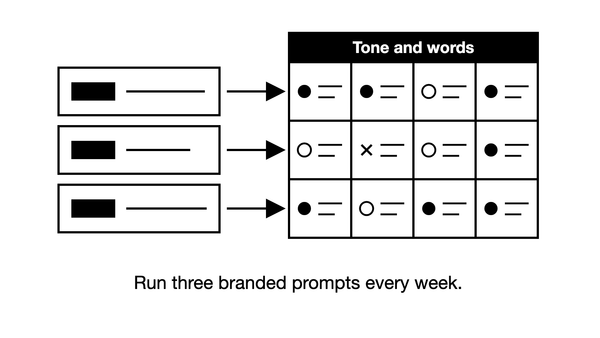
For a first read, collect 4 to 5 answers per prompt, per engine and per country, over at least a few days. For tracking, run each prompt once a day on each engine and in each country, and read the score as a monthly trend. On a tight budget, track fewer engines before you cut prompts or runs. Our guide on how many prompts to track covers how big the set should be.
Most tools come with a free trial, which is enough for a first read. As of November 2026, the Zadoosh AEO platform's free trial runs 25 prompts for 7 days, no card. It covers ChatGPT, Gemini, Perplexity, Copilot, AI Overviews and AI Mode, from the countries you choose.
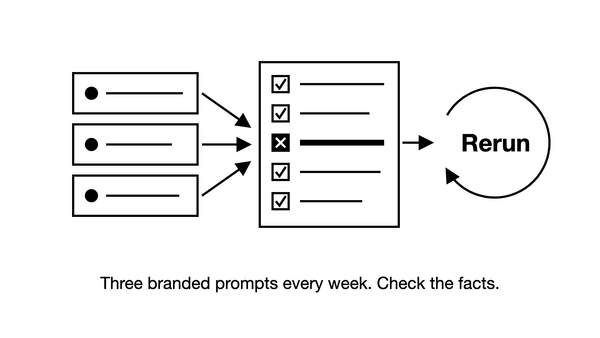
Then check the tool. Run a few prompts by hand, logged out, and compare what you see with the answers the tool recorded. Trust only a tool that shows you the full answer text behind every number. Our guide to how AI visibility tools work explains how to audit one.
What is a good AI visibility score?
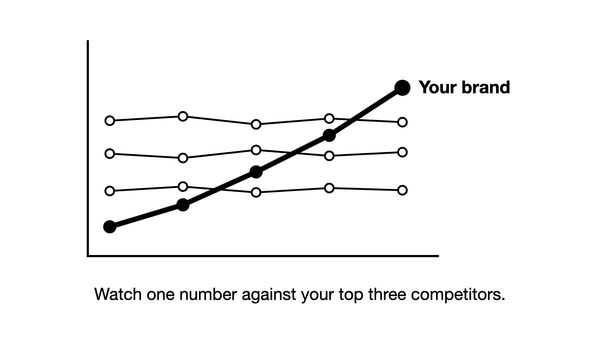
There is no universal good AI visibility score: judge yours against your top three competitors on the same prompts, engines and countries. A good sign is a rising score and a closing gap to them over about three months. Fixed bands such as "above 30% is strong" ignore how a score was built, and the same brand can score far apart on two prompt sets. How to set your own benchmark and target is in AI search visibility benchmarks.
How far can you trust an AI visibility score as a KPI?
You can trust it as a trend, read in one tool from enough answers over several weeks. You cannot trust a single reading, or a comparison between scores from two different tools.
Say ChatGPT names your brand in 40% of its answers to a prompt this month. Run that prompt once and you see 0% or 100%. OpenAI itself says the same question may get different answers each time it is asked. Our guide on whether AI visibility can be measured explains why answers vary from run to run.
How big is the margin of error on an AI visibility score?
We measured how close a few random runs come to a prompt's full month. We looked at our ChatGPT data, April to October 2026, B2B brands across software and other fields. We used prompts where the brand is named in some answers but not all, which was 72% of prompt windows (a prompt's answers over 30 days).
The 30-day share is the share of all that prompt's answers in the window that named the brand. Points here are percentage points: 30% against 40% is a gap of 10 points. "Within 10 points" means the runs gave a share no more than 10 points above or below the 30-day share. The typical miss is the usual gap between the two.
| Runs of the prompt | Came within 10 points of the 30-day share | Came within 20 points | Typical miss |
|---|---|---|---|
| 1 run | 35% of the time | 53% of the time | 18 points |
| 3 runs | 42% | 67% | 12 points |
| 5 runs | 49% | 79% | 11 points |
| 10 runs | 64% | 88% | 8 points |
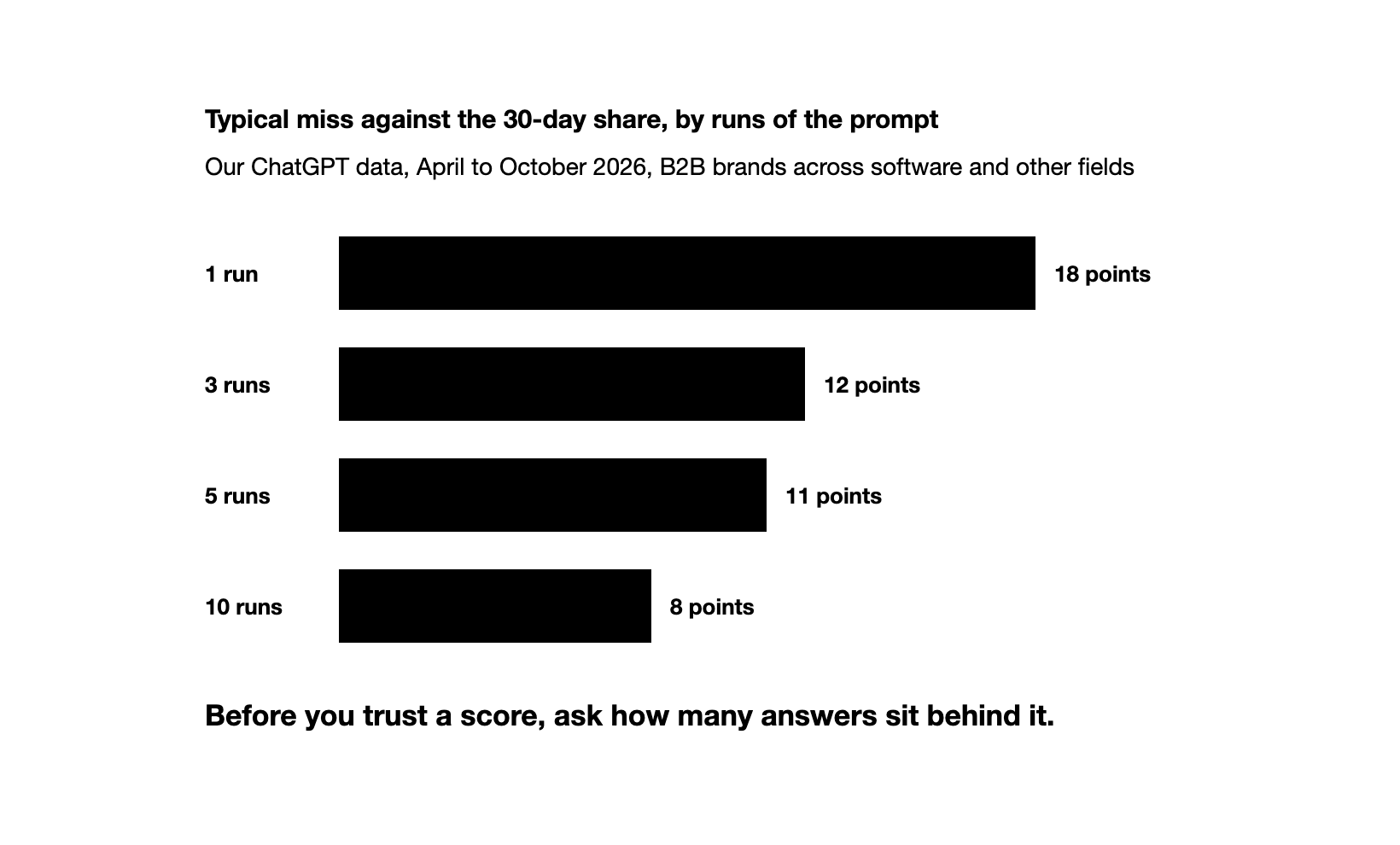
So before you trust a score, ask how many answers sit behind it. A tool can show this margin of error, because the margin depends mostly on that count. A prompt with only a few runs is a rough guess, even when it is shown to one decimal place. The score pools every prompt, so the headline number is steadier than any one prompt in it.
Does an AI visibility score from one audit still hold later?
Not reliably. Engines change how they search and what they cite, and the pages themselves change too. Some movement is only noise: answers differ from run to run even when nothing real has changed.
We used the same ChatGPT data (April to October 2026, B2B brands across software and other fields). We took prompts tracked long enough to compare their first 28 days with their last 28 days. A single prompt's share of answers naming the brand moved by a median 13 points, against about 4 points from noise alone.
So a one-off audit tells you where you stood then, and tracking has to go on. Our guide on how to monitor brand mentions in AI search covers tracking over time.
Why do two tools give the same brand different AI visibility scores?
Because two tools rarely measure the same thing.
| Setting | How two tools can differ |
|---|---|
| Prompts | Your own list, or prompts the tool suggested |
| Engines and countries | One engine or six; one country or every market you sell in |
| Runs | One answer per prompt, or one a day for a month |
| What counts as a mention | Whether a brand named only inside a citation link counts |
| The formula | Answers naming you out of all answers, a share measured against competitors, or a weighted 0 to 100 blend |
| App or API answers | Answers taken from the engine's app, or from its API (the version software calls directly); Perplexity says the two can differ |
When two tools disagree, compare those settings first, then pick one tool and read its trend. Mixing two tools' numbers in one report shows changes that are only differences in method. Our guide to how AI visibility tools work covers app and API answers in more depth.
Does an AI visibility score show what real buyers see?
No. A score measures a sample: the answers a tool collected, not the answers real buyers got. No tool, ours included, can see a buyer's own conversation.
Real answers also depend on who is asking. ChatGPT says it may use saved memories when it rewrites a search, and that it may use an approximate location based on your IP address. A tool runs your prompts as cleanly as it can, so the score shows how the engines answer those prompts today.
Say "named in 25% of the answers collected", not "seen by 25% of buyers". As long as your prompts, engines and countries stay the same, a change in the score comes from the engines rather than your setup.
What does an AI visibility score mean for leads, traffic and revenue?
A rising score means engines name you more often when buyers ask for a solution. AI visibility sits between performance marketing and brand marketing.
That leaves two mistakes to avoid. Expecting an exact return per point is the performance-marketing mistake. Calling AI visibility unmeasurable is the brand-marketing mistake. Explain this middle ground to your CFO before you show the number.
The score does not know how many buyers ask each prompt. A 25% share on a prompt few buyers ask can matter less than a 10% share on one that many ask.
Will raising your AI visibility score bring more traffic?
Not much, directly. Buyers rarely click the citations in an AI answer, so the value of a higher score is in being named. Citations still matter, because engines use the pages they cite to decide which brands to name.
When a buyer does click, analytics can show it. Since 13 May 2026, Google Analytics 4 (GA4) has an AI Assistant channel for visits from sources such as ChatGPT, Gemini and Copilot. Visits from AI Overviews and AI Mode count as Organic Search instead.
A buyer who sees your name and does not click may come later, through a Google search for your brand or by typing your address. Those visits show up as branded search or direct traffic, and nothing ties them to the answer. So watch your branded search in Search Console next to the score. Our guide on how to measure AI search visibility covers AI traffic in GA4, Search Console and Bing.
Should you judge an AI visibility score by leads and bookings instead?
Use both, for different jobs. The score tells you whether engines name you, and leads and bookings tell you whether that turns into business. No engine tells you which prompt or answer sent a buyer your way, so link leads to AI mainly by asking. Add a "How did you hear about us?" field to your forms, and ask on every demo and sales call.
Then watch whether leads that name ChatGPT or another AI engine rise as your score rises. Read them as a directional signal, not an exact count.
AI visibility has no clean ROI per mention, but it is narrower than brand marketing. So when revenue jumps after a clear rise in your score and in leads that name AI, you can still attribute it. Report the score against competitors as your early signal, with the leads that name AI and your revenue next to it.
If your score rises and leads do not, read the answers that name you. The score does not show how engines describe you, and a mention with the wrong description drives little demand: buyers arrive expecting something else. Look for outdated facts such as old pricing, and for wrong words next to your name. Check too whether you appear in the wrong kind of list, such as a premium product under "cheapest options".
What goes on an AI visibility scorecard, and how often should you check the score?
An AI visibility scorecard is the page of your monthly report that carries the score. Give AI visibility its own section and KPI next to your SEO numbers, and roll it up into a quarterly summary for your CFO.
A page is retrieved when an engine's searches pull it into the pool of pages gathered for an answer, whether or not the answer then cites it.
| Line on the scorecard | What it shows |
|---|---|
| The score and its scope | This month's score, with the prompts, engines, countries and dates behind it |
| Your rank against competitors | Your score next to the scores of your top three competitors on the same prompts |
| The score by engine | Where you are named and where you are missing, with AI Overviews and AI Mode on separate lines because they are different products |
| Where the citations came from | The share of cited pages from your own site, community pages and third-party pages, this month against last; the channel that grew is the likely cause of a change |
| Pages you worked on | Whether pages you created or improved (on your site, in a third-party publication or in a community thread) are retrieved and cited yet: the early sign the work is working |
| Leads that name AI | Answers to "How did you hear about us?" that name an AI engine |
| The target | A rising score and a closing gap to your top competitors over the quarter, never a fixed percentage |
Pick the competitors on your scorecard from the brands the answers actually name, not the ones you assume matter. If rivals you expected never show up, your prompts may be too generic.
Our guide to which AI visibility metrics matter covers the full report and how to present it to executives.
Look at the score every few days. What has to happen daily is the collection. If a tool collects only weekly or monthly, the month's score rests on a few runs per prompt.
Say your score was 22% last week and 25% this week. That 3-point move is about the size of a normal week's noise.
We also looked at weekly changes in our ChatGPT data, March to October 2026, B2B brands across software and other fields. Most week-to-week moves in a prompt set's visibility were noise: the median move was about 3 points. A weekly change was at least 80% likely to be real from about 11 points across all prompt sets.
On sets with 100 to 299 answers a week, the same bar was about 7 points. Under 100 answers a week, no weekly change could be told from noise. Comparing one 4-week block with the next, changes of 3 to 6 points were already likely real.
So act on a weekly change of about 10 points or more when the set has 100 or more answers a week, and read smaller moves over a month. Your tool should show how many answers a week your set gets.
Frequently asked questions
Is an LLM visibility score the same as an AI visibility score? Usually, yes: it is the same idea under another name, as are "brand AI search score" and "AI brand visibility score". LLM stands for large language model, the kind of AI behind ChatGPT and Gemini. No standard definition exists, so the name tells you little about the number.
Should a failed data source count as a zero AI visibility score? No. A zero is a claim about the engines: it says they answered your prompts and never named you. When a data source fails or nothing was collected, the honest reading is "no answers captured yet". Drop answers that came back empty because of a collection error, but keep refusals in the count, because an engine refusing your prompt is a real result.
What does it mean when your AI visibility score is 0%? If the tool did collect answers and none named you, the engines are answering those buyer questions without you. First check that the prompts ask about your market, because prompts can drift into a neighbouring category where you were never a candidate. If they do ask about your market, the answers show which brands and pages you are up against.
Can you build a GEO score by reverse-engineering how AI search works? No. GEO (generative engine optimization) is another name for answer engine optimization: getting a brand named and cited in AI answers. Knowing how AI search works tells you what to measure, but it cannot give you the number. ChatGPT, for example, typically rewrites a question into one or more searches (query fan-out), then retrieves pages, cites a few and names the brands worth naming. Each step gives its own number, and only running your prompts and counting shows what the engines did.
Why did my AI visibility score change after I added an engine or new prompts? The score pools every answer, and new answers join the pool at their own level, not at zero. If the new engine names you less often than your old ones, the score falls, even though nothing changed where you tracked before. To read the trend like for like, look at the old prompts and engines on their own, and note the change in your report.