AI Brand Monitoring: See How AI Describes Your Brand
Ask each AI engine every week what your brand is, its pros and cons and whether it suits your use case, then note the phrases it keeps using.
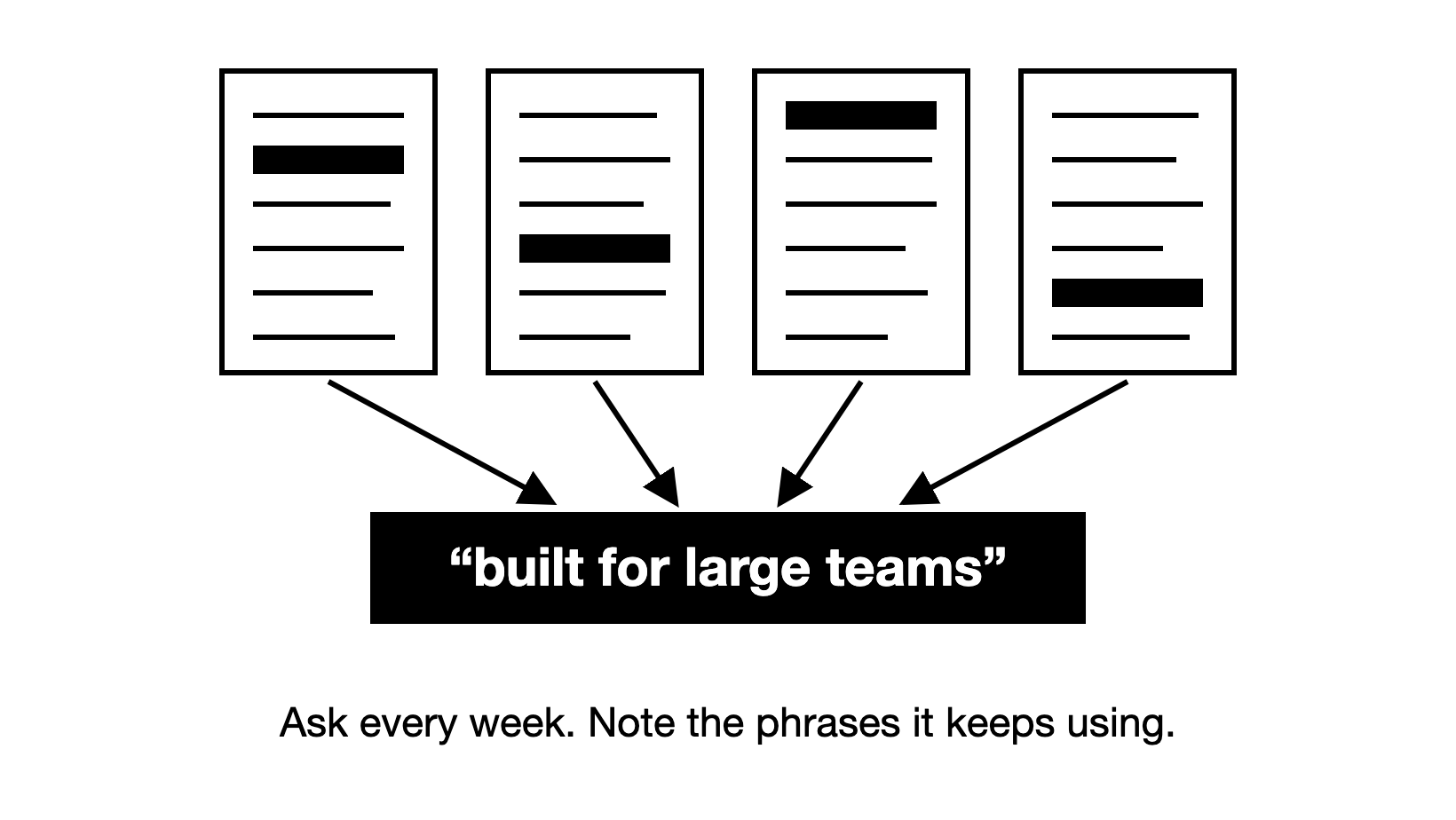
To see how AI represents your brand, ask each engine every week what your brand is, its pros and cons and whether it suits your use case, then note the phrases it keeps using.
When a buyer researches your brand by name in ChatGPT or Gemini, the answer describes you in words you did not write. You never see the answer that buyer got, unless they share it. No tool sees it either, ours included. But you can ask about your brand yourself and read what the engines say today.
What is AI brand monitoring, and why does it matter?
AI brand monitoring is the regular check of whether AI engines such as ChatGPT, Gemini and Perplexity name your brand, and how they describe it when they do.
It matters because the answer can reach a buyer before your website does. A mention with the wrong words does not drive demand: the visitor arrives expecting something you do not offer.
How is AI brand monitoring different from social listening and SEO?
Social listening collects what people post about your brand. AI answers are not published as posts. The engine writes each one when someone asks, so there is no feed of answers to collect.
Rank tracking shows where your page sits on Google, not what an engine says about your brand. A high Google rank does not mean AI cites the page either. In what we have seen, the two are mostly unrelated. For mentions, how monitoring AI brand mentions differs from rank tracking goes into more detail.
What should AI brand monitoring measure?
Whether AI names you and how it describes you are two different jobs, and each needs its own prompts. Visibility prompts are buyer questions that never name your brand. AI visibility is how often AI engines such as ChatGPT, Gemini and Google AI Overviews name your brand when buyers ask the questions you care about. It is measured as visibility %: the share of answers to your visibility prompts that mention you.
| Job | The question it answers | Prompts | What to record |
|---|---|---|---|
| Demand | Does AI name you when a buyer looks for a solution? | Visibility prompts | Visibility %, share of voice (your mentions as a share of all brand mentions), your pages cited as sources |
| Positioning | What does AI say when someone asks about you? | Branded prompts, which name your brand | Facts stated, phrases used about you, the list you are put in, how sure it sounds, sentiment (positive, neutral or negative) |
Branded prompts stay out of your visibility %, and this guide to choosing prompts explains which ones belong in that number. The demand side has its own guide to the AI visibility metrics that matter.
How do you track what AI says about your brand, step by step?
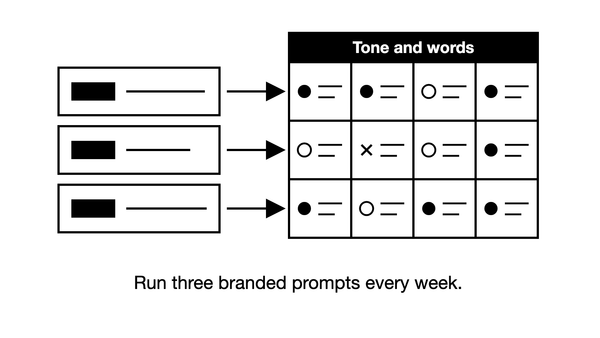
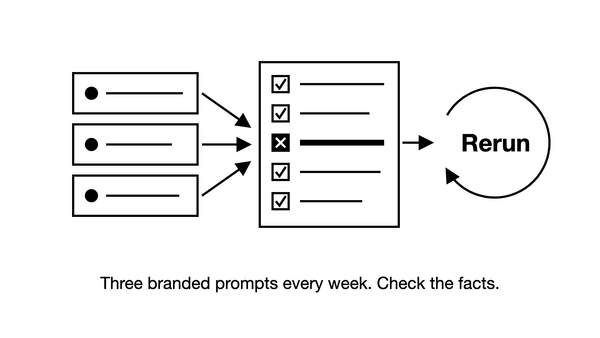
Step 1. Write three branded prompts. Ask "What is [brand]?", "[brand] pros and cons" and "Is [brand] good for [use case]?" Between them, they show your category, the strengths and weaknesses AI repeats, and whether it fits the job you sell for. Write the use case the way buyers say it on sales calls.
If your name is also a common word or another product's name, add your category to each prompt. Then count only the answers that clearly mean you.
Keep "[brand] vs [competitor]" prompts out of this set. They are a separate positioning check and never count in your visibility %. That check can also use a "[competitor] vs [competitor]" prompt. It shows whether AI brings you into a comparison you were not named in.
Step 2. Run them every week in a clean session. In each engine your buyers use, open a fresh chat, logged out, from the country you sell in or through a VPN set to it. A fresh chat keeps earlier turns from shaping the answer. Login and location change answers too: ChatGPT may use saved memories when it rewrites a search, and it estimates your location from your IP address.
Step 3. Take several answers per prompt. In ChatGPT, the same question may yield different answers, so one answer proves little. Each week, take 4 or 5 answers per prompt and engine.
Step 4. Log the words in every answer. Give each answer one row:
| Column | What to write |
|---|---|
| Date, engine, country, prompt | When, where and what you asked |
| Phrases about you | The words used for your brand, such as "built for large teams" |
| List | The group it puts you in, such as "budget options" |
| Hedges | Wording that keeps a distance, such as "describes itself as" |
| Sentiment | Positive, neutral or negative |
| Facts stated | Pricing, features, category, who it is for |
| Cited pages | The pages the answer shows as its sources |
Step 5. Check the facts once a month and after any change. Compare every fact in the log with the truth: pricing, features, category, who the product is for and company facts. A change to your pricing, product or positioning is a reason to check that week.
Step 6. Fix the sources that carry old facts. When a fact is wrong, open the pages behind the answer: ChatGPT's Sources, Perplexity's numbered citations or the Gemini app's Sources button. Find the page that still carries the old fact. Update it if it is yours. If another site owns it, ask the owner to update it.
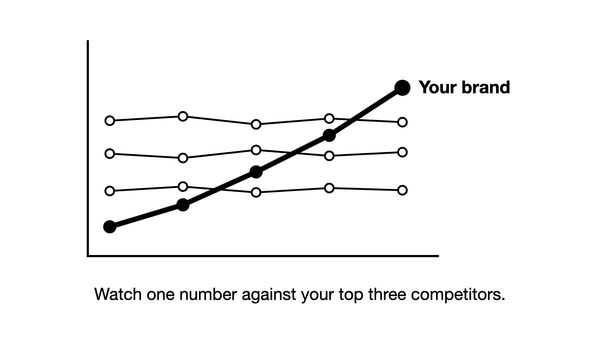
Step 7. Read your visibility % on its own. Keep tracking it from your visibility prompts next to this log. Say it dips a few points this week.
We looked at ChatGPT data from the Zadoosh data platform, March to October 2026, for B2B brands across software and other fields. Most week-to-week moves in a prompt set's visibility were noise: the median move was about 3 points. Act on a weekly change of about 10 points or more when the set has 100 or more answers a week. Read smaller moves, like that dip, over a month.
A set with 100 or more answers a week is hard to run by hand. The Zadoosh AEO platform runs visibility prompts every day in ChatGPT, Gemini, Perplexity, Copilot, AI Overviews and AI Mode. As of November 2026, its free trial runs 25 prompts for 7 days, no card.
How do you track the way AI frames your brand?
Sentiment is whether AI answers describe your brand positively, neutrally or negatively. It is a positioning check, tracked weekly next to visibility, as our guide to measuring AI visibility explains.
Framing is the words behind that sentiment: the phrases AI repeats about you, the lists it puts you in and how sure it sounds. "A great budget option" is positive, and still the wrong framing for a premium product.
Which phrases does AI keep using about your brand?
Once a month, count how often each phrase in your log comes back, engine by engine. Say most answers call you "best for small teams" while you sell to large companies. Then that phrase is how AI positions you to buyers, even if your homepage says otherwise.
Two traps show up this way. One is wrong words tied to your brand, as in that example. The other is being named in the wrong kind of list, such as "cheapest options" for a premium product.
You cannot control how AI describes your brand directly, but you can change the pages it retrieves. State your positioning in plain words on your own pages first. Then check how the other cited pages describe you: third-party pages (a listicle, a review site's editorial page, etc.) and community pages (a Reddit thread, a forum post, etc.).
Does AI describe your brand with confident or hedged language?
Start with where you sit in each answer. AI may recommend you as the best fit, name you as the specialist for one kind of buyer, list you among other tools or mention you in passing. Being recommended is a measure of its own, apart from being mentioned. This guide to monitoring AI brand mentions shows how to tell the two apart.
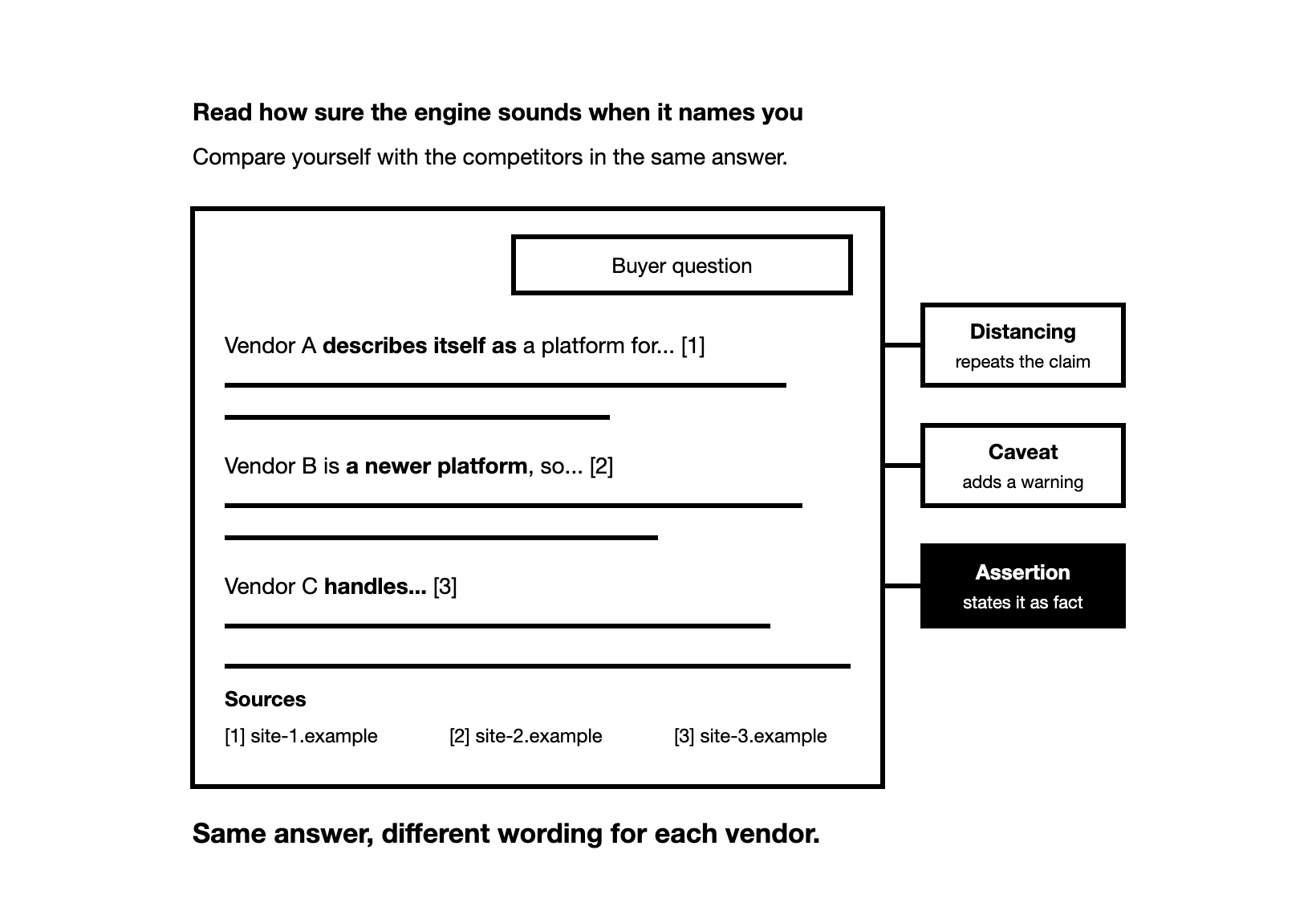
Then read how sure the engine sounds when it names you.
| Wording | What it sounds like | What it means |
|---|---|---|
| Distancing | "[brand] describes itself as a platform for..." | The engine repeats your claim without backing it |
| Caveat | "[brand] is a newer platform, so..." | The engine adds a warning to the mention |
| Assertion | "[brand] handles..." | The engine states your capability as fact |
Compare yourself with the competitors in the same answer. If the engine distances every vendor, that is how it writes. If it distances you and states a competitor's capability as fact, that difference is how AI positions you against them.
Then open the pages it cited for that answer. Check whether any page besides your own says the same thing about you. If none does, work on the third-party and community pages that engine cites.
Should AI brand monitoring use multi-turn conversations or one long prompt?
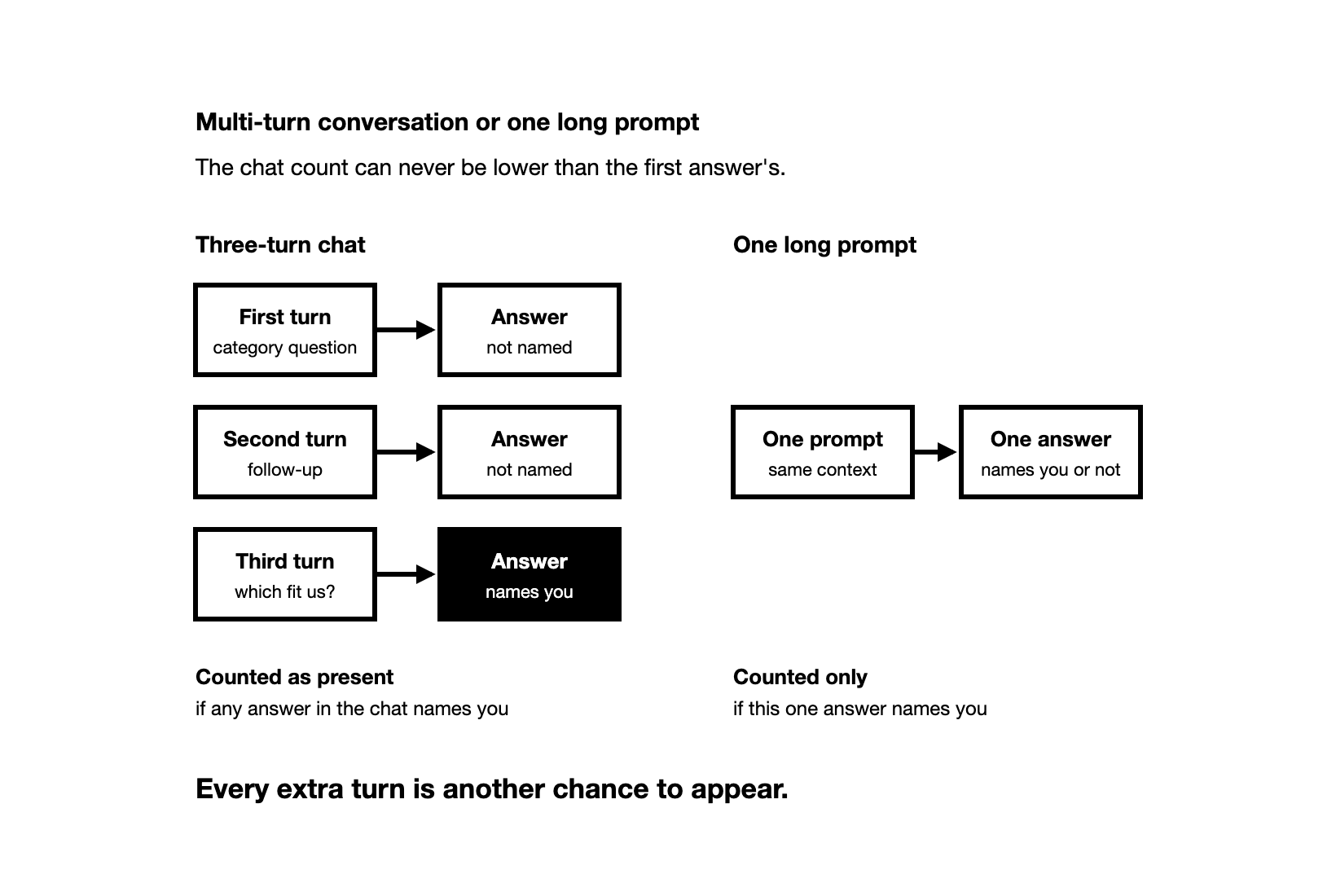
Use one long prompt. A multi-turn conversation is a chat in which the buyer asks several questions in a row, each building on the last. Real buyers often research that way, so testing with a chat seems more realistic.
But if your brand counts as present when it appears anywhere in the chat, every extra turn is another chance to appear. The count can never be lower than the first answer's.
Put the context of the conversation into one prompt instead: who the buyer is, their company, what they need and what limits them. Say a buyer asks ChatGPT three things in a row.
| Turn | What the buyer types |
|---|---|
| First | "What should a B2B sales team look for in a CRM?" |
| Second | "We have 20 reps selling to IT managers in Germany." |
| Third | "Which CRMs fit us?" |
| One prompt to track | "I lead a 20-person B2B sales team selling to IT managers in Germany. Which CRMs fit a team like ours, and why?" |
Our guide to choosing prompts to track shows how to build such prompts from real buyer questions.
When ChatGPT searches the web, it typically rewrites a question into one or more targeted searches. Our reading is that, in a chat, the engine works out the buyer's need from the whole conversation and what it knows about them, then searches. A long prompt that carries the same context leads it to the same need and the same searches.
Does naming your brand in a follow-up make AI flatter you?
It makes the engine mention you, and that flatters your numbers. Ask "What about [brand]?" after a category question, and the engine will talk about your brand because you named it. Branded prompts work the same way: they name the brand, so the engine names it back. So once a follow-up names you, the chat is a branded check, and it tells you nothing about your visibility.
People also worry about sycophancy, where AI tells you what you want to hear. That depends on how you ask. A leading question such as "Why is [brand] the best choice for [use case]?" already contains the praise, so a positive answer tells you little. Keep your branded checks neutral: "[brand] pros and cons" asks for both sides.
Frequently asked questions
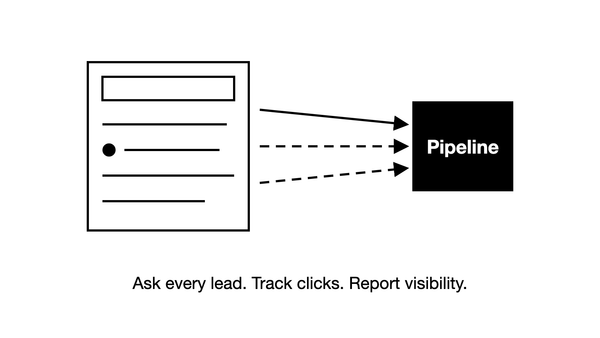
How do you see what AI tells buyers about your brand if they never click? You cannot see the answers those buyers got, unless they share them. The closest you can get is to ask the engines about your brand yourself and read what they say today. Since May 2026, GA4's AI Assistant channel counts visits that click through from ChatGPT, Gemini, Copilot and similar assistants. Since August 2026, every site has Search Console's generative AI performance report, which counts impressions of your pages in AI Overviews and AI Mode. Neither shows what an answer said about you.
Which comes first: AI visibility or how AI describes your brand? Neither matters more, because they answer different questions. Most teams first want to know that AI names them at all, and only later ask how it describes them. The branded check is three prompts a week per engine, so it can run from the start.
Can you opt out of AI engines describing your brand? No. Blocking an engine's search crawler can, at most, keep your own pages out of its answers. For example, OpenAI says sites that block its search crawler, OAI-SearchBot, will not be shown in ChatGPT search answers. ChatGPT can still describe you from third-party and community pages, and from what its model learned in training.
Should a sales-led B2B company check what AI says about its brand? Yes. Buyers who hear your name from a rep, a partner or an event can ask AI about you by name before the next call. The branded prompts show what the engines say today when asked that way.