How to Find AI Citations for Your Website
Run your buyer prompts many times and record when your own pages appear as sources in AI answers, kept apart from pages the engine only retrieves.
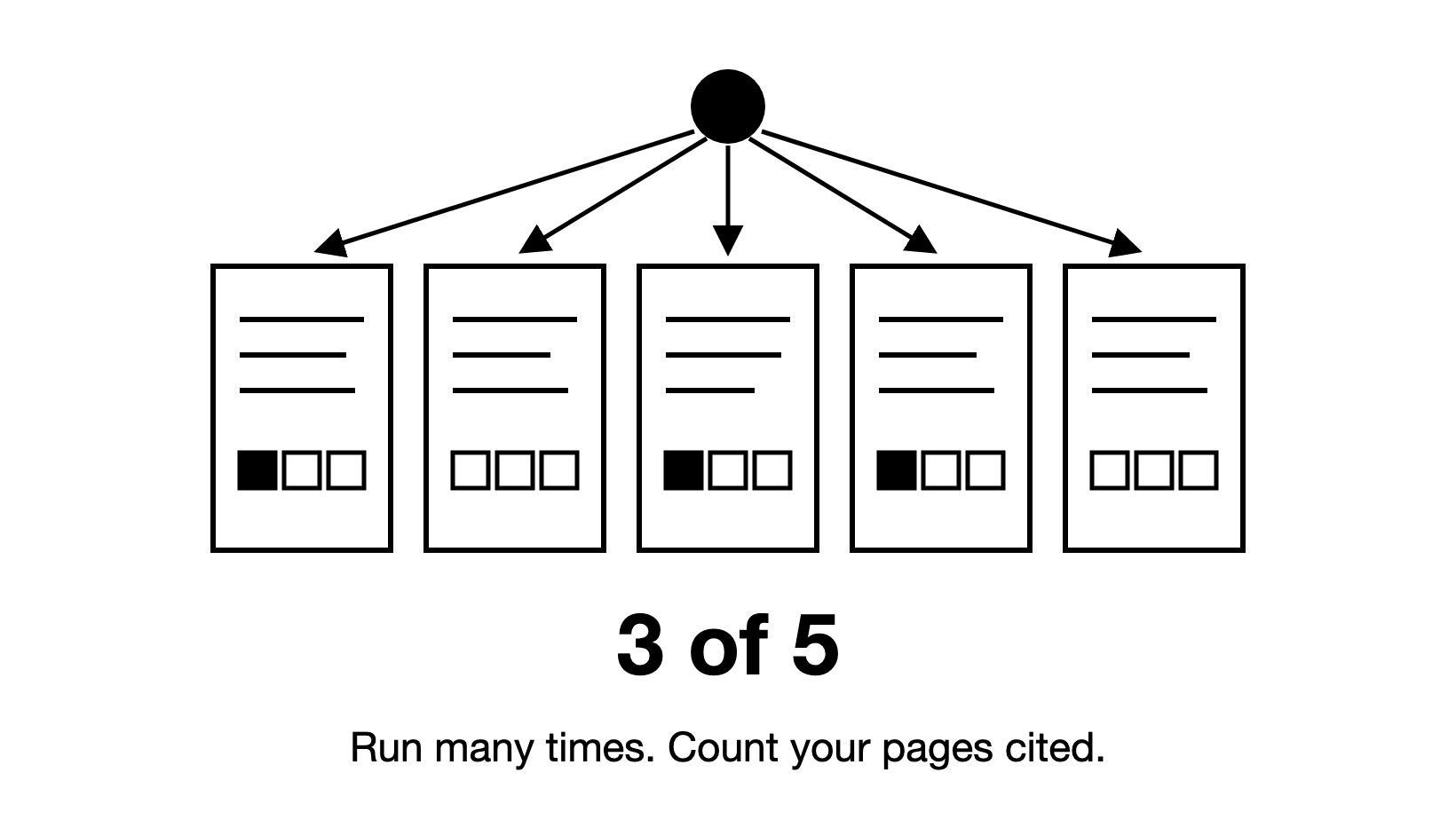
To find AI citations for your website, run your buyer prompts many times and record when your own pages appear as sources in the answer, kept apart from pages the engine only retrieves and from brand mentions.
What is AI citation tracking, and what counts as a citation?
AI citation tracking means recording which pages AI answers show as sources for your buyers' questions, and how often your own pages are among them.
In general, a page is cited when an AI answer shows it as a source. That can be your own page, a third-party page (a listicle, an industry article, etc.) or a community page (a Reddit thread, a forum post, etc.). When you track your own citations, the measure narrows to "your pages cited": the answer shows at least one page from your domain as a source.
A page is retrieved when the engine pulls it into the pool of pages it gathers while building the answer, after running its own web searches. Cited pages come out of that pool, but not every retrieved page is cited.
Your brand is mentioned when the answer names it in its text, first or fifth, with a link or without one. Our guide to mentioned, cited and retrieved explains how an engine produces each one.
Mentions are what AI visibility measures: how often AI engines such as ChatGPT, Gemini and Google AI Overviews name your brand when buyers ask the questions you care about. Visibility prompts are buyer questions that do not name your brand. AI visibility is measured as visibility %, the share of answers to your visibility prompts that mention you. Our guide on how to measure AI search visibility covers that number in full.
Buyers rarely click citations, but engines use the pages they cite to decide which brands to name. So a citation is usually the route to a mention. The exception is an answer written from what the model learned in training, which can name a brand with no page cited.
How do you count citations and brand mentions in an AI answer?
- A brand that appears only in the title or web address of a cited link is not a mention. A brand named inside the engine's own sentence is one, even when the engine links it. ChatGPT often writes brand names as links inside its sentences, so a rule that ignores every linked name undercounts its mentions.
- A publisher named without a link ("according to a report by ...") is a mention of that publisher, not a citation. No page was shown as a source.
- A cited third-party page that names you helps you get mentioned, but it does not count as your pages cited.
- Every count is a sample of the answers you captured, for the prompts you track. Write "cited in 3 of 5 answers", never "cited 3 times by ChatGPT".
How do you check AI citations for your website by hand?
Which prompts should you run to find AI citations?
Split your prompts into three lists before you run anything, because each list answers a different question.
| List | Example | What you count |
|---|---|---|
| Visibility prompts: buyer questions that never name you | "Best CRM for a 20-person B2B sales team" | Your pages cited and your brand named |
| Positioning prompts: questions that name you | "What is [brand]?" or "[brand] vs [rival]" | What AI says about you and which pages it cites to say it, kept out of your visibility number |
| Informational prompts: questions about a concept | "What is [topic]?" | Your pages cited only, because these answers rarely name any brand |
When a prompt names you, the engine names you because you asked. So that prompt tells you nothing about whether a buyer's question leads to your pages. Start with 20 to 30 visibility prompts. How to choose which prompts to track covers building the set from real buyer questions, and the free Prompt Builder generates buyer prompts you can start from.
How do you run a fair AI citation check?
Run each prompt the same way every time:
- Use a fresh chat for each prompt, logged out or with memory off.
- Connect through a VPN set to the country your buyers are in.
- Copy every cited web address in full. Page titles shown in an answer can be wrong, so count the address.
As of November 2026, OpenAI says ChatGPT may use saved memories when it rewrites a search, and may use an approximate location based on your IP address. The Gemini app uses the general area from your IP address, or the Home and Work addresses in your Google account. A check from your own logged-in account shows answers shaped by you, not by a buyer.
Where does each AI engine show the pages it cites?
As of November 2026, each engine shows its citations in a different place:
| Engine | Where its cited pages show |
|---|---|
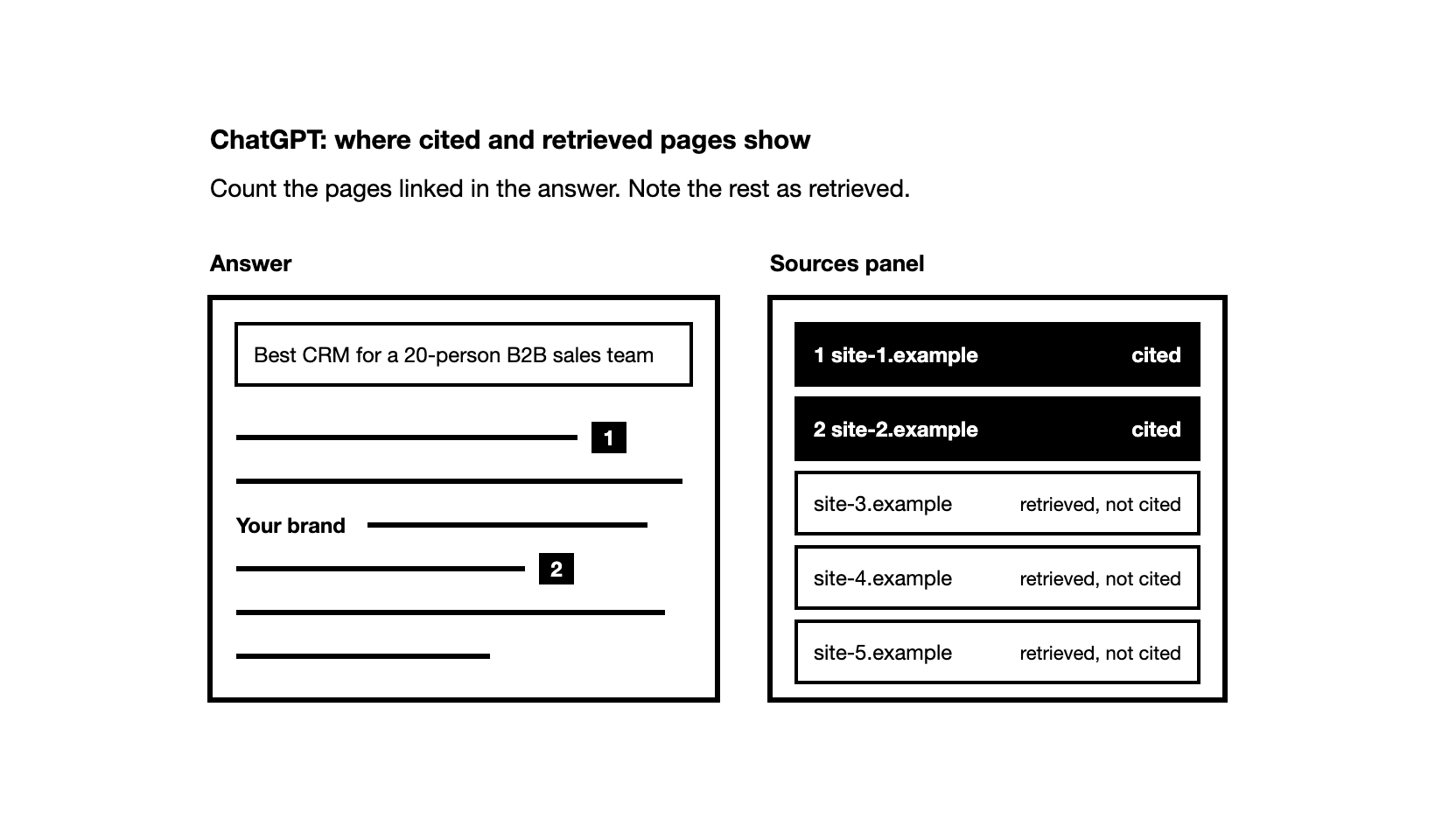
| ChatGPT | Links inside the answer text. The Sources panel lists them along with other pages the engine pulled in, which OpenAI describes as "cited sources and other relevant links". |
| Perplexity | Numbered citations in the answer, each linking to its page |
| Gemini app | A Sources button at the bottom of the response or in line with the text. Not every response has sources. |
| AI Overviews and AI Mode | Supporting links shown with the answer |
In ChatGPT, count only the pages linked in the answer as citations, and note the pages that appear only in the Sources panel as retrieved. If one of your pages keeps showing up as retrieved but never cited, the engine finds it but picks other pages to cite. Most engines show the pages they retrieved in a similar way.
How many runs does a hand check of AI citations need?
One run is never enough, because cited pages change a lot from run to run.
We looked at data from the Zadoosh data platform for B2B brands across software and other fields. Two runs of the same prompt on the same day shared 22% of their cited pages in ChatGPT (April to October 2026) and 20% in Gemini (June to October 2026). The brands named stayed steadier than the cited pages.
So count how often each page is cited across runs, never whether it showed up once. Four to five runs per prompt, engine and country give you a first read, which is what an AI visibility audit needs. Ongoing tracking needs about ten runs or more, one a day.
What should you record for each AI answer?
| Column | What goes in it |
|---|---|
| Prompt, engine, country, date | The run this answer came from |
| Cited pages | Every web address the answer shows as a source |
| Your pages cited | Yes or no, and which of your pages |
| Retrieved, not cited | Pages listed with the answer, such as in ChatGPT's Sources panel, but not linked in its text |
| Brand named | Yes or no |
| Rivals named | Each competitor the answer names |
As of November 2026, Google Search Console's generative AI performance report counts impressions of links to your pages in AI Overviews and AI Mode, with no query data. Bing Webmaster Tools' AI Performance report shows how often Copilot and Bing's AI summaries cite your content. Neither shows rivals, whether your brand is named or the answers themselves, so use them next to the prompts you run yourself. Our guide on whether AI visibility can be measured covers what each engine publishes.
What should an AI citation tracking tool show you?
A hand check shows roughly where you stand. It cannot tell you whether a change is real. To track citations week after week, you need a tool that runs the prompts for you. Check three things before you trust one:
- It captures answers from the engines' apps, not only through their APIs, the direct connections software uses to send prompts. Perplexity's own FAQ says results from its API and its web interface can differ.
- It shows the raw answer and every cited web address behind each number.
- Its results hold up when you run a few prompts by hand, logged out, and compare.
Our guide to how AI visibility tools work explains the app and API difference in full. Most tools offer a free trial, so test one on your own prompts before you pay. As of November 2026, the Zadoosh AEO platform's free trial runs 25 prompts for 7 days, with no card. It covers ChatGPT, Gemini, Perplexity, Copilot, AI Overviews and AI Mode, from the countries you choose.
How do you analyse your AI citation results?
Turn your log into a few numbers, and keep each one apart:
| Measure | What it counts | Example |
|---|---|---|
| Your pages cited | The share of answers that cite at least one page from your domain | Cited in 3 of 5 answers: 60% |
| Visibility % | The share of answers that name your brand | Named in 2 of 5 answers: 40% |
| Rival pages cited | For each competitor, the share of answers that cite at least one of its own pages | One rival cited in 4 of 5 answers: 80% |
| Density | Of the pages one answer cites, the share that name your brand | 4 of the 10 cited pages name you: 4 in 10 |
Use these shares, not raw totals. Totals rise whenever you add prompts, engines or runs, even when nothing has changed. Read each engine on its own before you pool them, because each engine picks its pages in its own way.
What does it mean when AI names your brand without citing your pages?
Any answer can go four ways for you. It cites your page and names you, cites your page without naming you, names you without citing any of your pages, or does neither. The two middle cases tell you different things, so count them apart.
We looked at our data from April to October 2026, B2B brands across software and other fields. In answers that showed sources, the two middle cases came out like this:
| Engine | Brand named, none of its pages cited | Brand's own page cited, brand not named | Months |
|---|---|---|---|
| ChatGPT | 8.1% of answers | 5.2% of answers | April to October 2026 |
| Gemini | 6.2% | 3.8% | June to October 2026 |
| Perplexity | about 11% | about 12% | June to October 2026 |
| AI Overviews | about 11% | about 11% | June to October 2026 |
| AI Mode | 5.8% | 17.5% | June to October 2026 |
So in ChatGPT and Gemini, a brand was named without its pages cited more often than the reverse. AI Mode went the other way: it cited a brand's own page without naming the brand more often.
Named without your pages cited has two readings, and both can be true. The model may know your brand from training while your own pages are poorly structured. More often, the third-party pages it cited are the ones naming you.
When your page is cited but your brand is not named, check whether that page names your product and says what it does.
Which cited page made AI name your brand?
An answer does not say which cited page led it to name you. Matching a mention to the links placed near it is unreliable, and it fails when the answer is written as a table.
Use density instead, and read it across many answers. A page's brand mention rate helps too: of the answers that cite that page, the share that also name your brand. Sort the pages that keep getting cited by whether they name you, and work first on those that leave you out.
How do you find negative pages that AI cites about your brand?
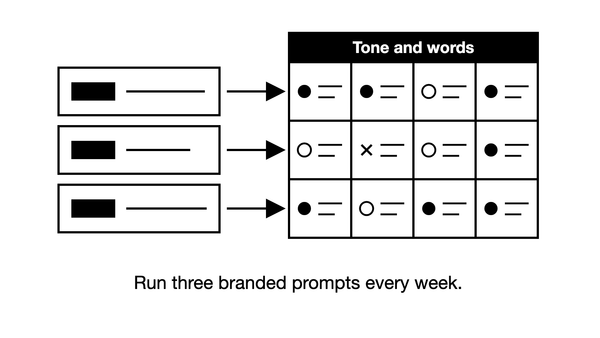
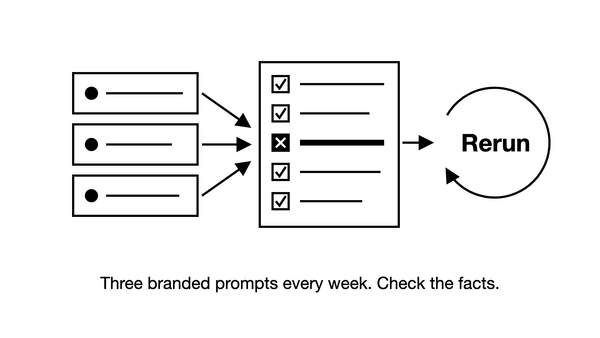
To catch negative brand sentiment in AI answers, run three positioning prompts each week: "What is [brand]?", "[brand] pros and cons" and "Is [brand] good for [use case]?". Read the pages those answers cite, not only the answers. Look for three problems:
- Outdated facts, such as old pricing, features or category.
- Your brand in the wrong kind of list, such as a "cheapest options" list for a premium product.
- The wrong words attached to your brand.
When a cited page carries an old fact, fix it at that page. Update it if it is yours, and ask the publisher to correct it if it is not. Each month, and after every change, check a short fact list: pricing, features, category, who the product is for and company facts.
Track sentiment as well: note whether each answer describes you in a positive, neutral or negative way, and read it weekly next to your visibility. If your brand name is also a common word or another product's name, add your category to these prompts. Then count only the answers that clearly mean you.
Which websites does AI cite in your category instead of yours?
How much of what AI cites comes from your own website?
Every cited page belongs to one of three channels:
| Channel | What counts | Examples |
|---|---|---|
| Your own site | Pages whose host is your domain or one of its subdomains | blog.yourbrand.com counts, but a review of you on a review site does not |
| Community | Pages written by users | Reddit threads, forum posts, YouTube videos, user reviews, etc. |
| Third-party | Pages published by someone else | Listicles, articles, comparison pages, rivals' own pages, etc. |
Review sites hold both kinds. Their user reviews count as community, and their editorial pages, such as category lists and comparisons, count as third-party.
Most of the pages AI cites belong to someone else. We looked at our data for B2B brands across software and other fields, across all engines, from April to October 2026. Third-party pages were 80% to 86% of the pages AI answers cited, community pages 8% to 15%, and the brands' own pages about 6%. The range depends on review sites: 86% when they count as third-party, 80% when they count as community.
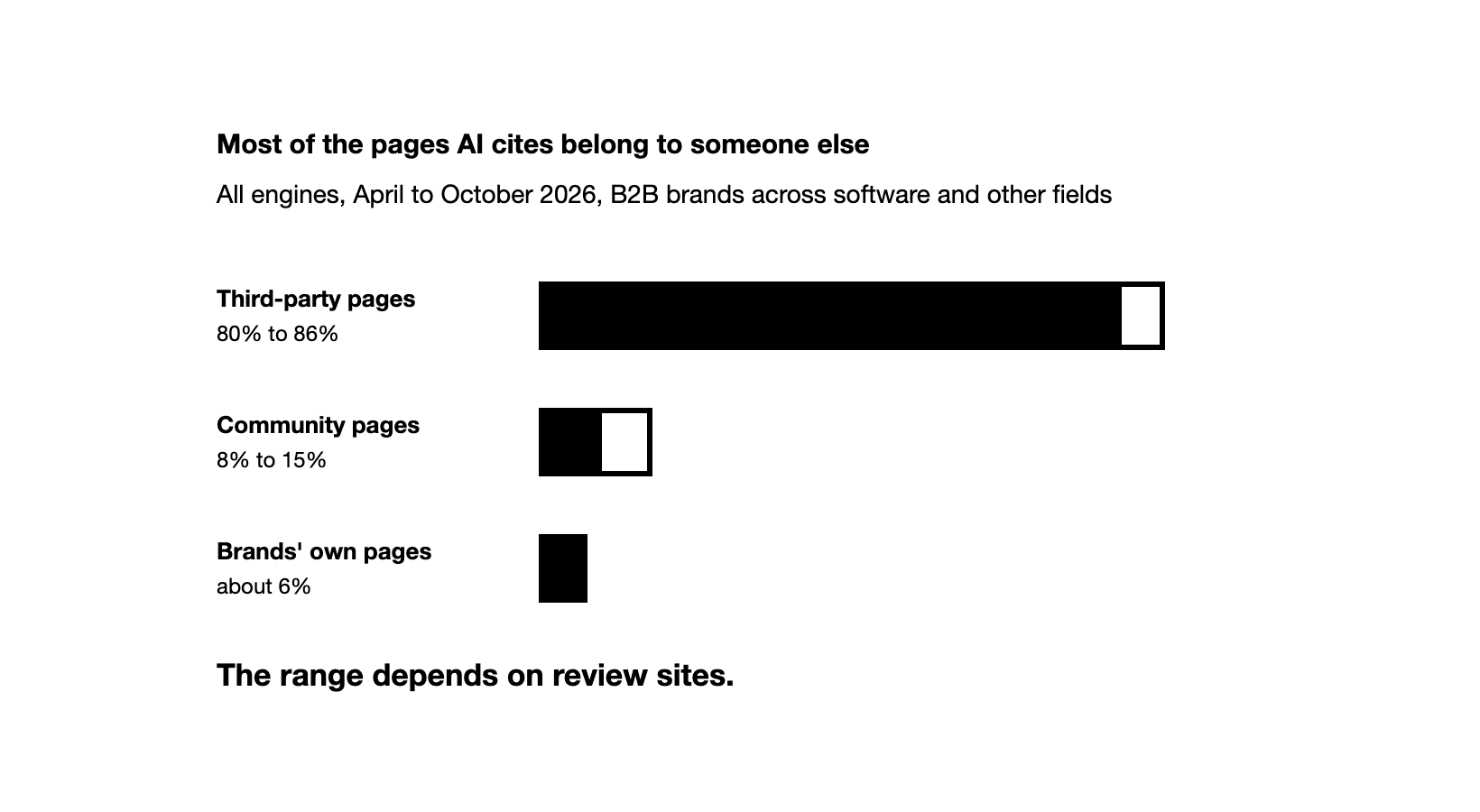
So compare the share of cited pages in each channel, never the share of answers. When your numbers move, the channel whose share grew is the likely cause.
Which page types does AI cite for each kind of prompt?
As of November 2026, the kind of page AI cites depends on the prompt. A category prompt, such as "Best CRM software", tends to get listicles cited. A narrow buyer prompt, with a specific team, need and budget, tends to get vendors' own pages cited: pricing pages, homepages, and help or documentation articles.
In our experience, category prompts also name more brands per answer than narrow buyer prompts. So on category prompts, being named on the listicles they cite matters.
Compare page type with page type. If AI cites rivals' pricing pages for a prompt, your pricing page is the one to check, not your blog.
Which citations keep coming back across runs and days?
Score each cited page on three things:
- Reach: the share of answers that cite it.
- Engine coverage: how many of your engines cite it.
- Persistence: the share of days it was cited.
Pages that score high on all three are the ones the engines keep coming back to in your category. Study those first: what they cover, how they are built, and whether they name you.
How do you find the Reddit threads that AI cites in your category?
For Reddit threads, forum posts and other community pages, track two things: whether AI cites them for your prompts, and whether they mention your brand.
Reddit's share of AI citations can change fast. In our data (B2B brands across software and other fields), Reddit was 8.6% of the pages ChatGPT cited in July 2026. On 14 August 2026 it fell in one step, to 0.1% to 0.2% in September and October. In Gemini it was 1% to 2% (July to October 2026), and in AI Overviews about 4% (August and September 2026).
To find threads worth your time, start from those an engine already cites for one of your tracked prompts. Check that each one still accepts replies, because threads get archived or locked over time. Then work from the threads first cited most recently, and among those, the ones with the fewest comments.
A rival does not need to be named in the thread. On a cited thread with no comments, a useful answer from you would be the only one there.
How do you track your YouTube videos in AI answers?
Count each video once. The same video can be cited as a watch link, a youtu.be short link, a Shorts link or an embed. Fold all of them into one video ID.
Your videos sit on youtube.com, not on your domain, so a domain check will not count them as yours. Keep a list of your video IDs and match cited YouTube links against it.
A video does not need many views to be cited. From May to August 2026, we saw recent videos with few views get cited.
Which citations put a rival in the answer instead of you?
Look at the answers you lose: a rival is named and you are not. The pages cited in those answers are the evidence for why. For each one, check what type of page it is, whether it names the rival and whether it names you.
A page that keeps getting cited in those answers and names only the rival shows you where your brand is missing from the shortlist. The full method, rival by rival, is in how to analyse AI citation gaps against competitors.
What does a repeatable AI citation tracking routine look like?
A citation number feels made up when nobody can say which prompts, engines, countries and runs produced it. Fix each of those steps in writing and run the same chain every time, so this month's numbers compare with last month's:
| Step | What you do | How often |
|---|---|---|
| Prompts | Your visibility prompts, plus your positioning and informational lists | Add a prompt whenever you find a real buyer question |
| Engines and countries | The engines your buyers use, in the countries you sell in | Change them when your buyers' habits change |
| Runs | One run per prompt, engine and country | Every day |
| Measures | Your pages cited, visibility % and, where the engine shows them, retrieved pages | Read every week |
| Reasons | The share of cited pages in each channel | Every month |
| Report | Your pages cited per engine, the channel shares and the same numbers for your top 3 competitors. Plus the pages you created or worked on (your own site, third-party or community) that were retrieved or cited for the first time | Every month, in its own section next to your SEO numbers |
The first retrieval or citation of a page you created or worked on is an early, clear sign that the work is paying off. Give it its own line.
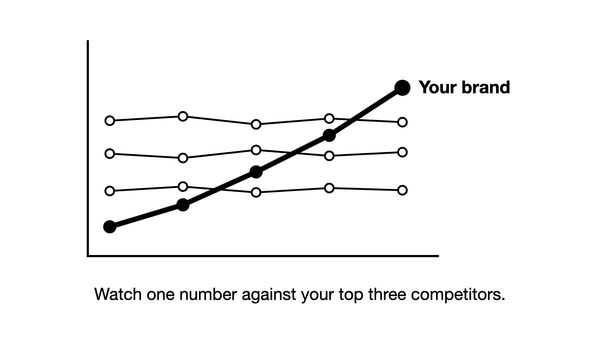
No citation number is good on its own. Look for your share rising against your top 3 competitors over about 3 months.
When can you trust a change in your AI citations?
Say a brand is named in 40% of a prompt's ChatGPT answers over 30 days. One run shows you 0% or 100%, so it takes many runs to get close to the real share.
We looked at our ChatGPT data for B2B brands across software and other fields, April to October 2026. On prompts where the brand was named in some answers but not all, one random run came within 10 points of the 30-day share 35% of the time. Ten runs did so 64% of the time.
Cited pages move even more than brands, as the same-day figures in the hand check section show. So your citation numbers need at least as many runs, and a clear bar before you act on a change.
The bar comes from our ChatGPT data on brands named (March to October 2026, B2B brands across software and other fields). Use the same bar for your citation numbers. Act on a weekly change of about 10 points or more when your prompt set gets 100 or more answers a week. Read smaller moves over a month.
How do you keep AI citation tracking affordable?
On a tight budget, track fewer engines first, and keep your prompts and your daily runs. Ten prompts run every day tell you more than many prompts run now and then.
For a one-off check, you can also save runs in two rounds. Run each prompt 5 times. If your pages are cited in none of the 5, or in 4 or 5, the result is clear. If they are cited in 1 to 3, run 5 more.
Where do you start when AI does not cite your pages?
Start from what AI cites, not from your own page. For a prompt where none of your pages is cited, list the pages that are, with their channel and page type. Why a brand or page is missing in the first place is covered in AI search visibility gap analysis.
Your own site is only one of the three channels. Look at the third-party and community pages already cited for your prompts. Work to be included where you genuinely fit, such as a listicle that covers your category or a thread where your answer helps.
Why did your AI citations drop?
When one of your pages drops out of the citations, first check whether it is still retrieved. In ChatGPT, run the same prompt a few times and open the Sources panel. If your page is still listed, the engine still finds it but now cites other pages.
If the page is gone from the Sources panel too, the engine no longer pulls it in for those searches. This is why retrieved pages are worth tracking next to cited ones. Without them, you cannot tell a page the engine stopped citing from a page it stopped finding.
If your brand stopped being named at the same time, check whether the cited page that used to bring it into the answer dropped out too.
Which mistakes make AI citation counts wrong?
Three counting mistakes make your pages look more or less cited than they really are.
| Mistake | What goes wrong | Fix |
|---|---|---|
| One page under several addresses | The same page gets cited with and without a trailing slash, with or without www, or with tracking parameters such as utm_source added. Each version collects part of the count, so one page can show as never cited in one row and heavily cited in another | Clean every address before you count: https, no www, no trailing slash, tracking parameters removed. On your site, send the copies to one address with a permanent redirect, and add a canonical tag that names that address as the main one |
| Missing your other domains | Pages on a second domain you own, such as a separate docs site, get cited but are not counted as yours | List every domain you own before you count |
| Counting from an API without web search | In OpenAI's API, web search is a tool you turn on, and even then the model decides whether to search. Answers with no search cite no pages, so your counts drop | Count from answers captured in the app, or check a sample of API answers against the app |
Frequently asked questions
Does ChatGPT cite a website in every answer? No. ChatGPT cites pages only when it searches the web. As of November 2026, OpenAI says it may search automatically when a question would benefit from current information. In our data for B2B brands across software and other fields, ChatGPT cited at least one page in 98% of answers to tracked buyer prompts (March to October 2026).
How many pages does an AI answer cite? It depends on the engine. In our data for B2B brands across software and other fields, answers that cited at least one page cited about 7 pages in AI Overviews (August and September 2026). Gemini cited 3 to 4 (July to October 2026), Perplexity about 4 (June to August 2026) and Copilot about 4 (June and July 2026). ChatGPT cited 4 to 7.5, depending on the month (May to October 2026).
Which AI engines cite brands' own websites most often? In our data for B2B brands across software and other fields, Perplexity and Copilot did. From June to October 2026, brands' own pages were about 14% of the pages Perplexity cited and about 13% of the pages Copilot cited. Over the same months they were about 8% in AI Overviews and about 7% in Gemini and AI Mode. In ChatGPT they were about 4% (April to October 2026).
Can AI Overviews or AI Mode cite a page that Google has not indexed? No. Google says a page must be indexed and eligible to be shown in Google Search with a snippet before it can appear as a supporting link in AI Overviews or AI Mode. If your pages never appear there, check that Google has indexed them first.