How to Find AI Hallucinations That Hurt Your Brand
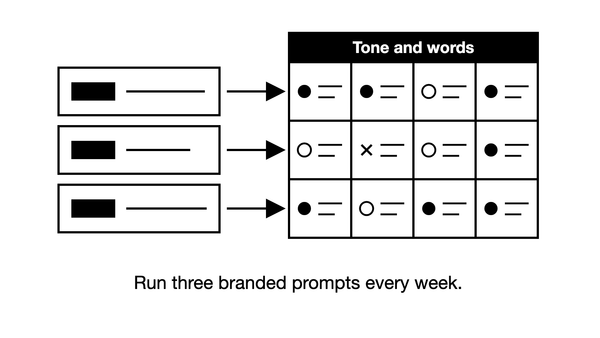
Run three branded prompts every week, such as "What is [brand]?", check the answers against your fact checklist, then rerun to rule out one-off errors.
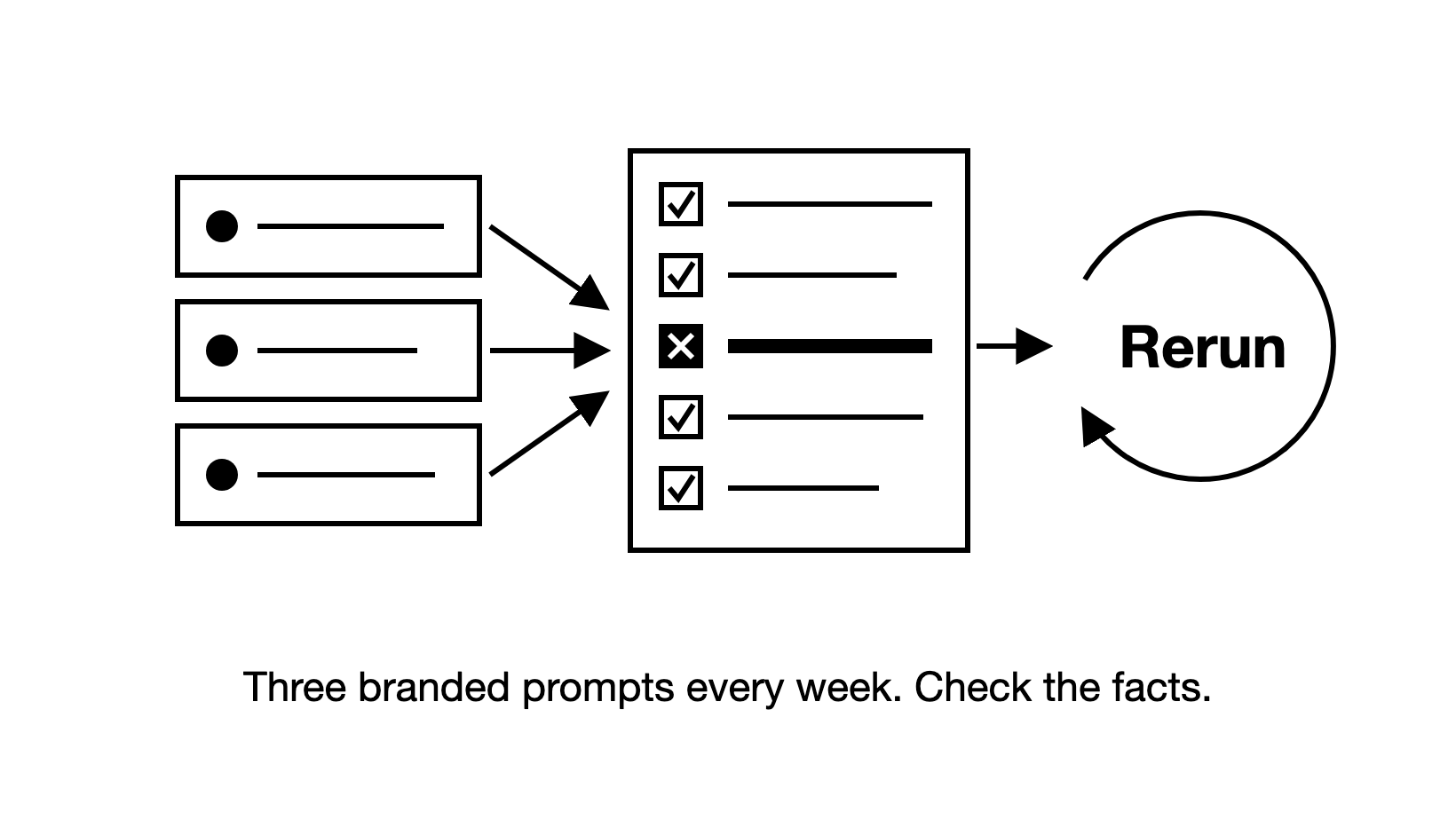
Run three branded prompts every week ("What is [brand]?", "[brand] pros and cons" and "Is [brand] good for [use case]?") and check the answers against your fact checklist, then rerun to rule out one-off errors.
An AI hallucination about your brand is a claim that an AI answer states as fact and gets wrong. Some are one-off errors that the engine makes up and does not repeat on a second run of the same prompt. Others are stable wrong answers, repeated run after run because a page the engine uses or its training data carries the wrong or old fact.
The stable kind is the one that hurts your brand. It comes back each time the question is asked, so more of your buyers are likely to meet it.
A branded prompt is a question that names your brand. Your fact checklist is the list of facts about you that AI must get right, each with its correct answer today.
Why should you check AI answers about your brand for accuracy, not only for mentions?
Your brand is mentioned when an AI answer names it in its text, first or fifth, with a link or without one (mentioned, cited and retrieved, explained). Your AI visibility is the share of answers that mention you. It counts a mention the same way whether the answer gets your facts right or wrong.
AI visibility does two jobs, and accuracy belongs to the second. The first is demand: your brand named when a buyer asks for a solution, measured on visibility prompts, the ones that do not name you. The second is positioning: what AI says when a buyer asks about you by name. Both are part of how you measure AI search visibility.
Neither job matters more than the other, and the two are linked. Say an answer lists you among "free tools" when your cheapest plan is paid. Your visibility goes up, but the buyer who clicks through expects a free tool, finds a price and leaves. A mention with the wrong description brings no demand, so it should not count as a win.
When AI misrepresents your brand or your content, or blurs the facts, the error fits one of three traps. Check every answer for all three:
| Trap | What it looks like in an answer |
|---|---|
| Outdated or wrong facts | A price, plan, feature or company fact that is no longer true or never was, or a category you have left |
| The wrong kind of list | Named among tools for buyers you do not serve, or in a price bracket you are not in |
| Wrong words tied to your brand | The same off-target label in answer after answer, such as an old tagline, or "basic" for a product built for large companies |
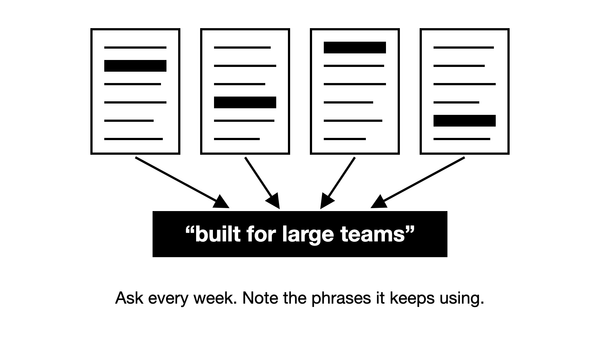
The third trap shows only across many answers. Collect the words AI uses about you over several weeks, and look for the ones that keep coming back.
How do you identify AI hallucinations about your brand, step by step?
Which branded prompts should you run every week?
Run all three on every engine your buyers use:
| Prompt | What it tests | A wrong answer looks like |
|---|---|---|
| "What is [brand]?" | Who you are: your category, your product, your buyer | The wrong category, an old description, or a different company with your name |
| "[brand] pros and cons" | The claims a buyer weighs | A feature you lack listed as a pro, or a weakness you fixed listed as a con |
| "Is [brand] good for [use case]?" | Your fit for a job you sell to | A "no" for a use case you serve, or a "yes" for one you do not |
Fill in [use case] with what your best buyers use you for. If you sell to several kinds of buyer, add one prompt per use case.
Naming your brand pushes the engine to mention you. That makes these prompts a positioning check, never part of your visibility number (which prompts belong in it).
Leave "[brand] vs [competitor]" out of this weekly check. A vs prompt shows how AI frames you against one rival. That is a separate positioning check, and you can run it beside these three.
If your brand name is also a common word or another company's name, add your category to each prompt: "What is [brand], the [category] software?". Then count only the answers that clearly mean you.
What goes on your brand's fact checklist?
Write down the true version of five facts, and the page where each one lives:
| Fact | What to write down | Where it usually lives |
|---|---|---|
| Pricing | Plans, prices and contract terms | Pricing page |
| Features | What the product does today, and what it no longer does | Product pages and docs |
| Category | The category you sell in, in your own words | Homepage |
| Who it is for | The company sizes, industries and roles you serve | Homepage and solution pages |
| Company facts | Founding year, headquarters, owner, former names | About page |
Check the three weekly answers against the list. Once a month, and in the week after any change to your pricing, product or positioning, go through the whole list. Where the three answers say nothing about a fact, ask the engine directly, for example "How much does [brand] cost?". A quarterly check is too slow: a wrong price can stay in answers for a full quarter before you see it.
How do you keep every AI check under the same conditions?
| Setting | Keep it as | Why |
|---|---|---|
| Account | Logged out, or with memory off | ChatGPT may use saved memories when it rewrites your question into searches |
| Country | The country your buyers are in, using a VPN if you are elsewhere | ChatGPT may estimate your location from your IP address, and a VPN can change it |
| Chat | A new chat for each prompt | Earlier questions in a chat can shape the next answer |
| Wording | The exact prompt text from last week | Keeps this week's answers comparable with last week's |
If you sell in several countries, run the checks from each one, because local prices and plans are facts too (tracking AI visibility by location and language).
What should you record from each AI answer?
Give each run one row in a sheet:
| Column | What to record |
|---|---|
| Run | Date, engine and country |
| Prompt | The exact wording you used |
| Answer | The full text, pasted, not a summary |
| Cited pages | The pages the answer shows as its sources (its citations) |
| Facts | Each checklist fact the answer states, marked right, wrong or outdated |
| List and words | The kind of list you appear in, and the words used about you |
The full text lets you spot a wrong fact you did not think to check.
How do you tell a one-off AI hallucination from a stable wrong answer?
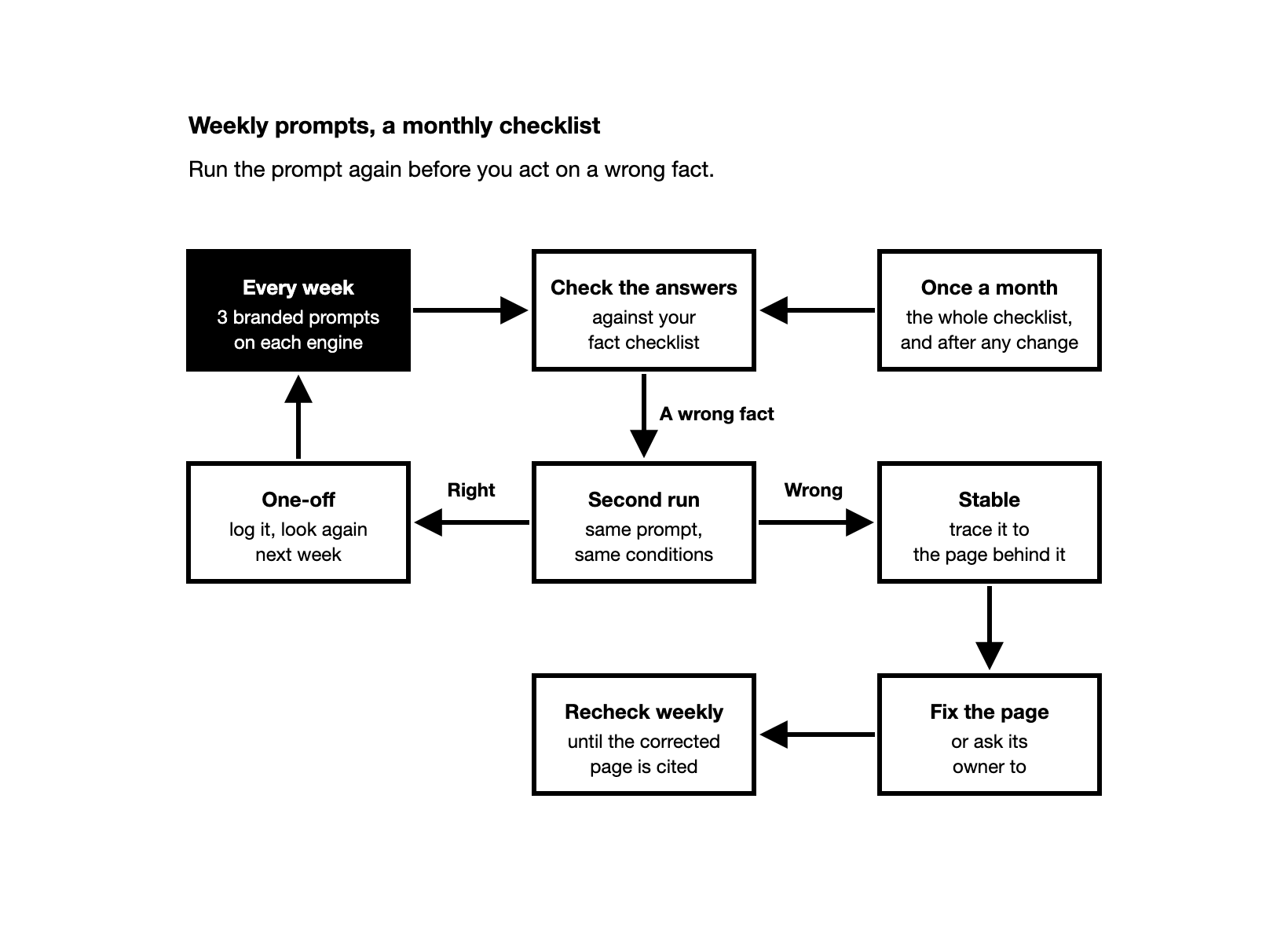
The most common mistake is one check and a big conclusion (why one AI check is not a measurement). When an answer gets a fact wrong, run the same prompt again under the same conditions before you act. The same question can get different answers from one run to the next.
If the second run gets the fact right, log the first as a one-off and look for it again next week. If the wrong fact comes back, it is stable: trace it to the page behind it.
A fixed fact, such as your price, needs only that second run. A judgement, such as "not a good fit for [use case]", changes more from run to run. Read it across several weeks of answers before you act.
Does AI get your pricing, plans and terms right?
Pricing changes, and the old versions stay online, for example in a review that quotes last year's plans. An engine that uses one of them can repeat the old price. Compare each answer with the details a B2B buyer acts on:
| Commercial fact | Example of a wrong answer |
|---|---|
| How you charge | "Priced per user" after you moved to usage-based pricing |
| Plans and limits | A plan you retired, or a limit you have since raised |
| Free plan or trial | "Has a free plan" when you only offer a trial |
| Contract terms | "Annual contracts only" when you also sell monthly |
| What each plan includes | A feature placed in the wrong plan |
Check the price bracket as well as the numbers. A premium product named among the "cheapest options" is placed wrongly even when every number in the answer is right. To spot it, look at the other brands AI names next to you in your "Is [brand] good for [use case]?" answers. If they all sell at a different price level from you, AI has put you in the wrong tier.
We see narrow buyer questions answered from vendors' own pages: pricing pages, homepages and docs. So for a question about your price, the page an engine cites is often yours. When a price or plan changes, update every page of yours that quotes it, not only the pricing page.
How do you trace a wrong AI answer about your brand to its source?
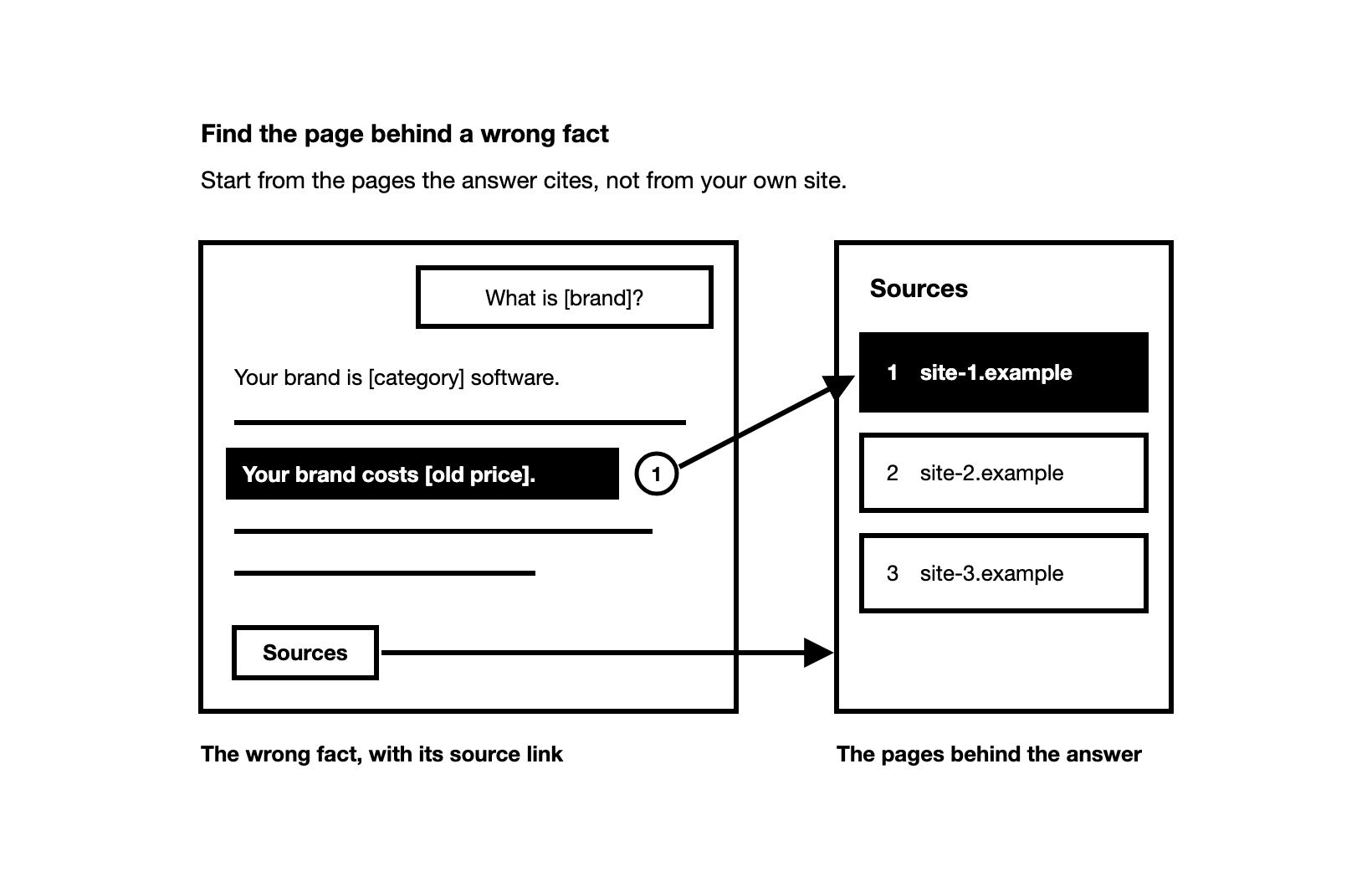
Start from the pages the answer cites, not from your own site. Open each cited page and search it for the wrong fact.
In ChatGPT, select Sources to see the cited sources and other relevant links. Perplexity numbers its citations and links each one to its source. Gemini shows a Sources button when sources are available. For ChatGPT's own first checks when it describes you wrong, see how to monitor brand mentions in ChatGPT.
ChatGPT cites pages only when it searches the web, which it can do on its own when a question needs current information. We looked at data from the Zadoosh data platform, March to October 2026, B2B brands across software and other fields. On tracked buyer prompts, ChatGPT cited at least one page in 98% of answers.
Rerun a prompt later the same day, and most of the pages it cites are likely to differ. In the same data, two ChatGPT runs of the same prompt on the same day shared 22% of their cited pages (April to October 2026).
So collect the cited pages from every run that repeats the wrong fact, not from one run. The page that turns up each time the fact does is the likely source.
Check pages you do not own as closely as your own. The wrong fact may sit on third-party pages (listicles, review sites' comparison pages, etc.) or community pages (Reddit threads, user reviews, etc.). In the same data, across all engines, third-party pages were 80% to 86% of the pages AI answers cited (April to October 2026).
If the wrong fact sits on someone else's page, ask the owner to change it, and point them to the page where you state the right fact.
Is the cited page wrong, or has the AI engine not caught up with your fix?
A wrong answer can stay after you fix the page behind it. So read each cited page as it is today, and match what you see:
| What you see | What it means | What to do |
|---|---|---|
| The cited page still states the wrong fact | The page is the problem | Correct it, or ask its owner to |
| The cited page is now correct, but the answer repeats the old fact | The engine is still working from the old version | If it is your page, resubmit it in Google Search Console and Bing Webmaster Tools (the free site-owner tools from Google and Microsoft). Either way, recheck weekly |
| A cited page of yours no longer exists | The engine has not dropped the dead page yet | Redirect the old address to the page that now carries the fact |
| A cited page on someone else's site no longer exists | The engine has not dropped the dead page yet | Make sure a live page, such as your own, states the right fact. Then recheck weekly until the engine stops citing the dead page |
| No cited page carries the wrong fact, or the answer cites nothing | The model may be filling a gap from what it learned in training | Check that your site and your main profiles state the fact plainly, then recheck weekly |
AI Overviews and AI Mode only show a page as a supporting link if it is indexed in Google Search. So check that your corrected page, or the page you redirect to, is indexed. ChatGPT uses several web indexes, Bing's among them, and OpenAI has not said which. That is why you resubmit your edited page to Bing as well as to Google.
How do you know your fix is what cleared a wrong AI answer?
Say a wrong price disappears the week after you update your pricing page. That may be your fix, or something else changed, because answers drift over time.
In the same ChatGPT data (B2B brands across software and other fields, April to October 2026), we compared each prompt's first 28 days with its last 28 days. The share of answers naming the brand moved by a median 13 points. Noise, the random change you get from rerunning the same prompt, moved it about 4 points.
So look at the answer that is now right. Your fix worked when the page you corrected appears among its sources and is cited next to the right fact. If the answer is right but cites none of the pages you worked on, the change came from the engine or from another page. Keep the weekly prompts running either way.
Keep a change log beside your answer sheet, with one row per wrong claim:
| Column | What to record |
|---|---|
| Claim | The wrong fact, word for word |
| Where | Prompt, engine and country |
| First seen | Date of the first run that showed it |
| Source | The page that carried it |
| Fix | What you changed or asked for, and the date |
| Cleared | First date the answer got it right |
| Proof | Whether your corrected page is now cited in that answer |
If you report to a client or to leadership, this log is the report.
Can you get real-time alerts for brand reputation threats in AI answers?
Yes, within limits. No tool sees the answers your buyers actually get, so an alert can only report what your own tracked prompts return, as often as they run.
We looked at ChatGPT data from the Zadoosh data platform, March to October 2026, B2B brands across software and other fields. Most week-to-week moves in the visibility of a set of tracked prompts were noise: the median move was about 3 points. Under 100 answers a week, no weekly change could be told from noise (when a change is real). So an alert on every daily or weekly swing in your visibility number would mostly report noise.
Alert on a flip instead: a page cited for the first time on the prompts you track. Answers usually describe you from the pages they cite, so a newly cited page can bring a new claim with it. That is the moment to read what the page says about you.
Our platform emails you when one of your pages, a competitor's page or a Reddit thread is cited for the first time on your tracked prompts. It fires only on pages never cited before, so your history does not flood your inbox.
An alert tells you that a new page is being cited, not whether the answer is true. The platform does not score sentiment either. Reading each answer against your fact checklist stays your job.
By hand, the weekly check grows with every engine, country and product you add. Three prompts on six engines in two countries is already 36 answers a week, before reruns and the monthly checklist. With several products or markets, or several brands to watch for clients, use a tool. It should run the prompts daily and keep every answer and its cited pages (monitoring by hand or with a tool).
As of November 2026, our free trial runs 25 prompts for 7 days, no card, on ChatGPT, Gemini, Perplexity, Copilot, AI Overviews and AI Mode. You can start a free trial and run your branded prompts on all six. Put them in their own prompt category, so you read them apart from your visibility prompts.
Frequently asked questions
Which AI hallucinations about your brand should you fix first? Start with the stable ones, the errors that came back on your second run. Among those, fix the facts a buyer decides on first: pricing, features and who the product is for. Company facts come after.
Is an AI hallucination about your brand the same as negative sentiment? No. Sentiment is the tone of an answer, and a hallucination is a false fact. A warm answer can still quote a plan you retired, and a critical one can be accurate. Check facts against your checklist, and read tone as its own measure (how to measure sentiment in AI answers).
Do all AI engines get the same facts about your brand wrong? Not always. Each engine turns your question into its own searches and runs them on the web index it uses. It then cites a few of the pages that come back. So one engine may cite the page with the old fact while another does not. After a fix, recheck each engine on its own.
How should you write your brand facts so AI answers get them right? Write them in plain, factual words, the way a third party would describe you, for example "[brand] is [category] software for [buyer]", rather than in first-person marketing copy. Use one brand name everywhere.