How to Measure AI Search Visibility
Run your buyer prompts on ChatGPT, Gemini, Perplexity, Copilot, AI Overviews and AI Mode many times, and track how often you are mentioned and cited.
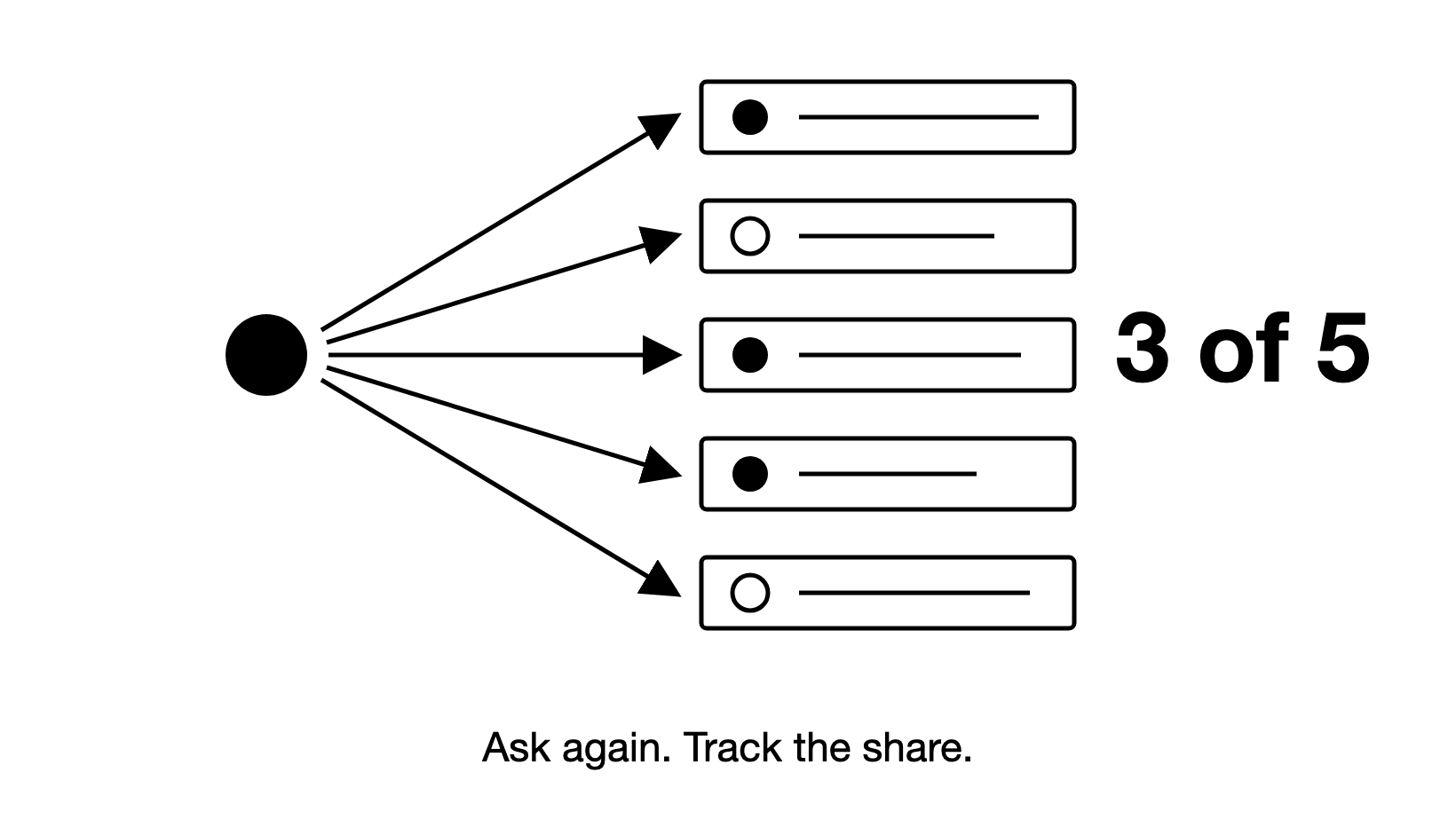
To measure AI visibility, run a set of buyer prompts on ChatGPT, Gemini, Perplexity, Copilot, Google AI Overviews and AI Mode many times, and track how often you are mentioned and cited against your competitors.
AI visibility is how often AI engines such as ChatGPT, Gemini, AI Overviews and AI Mode name your brand when buyers ask the questions you care about. It is measured as visibility %: the share of answers to your visibility prompts that mention you.
- Choose visibility prompts: buyer prompts that never name your brand.
- Choose the engines and markets your buyers use.
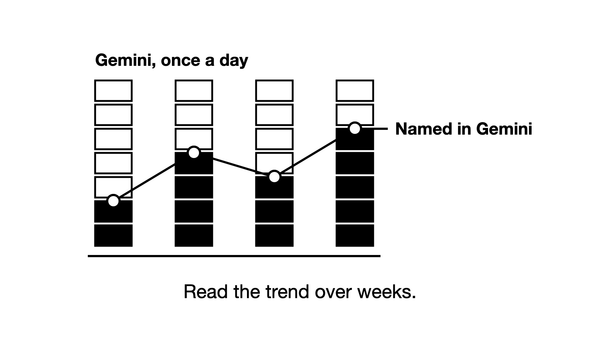
- Run each prompt many times: 4 to 5 runs for an audit, one run a day for tracking.
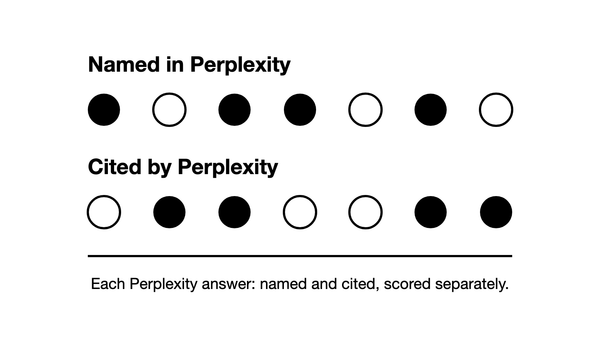
- Count three things in every answer: mentioned, cited and retrieved.
- Pool the answers into one visibility % and compare it with your competitors.
- Read the trend, then the reasons: which pages the engines cite.
- Act, and connect the result to leads and revenue.
What is AI visibility, and why do SEO metrics miss it?
Rankings and clicks do not tell you whether ChatGPT named your brand when a buyer asked for a shortlist. Buyers rarely click the citations in an AI answer, so a flat traffic chart can hide a real gain or loss. Keep your SEO numbers, but put AI visibility next to them.
An AI answer gives you three separate things to count. The engine breaks the question into several searches (query fan-out, as OpenAI describes for ChatGPT, checked November 2026). Every page it retrieves from those searches is retrieved; the few it shows as citations are cited. Your brand is mentioned when the answer names it.
In general, a page is cited when an AI answer shows it as a citation. It can be your own page, a third-party page (a listicle, an industry article, etc.) or a community page (a Reddit thread, a forum post, etc.). As a metric, "your pages cited" means the answer shows at least one page from your own domain as a citation. How mentioned, cited and retrieved differ explains why engines produce three different numbers.
The three numbers really do move apart. We looked at data from the Zadoosh data platform, April to October 2026, B2B brands across software and other fields. In ChatGPT, about 8% of answers named a brand without citing its own pages, and about 5% cited its pages without naming it. Gemini showed the same pattern, while Google's AI Mode was the exception: there, being cited without being named was more common.
AI visibility serves two jobs, measured differently. Demand is being named when a buyer looks for a solution: you measure it as visibility % on visibility prompts. Positioning is what AI says about you: you measure it with branded prompts, sentiment and comparisons with competitor brands, kept out of the visibility number. AI visibility sits between performance and brand marketing, so do not expect an exact dollar value per mention, and do not treat it as something you cannot measure.
How far can AI visibility be measured today?
Quite far, but not the way rank tracking works. Tools run the prompts you choose on the engines in the most neutral way they can, and record what the engines answer today.
Answers also change from run to run. In the same data (April to October 2026, B2B brands across software and other fields), we compared two ChatGPT runs of one prompt on the same day. They shared 53% of the brands they named, and only 22% of the pages they cited.
So one answer is an anecdote, and every AI visibility number is a sample. Each extra run helps, but some error always stays. Checking by hand gives a rough idea, but it is not enough to trust the number.
| You can measure | You cannot measure yet |
|---|---|
| How often answers to your prompts name you | The answer a specific buyer saw |
| Which of your pages engines retrieve and cite | How often a prompt is really asked (prompt volume is an estimate built from Google keyword data: a rough guide, not a count) |
| Visits from links in AI answers | A dollar value per mention |
Tools also disagree with each other. They differ in prompts, engines, country, number of runs and how they count a mention. Pick one tool, read its trend, and spot-check a few prompts by hand against the raw answers it stored.
How do you build a prompt set and a baseline?
Your prompt set is the list of buyer questions you run on AI engines again and again to measure visibility. Every AI visibility number is a share of answers to that set, so the set decides what the number means. How to choose which prompts to track covers it step by step.
Start with 20 to 30 visibility prompts, asked the way a buyer looks for a solution like yours. Prompts that name your brand or compare you with a competitor are positioning prompts. Keep them out of the visibility number, because naming you forces you into the answer. Keep informational prompts such as "What is employee engagement?" on a separate watch list for citations only, because they rarely name any brand.
Build prompts from real buyer data: your ideal customer profile, Google keyword data, the long tail in Search Console and Bing, and sales calls. Category prompts such as "best employee engagement platform" are a fine start. Then add category plus context, alternatives and buyer intent prompts. The more of a buyer's situation a prompt carries (role, company size, country, need, constraints), the closer it is to a real question.
A baseline is your starting numbers, recorded over a few weeks of running your prompt set before you change anything. For a first audit, run each prompt 4 to 5 times per engine and country over a few days.
For ongoing tracking, use a tool that runs each prompt once a day on each engine, and read the result as a monthly trend. Most tools have a free trial. As of October 2026, the Zadoosh AEO platform's trial tracks up to 25 prompts. On a tight budget, track fewer engines before you cut prompts or runs.
Add relevant prompts whenever you find them, and remove one only if it tracked the wrong thing. Report the original set like for like next to the full set.
How do you track your brand in ChatGPT, Gemini, Perplexity, Copilot, AI Overviews and AI Mode?
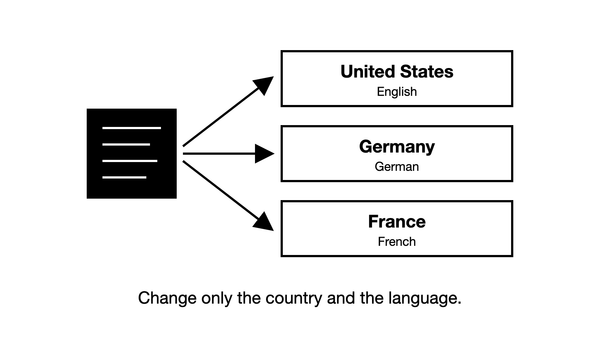
Run the same prompts on every engine your buyers use, so the numbers compare. For another market, run the same engines with that country and language. Pool every answer into one visibility %, and use per-engine numbers to read one engine at a time. For the full method, step by step, see how to monitor brand mentions in AI search.
Each engine also has its own guide: ChatGPT, Gemini, Perplexity, and AI Overviews and AI Mode.
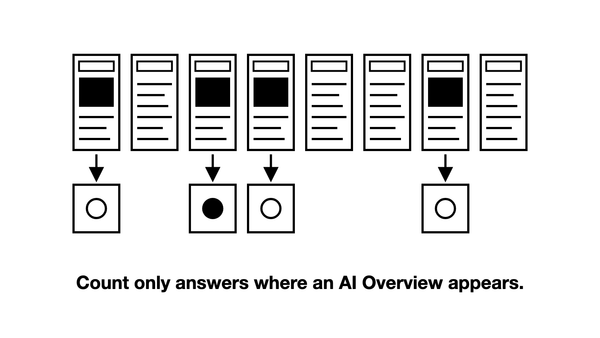
Treat AI Overviews and AI Mode separately. AI Overviews works more like a next-generation Google Search, and AI Mode more like ChatGPT. Do not rank one against the other.
Cover Claude as well, because buyers in the tech space increasingly use it. Run the same prompt set there, and read the answers by hand in a fresh chat with memory off. Meta AI, Grok and DeepSeek are typically used less by B2B buyers, so a check by hand from time to time is enough. If your buyers really are on one of them, take that engine more seriously and change your engine mix.
Engines also build answers differently. We looked at our data for May to October 2026, B2B brands across software and other fields. Gemini cited 3 to 4 pages per answer, AI Overviews about 7, and ChatGPT between 4 and 7.5. A brand can be well cited on one engine and missing on another.
For a fair check by hand, use a logged-out or temporary chat and a VPN in the buyer's country. Memory and your location change the answer (OpenAI says so for ChatGPT, checked November 2026). When you pick a tool, prefer one that captures the app answers buyers see, since API answers can differ. Use only tools that show the raw answer behind every number.
Which AI visibility metrics should you track?
| Metric | What it tells you | When to use it |
|---|---|---|
| Visibility % | Share of answers to your visibility prompts that name you | Always: the headline number |
| Share of voice | Your mentions as a share of all brand mentions | Comparing with competitors |
| Your pages cited | Share of answers that show a page from your domain as a citation | Seeing whether engines use your content |
| Retrieved | Pages the engine retrieved while building the answer | Early sign that new pages are picked up |
| Recommended | Whether the answer tells the buyer to pick you, not only lists you | Judging the quality of a mention |
| Position | Where you appear among the brands you track | Only once visibility is decent |
| Sentiment | Whether answers describe you positively, neutrally or negatively | Positioning, weekly |
"Ranking" in an AI answer is not a slot from 1 to 10 as on Google. Position is only your order among the brands you track, and it moves a lot between runs.
To see retrieved pages in ChatGPT, open the "..." menu under an answer and choose "View sources" (as of November 2026). The Sources panel lists the pages the answer drew on, beyond the ones linked in the text (OpenAI: "cited sources and other relevant links", checked November 2026). The links inside the answer are the cited ones. Most AI engines show retrieved sources in a similar way.
If a tool scores sentiment for you, read a few scored answers each month to check the scores match the text. Which AI visibility metrics matter goes through each metric in depth.
How do you check what AI says about your brand?
Run three branded prompts on each engine every week: "What is [brand]?", "[brand] pros and cons" and "Is [brand] good for [use case]?". If your name is also a common word or another product's name, add your category to these prompts, and count only mentions that clearly mean you. Look for three traps.
- Outdated facts: old pricing, features or category.
- The wrong kind of list: for example "cheapest options" for a premium product.
- The wrong words: phrases that describe a positioning you have moved away from.
Collect the phrases AI keeps using about you across many answers, not from one reply. Once a month, and after any big change, run a fact checklist: pricing, features, category, who it is for and company facts. When a fact is wrong, find the cited pages that carry it and get those fixed.
A "[brand] vs [competitor]" prompt also belongs here, as a positioning check only. A mention with the wrong words does not drive demand, because visitors arrive expecting something else.
How do you measure share of voice against competitors?
Share of voice is your brand mentions as a share of all brand mentions in the answers, yours and the competitors you compare with. There is no standard formula, so check what a tool divides by before you compare its number with another.
Compare against the brands AI actually names, not the ones you assume matter. If the rivals you expected never appear and you do not either, your prompts may be too generic. If they never appear but you do, you are winning those prompts.
No share is good in itself. Compare with your top 3 competitors on the same prompts, and look for a rising share and a closing gap over a quarter.
The top of a category is fairly steady, but not fixed. We looked at our data for April to October 2026, B2B brands across software and other fields; the data was thin, so treat these numbers as a rough guide. More than 9 in 10 of the brands in a top 3 were still there the next month. The brand in first place changed in 41% of month pairs, though sampling noise alone would change it in about 17%.
Lower positions tend to move more, especially after model updates, but that data was too thin to measure. So recheck the lower positions regularly, not only the leaders.
Which pages does AI cite, and how do you turn gaps into content work?
Visibility says how you are doing; the citations show why. Split the cited pages per engine into three channels: own site, community (a Reddit thread, a forum post, etc.) and third-party (a listicle, a publisher's article, etc.). On review sites such as G2, the user reviews count as community and the editorial pages (listicles, articles) as third-party. Compare the share of cited pages per channel over time, and do the same for retrieved pages where the engine shows them.
Most of what AI cites is not yours. We looked at our data for April to October 2026, B2B brands across software and other fields, on every engine we track, pooled across brands. About 94% of citations were not the brand's own pages. Third-party pages made up 80% to 86% and community pages 8% to 15%, depending on whether user reviews on sites like G2 count as community. For the typical brand, its own pages were only about 1% of its citations.
The mix also shifts, as our data for May to October 2026 shows (same scope). Reddit made up about 9% of the pages ChatGPT cited in July. After 14 August 2026 it fell to 0.1 to 0.2%, while Gemini stayed at 1 to 2%. Recheck the citations every month instead of planning from an old snapshot.
To turn a gap into work, start with prompts where competitors are named and you are not. See which pages the engine retrieves and cites there, and what type of page they are. As of October 2026, narrow buyer prompts tend to get vendors' pricing pages, homepages and docs cited; category prompts tend to get listicles cited. Fix the cheapest gap first: a page of yours that is already close to what the engine cites.
Do not stop at your own site. Find the community threads and third-party pages cited for your prompts, and work to be included where it fits. What is Omnichannel AEO? explains this approach across all three channels. Check crawler access only if none of your pages is ever retrieved.
How do you measure AI traffic in GA4, Search Console and Bing?
AI referral traffic is the visits that reach your site from links in AI answers, such as ChatGPT links, which show up in analytics as chatgpt.com referrals. It undercounts AI's real influence, because many AI visits arrive as Direct or as later branded searches.
Since 13 May 2026, GA4's default channel group has its own AI Assistant channel (Google's announcement; both pages checked November 2026). It counts a visit only if the referrer matches Google's own list of AI assistants. To count others too, build a custom channel group with an AI channel of your own. Match referrers such as chatgpt.com, claude.ai, perplexity.ai, gemini.google.com and copilot.microsoft.com, and put the channel above Referral so GA4 checks it first.
Google says custom channel groups can be applied to your reports retroactively, (checked November 2026). One limit remains: some AI tools strip the referrer, so those visits show up as Direct.
Google and Bing also report how your pages appear in their own AI answers. Google Search Console added a generative AI report in June 2026, first for some sites, and gave it to all sites by 31 August 2026. It shows impressions in AI Overviews and AI Mode, but no clicks or queries (checked November 2026).
Bing Webmaster Tools has had an AI Performance report since February 2026, first in public preview. It shows how often your pages are cited in Copilot, in AI summaries in Bing and in select partner integrations. It added a Citation Share figure in June 2026, in preview (both checked November 2026).
Keep bots out of this picture. Training crawlers such as GPTBot do not show demand. Fetches made when a user asks ChatGPT something do (OpenAI's crawler page, checked November 2026). Neither proves a page was used: server logs show access, not retrieval.
How do you tie AI visibility to leads, pipeline and revenue?
There is no clean line from a mention to a deal. Beyond the few AI referrals, leads that started in ChatGPT are often reported as Google, Direct or brand search.
Add a "How did you hear about us?" field to your forms, and ask on every sales call. It is the main way to link leads to AI, and it needs no tracking setup. Then watch whether AI-sourced demos rise.
Report visibility against competitors as the early signal. Read branded search, Direct traffic and AI referrals next to it each month. AI visibility is narrower than brand marketing, so a jump in revenue after a clear rise in visibility can still be attributed.
To prove your work caused a rise, look at the pages you created or earned. They can be your own pages, third-party pages (an article, a listicle, etc.) or community pages (a thread you joined, a forum post, etc.). The clearest proof is those pages being retrieved, then cited, then your mentions following, compared with competitors. If nothing you did is retrieved or cited, the change came from elsewhere.
How should you report to leadership, and how often should you measure?
Give AI visibility its own section and KPI in the monthly report, next to the SEO numbers. Add a quarterly summary for the CFO. Set directional targets: rising visibility and a closing gap to the top competitors over a quarter, not a fixed percentage.
Put these in the report.
- Visibility % and share of voice against the brands AI names.
- Your pages retrieved and cited, per engine.
- Citations split into own site, community and third-party.
- New pages you worked on that started being retrieved or cited: the early win.
- AI referral visits and AI-sourced leads.
- A like-for-like number when prompts were added.
Collect daily and read the trend, because daily numbers swing on small samples. We looked at ChatGPT in our data for March to October 2026, B2B brands across software and other fields. The median weekly move was about 3 points, and most of it was noise.
So act on a weekly change only when it is about 10 points or more, on a set with 100 or more answers a week. Read smaller changes over about a month, where a move of 3 to 6 points is already real.
Frequently asked questions
What is a good AI visibility score? There is no universal good number. A score only means something next to your top 3 competitors on the same prompts, and as a trend. A share that rises over about three months is what you want to see.
How is an AI visibility score calculated? Count the answers that name your brand and divide by all answers to your visibility prompts, across every run, engine and market. A brand named in 3 of every 10 answers has a visibility of 30%. Tools differ in prompts, runs and how they count a mention, so their scores differ too.
Can I check my AI visibility for free? Yes, for a first sense. Run your buyer prompts several times each in a logged-out or temporary chat, with a VPN in your buyer's country. A check by hand gives only a rough sense. For a real audit, the Zadoosh AEO platform's free trial runs the prompts for you.
How many prompts should I track? Start with 20 to 30 visibility prompts, then add relevant ones as you find them. On a small budget, keep fewer prompts run daily rather than many prompts run rarely.
Can I measure AI visibility with Google Search Console alone? No. Since 31 August 2026, Search Console shows every site impressions for its own pages in AI Overviews and AI Mode (checked November 2026). It cannot show whether ChatGPT, Perplexity or Copilot name your brand, or which competitors they name instead.