How to Monitor Brand Mentions in AI Search
Run buyer prompts on the engines your buyers use about once a day, and read the share of answers that name you as a trend over weeks, never from one check.
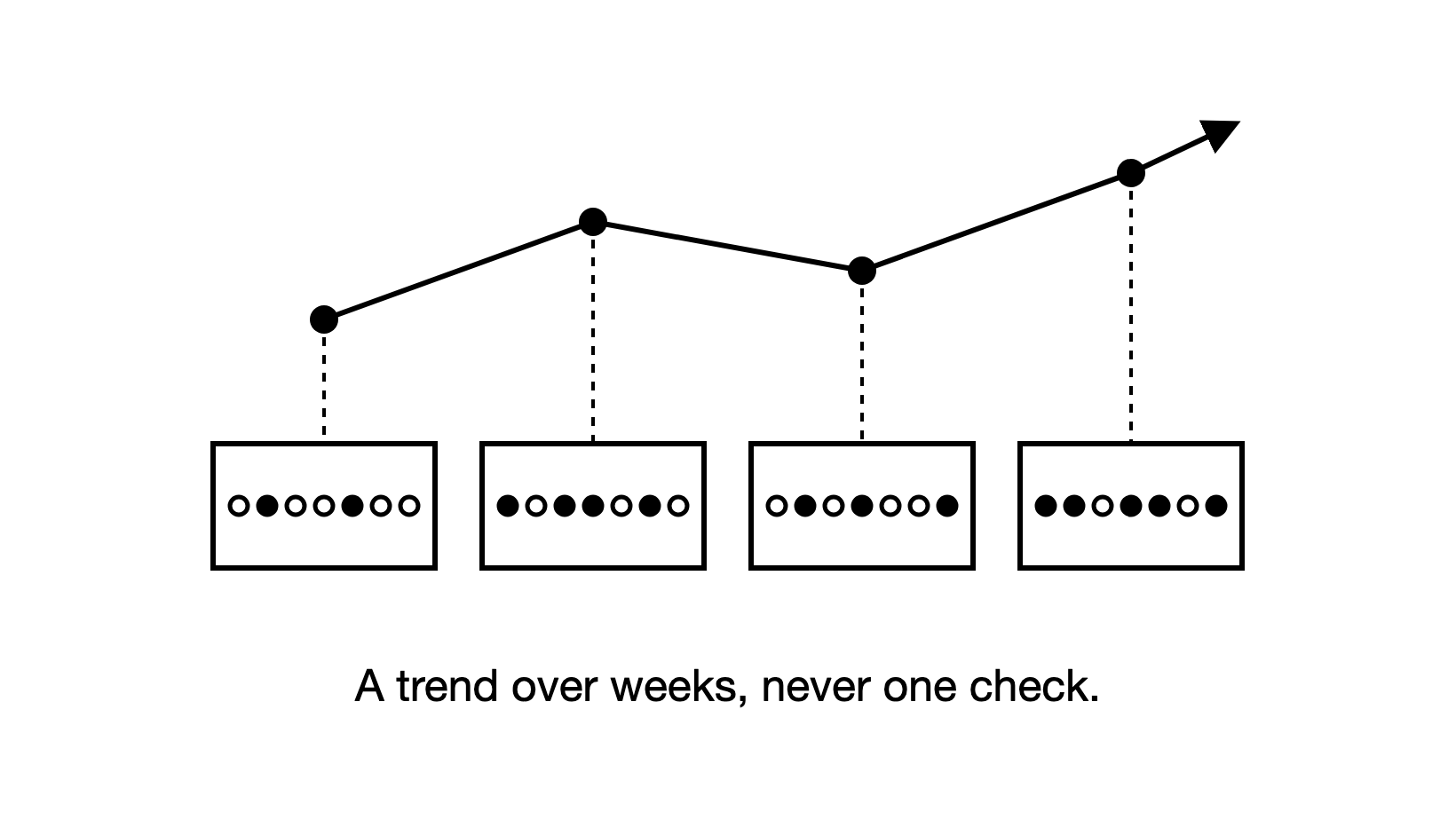
To monitor brand mentions in AI search, run a set of buyer prompts on the engines your buyers use, about once a day each, and read the share of answers that name you as a trend over weeks, never from one check.
Your brand is mentioned when an AI answer names it anywhere in its text, with a link or without one. AI visibility is how often engines such as ChatGPT, Gemini and Google AI Overviews name your brand when buyers ask the questions you care about. You measure it as visibility %: the share of answers to your visibility prompts that mention you. Visibility prompts are buyer questions whose wording does not name your brand; the answer may still name you.
A citation is a page an AI answer shows as a source. It can be your own page, a third-party page (a competitor's page, a listicle, etc.) or a community page (a Reddit thread, a forum post, etc.). Buyers rarely click citations, but engines use the cited pages to decide which brands to name.
Why should you monitor brand mentions in AI search?
Monitoring does two jobs. Demand: is your brand named when a buyer asks AI for a solution? Positioning: what does AI say about you, and in which words? The two connect, because a mention in the wrong words brings visitors who expect something else.
AI visibility sits between performance and brand marketing. Do not expect an exact dollar value per point, and do not treat it as unmeasurable.
Visibility also changes over time, so a one-off audit goes out of date. Data from the Zadoosh data platform shows how much (April to October 2026, B2B brands across software and other fields). From a prompt's first 28 days to its last 28, the share of ChatGPT answers naming the brand moved by a median 13 points. Noise alone, the random swing between answers, would move it about 4 points.
How is monitoring AI brand mentions different from rank tracking?
A rank tracker shows where your page sits on Google. An AI answer is not a ranked list of pages: your brand is named in it or not. OpenAI says the same question may yield different answers.
We looked at our ChatGPT data from April to October 2026, for B2B brands across software and other fields. Two runs of the same prompt on the same day shared 53% of the brands named, but only 31% of the cited sites. So neither works like a rank: track the brands named and the sites cited as shares over many answers.
Brand monitoring tools miss AI answers too. They watch published pages and social posts, and an AI answer is published nowhere.
Keep your SEO numbers too (rankings, organic traffic, Search Console impressions, branded search), with AI visibility as its own line. In our experience a page can rank first on Google and still not be cited in AI answers, and many cited pages earn almost no Google traffic.
What does ranking mean in an AI answer?
Ranking in an AI answer means your position: where your brand appears among the brands the answer names, for example second of five. Average position is that place averaged over the answers that name you. AI answers have no fixed positions 1 to 10 and the order changes between answers, so position is noisy and worth tracking only once your visibility is decent. If your tool counts only the brands you track, "third" means third of that set, not third in your market.
How do you monitor AI brand mentions, step by step?
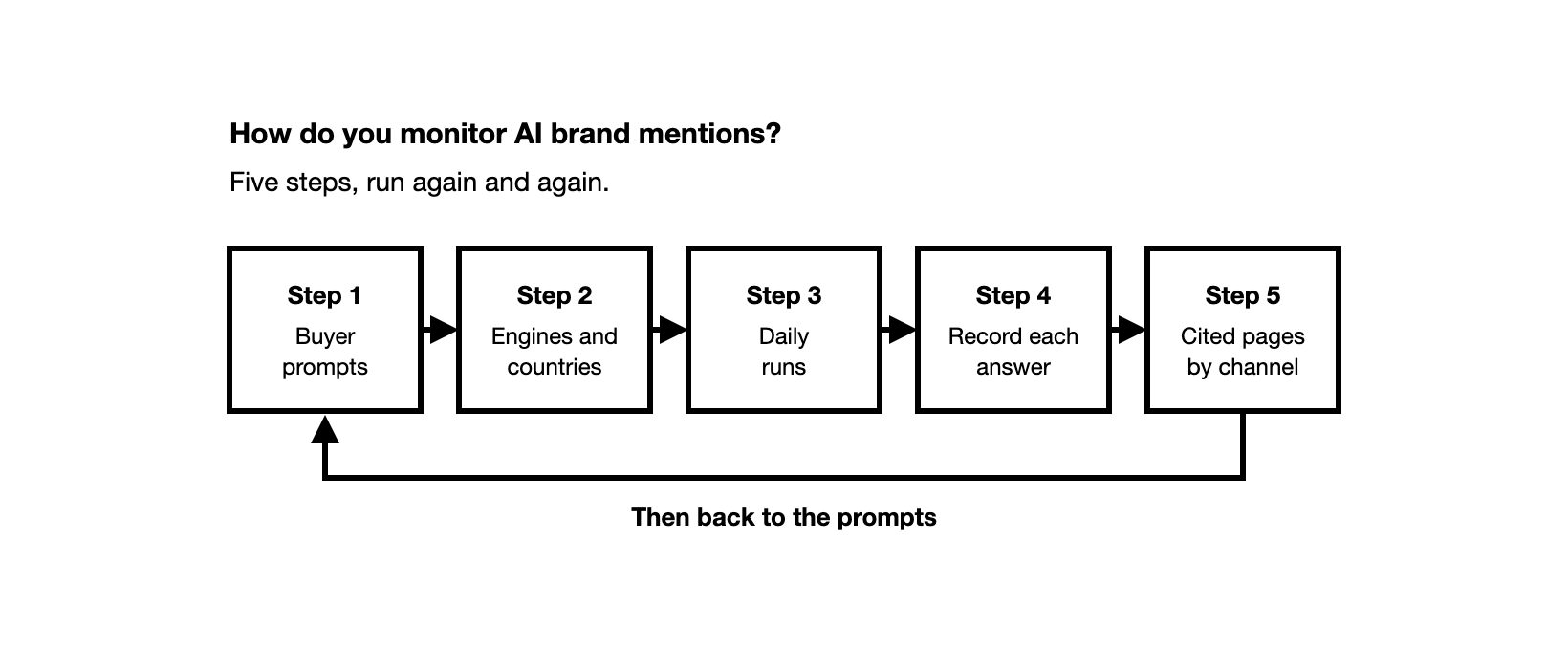
Step 1: Which buyer prompts should you track?
Your prompt set is the list of buyer questions you run on AI engines again and again. Every AI visibility number is a share of answers to that set, so the set decides what the number means. Start with 20 to 30 buyer prompts.
Work from broad to specific:
- Category: "best help desk software".
- Category plus context that serves you: "best help desk software for a small B2B support team".
- Alternatives: "best alternative to [competitor] for [need]".
- Buyer intent: a full buyer situation, built from the buyer's segment (industry, size, country), persona (who researches and decides), buying stage and priorities.
Add your scope to every prompt, so none asks for something you do not sell. Spread the prompts evenly across personas and buying stages (working out the category, comparing, replacing a tool, deciding), and tag each one.
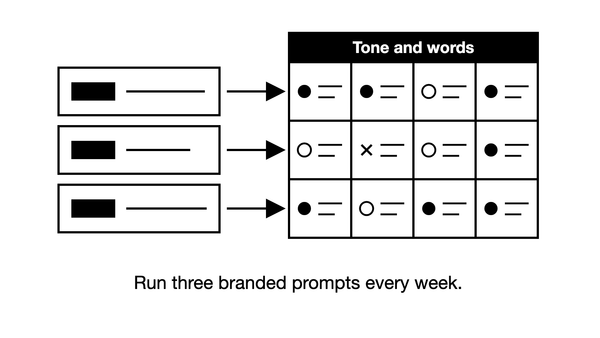
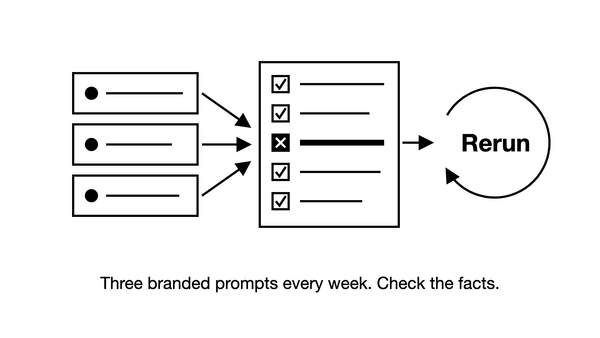
Leave out informational prompts such as "what is a help desk?": their answers rarely name a brand. Run branded prompts and you-versus-competitor prompts as positioning checks, outside visibility %, because a prompt that names your brand makes the engine name it back.
Step 2: Which AI engines and countries should you cover?
Run the same prompts on every engine your buyers use: ChatGPT, Gemini, Perplexity, Microsoft Copilot, AI Overviews and AI Mode, plus Claude for buyers in tech. B2B buyers use Meta AI, Grok and DeepSeek less, so a hand check from time to time is enough, unless your buyers really are there.
AI Overviews and AI Mode are separate products, so measure each on its own. AI Overviews are more like next-generation Google Search, and AI Mode is more like ChatGPT. AI Overviews also appear on only some searches, so tracking them needs its own method.
For each market, use that country and its language on the same engines: ChatGPT, for one, may use an approximate location based on your IP address. On a tight budget, cut engines first and keep the prompts and the daily runs. For an agency, the lightest setup per client is a few engines and about 10 prompts run daily, read monthly.
How do you track brand mentions in Microsoft Copilot?
Run the same prompts in Copilot, and add Bing Webmaster Tools. Its AI Performance report, launched as a public preview in February 2026, shows how often your pages are cited in Copilot and Bing's AI summaries. It also shows a sample of the phrases the AI searched with.
The report counts your pages, not your brand, and its phrases are not what people asked. Use it for your Copilot citations, and run your prompts for your Copilot mentions.
Step 3: How many runs does each prompt need?
One answer is one sample. If your brand is named in four of every ten answers, a single run shows you a hit or a miss, never the four in ten.
Our data for ChatGPT, April to October 2026 (B2B brands across software and other fields), shows how far one run can miss. On prompts where the brand is named in some answers but not all, one run came within 20 points of the brand's 30-day share 53% of the time. Ten runs did so 88% of the time, and the typical miss fell from 18 points to 8.
So collect 4 to 5 answers per prompt, engine and country for a first audit. For tracking, run each prompt once a day per engine and country, and read the trend. A weekly or monthly check leaves too few answers to read.
Step 4: What should you record from each AI answer?
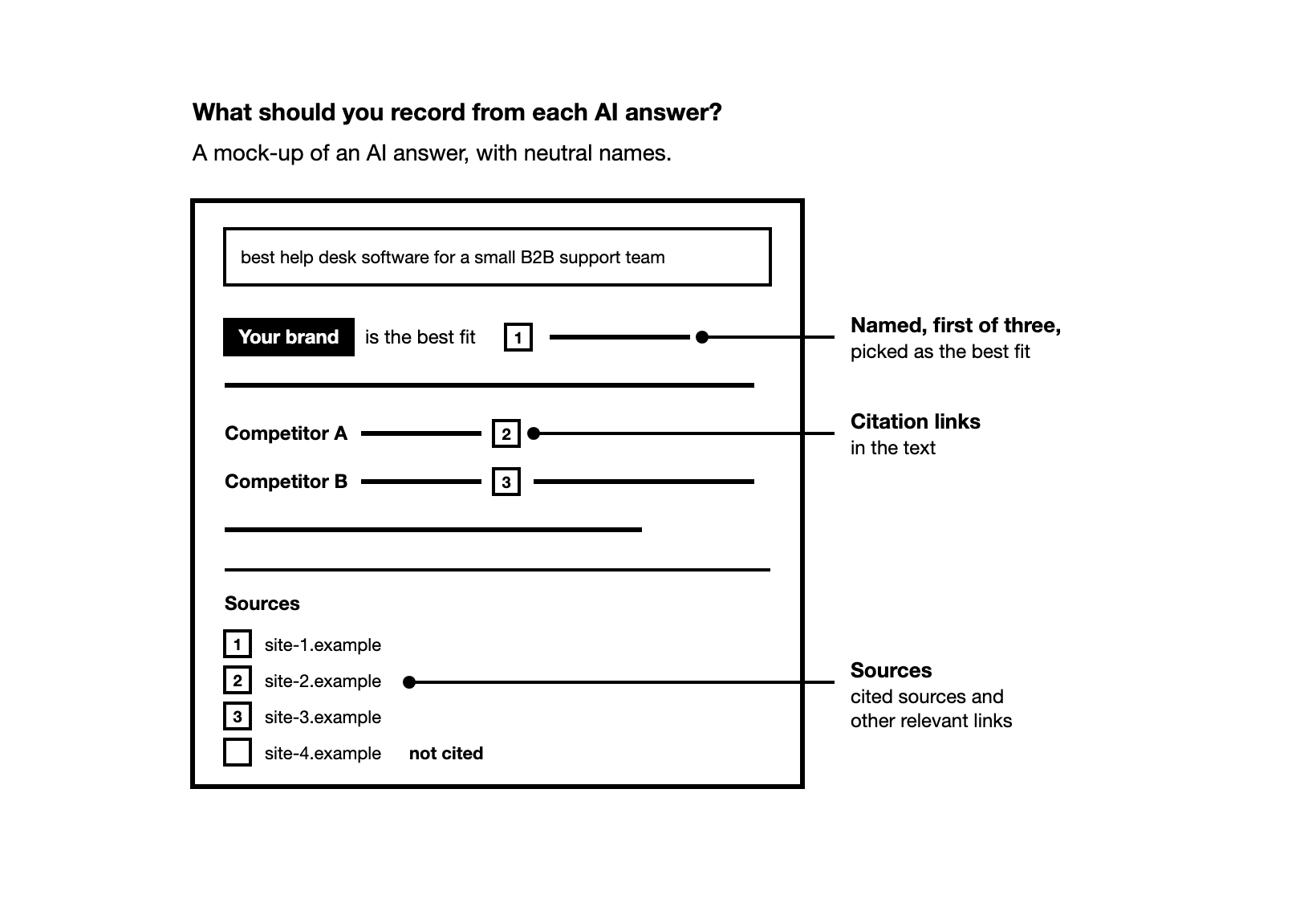
Record five things from every answer. Retrieved means the engine pulled your page into the set of pages it gathered for that answer.
| What you record | What it tells you |
|---|---|
| Whether your brand is named | Whether this answer counts toward your visibility % |
| Your place among the brands named | Your position in that answer |
| Whether the answer picks you as the best fit | Whether you are its pick, one of several options or a passing mention |
| Which of your pages were retrieved | Whether the engine finds your pages for this question at all |
| Which pages the answer cites | Which pages shaped the answer: yours, third-party or community |
To see these pages in ChatGPT, select Sources when it appears: it lists the cited sources and other relevant links. Most engines show something similar.
Step 5: Which cited pages explain your brand mentions?
To see why your visibility moves, split the cited pages for your prompts into three channels: your own site, community and third-party publications. Our data covers all engines from April to October 2026, for B2B brands across software and other fields. Third-party pages were 80% to 86% of the pages AI answers cited, the brand's own pages about 6% and community pages 8% to 15%. The range depends on how review sites are counted.
In the same data, the brand's own pages were about 14% of the pages Perplexity cited and about 4% of those ChatGPT cited. Engines lean on different kinds of pages, so you can be named in one engine and missing in another.
When an answer leaves you out, start with what it cites instead of you: the channels and the page types. Work first where one of your pages is already close to it.
Which metrics should you track for AI brand mentions?
Keep each number under its own name:
| Number | What it counts | How to read it |
|---|---|---|
| Visibility % | Answers naming you, out of all answers to your visibility prompts | Your headline number. Read it pooled, then per prompt, engine and country |
| Share of voice | Your mentions as a share of all mentions of the brands you track | Your standing against competitors. There is no standard definition, so check what your tool divides by |
| Citation share | The share of pages cited for your prompts that come from one source: your own site, or one channel | Why visibility moves. Count cited pages, not answers |
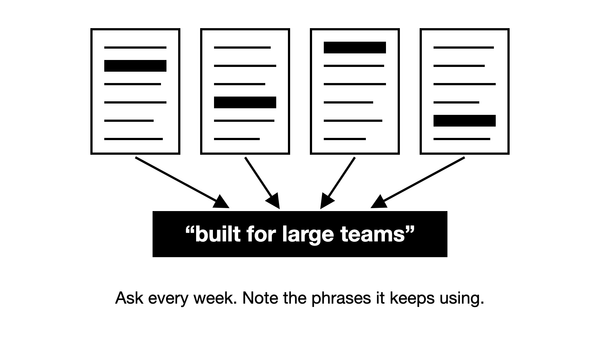
| Sentiment | Whether answers describe your brand positively, neutrally or negatively | A positioning check, read weekly |
Report rates, never raw counts: a count of cited pages rises and falls with how many answers you collected.
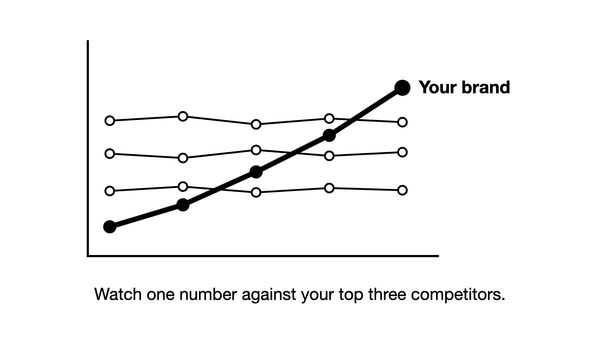
An AI visibility score is a single number that sums up how visible a brand is in AI answers, usually visibility % or a blend of several metrics. There is no universal good score: compare yours with your top three competitors on the same prompts, and look for a rising share over about three months.
Visits from links in AI answers are your AI referral traffic. Since May 2026, Google Analytics 4 puts visits from ChatGPT, Gemini, Copilot and some other assistants in an AI Assistant channel. It counts AI Overviews and AI Mode visits as Organic Search. Many buyers come back later directly or through a branded search, so also ask "How did you hear about us?" on forms and sales calls.
Does AI recommend your brand or only mention it?
Your brand is recommended when an answer names it as the best fit for the buyer's need, not as one more name in a list. Track it as its own measure, from what you record in step 4.
Then read visibility per buying stage, from the tags in step 1. It shows where you enter the shortlist and where you drop out. Category prompts show how you do across the category. Buyer intent prompts show whether you appear for your exact segment.
Say you are named in most category answers but rarely when a buyer is leaving another tool: your gap is at the replacing stage. In our experience, answers to broad prompts name more brands than answers to narrow ones, so compare position only between prompts of the same kind.
Should you monitor AI brand mentions by hand or with a tool?
A hand check shows roughly where you stand, but it rests on too few answers to decide on. Make it fair: run each prompt logged out or in a temporary chat, through a VPN in the country you sell in. In ChatGPT, for example, saved memories may shape the search it runs.
Read each prompt as a percentage: named in 3 of 5 answers is 60%. The mistake we see most is one check, often logged in, treated as the truth.
Asking ChatGPT itself to audit your visibility gives you one more answer, not a count. No engine shares the answers its users got, so ChatGPT has nothing to count from. For a real audit, run your prompts with a tool, as in steps 1 to 3, and count the answers that name you.
By hand or in a spreadsheet, every prompt multiplies by every engine, market and day, so at scale you need a tool you can check. Pick one that shows the raw answer text behind every number, and spot-check a few prompts by hand, logged out, against what it recorded. Prefer one that collects answers from the app buyers use. As of November 2026, Perplexity's FAQ says its API and its web interface can give different results.
For a free start, the Zadoosh AEO platform's free trial runs 25 prompts for 7 days on ChatGPT, Gemini, Perplexity, Copilot, AI Overviews and AI Mode, with no card. It is enough to test your visibility before you buy a tool or hire help (terms as of November 2026).
Why are AI brand mention numbers hard to trust?
Two tools often give different numbers for the same brand. Each makes its own choices: which prompts, engines and countries, how many runs, and what counts as a mention. So pick one tool and read its trend rather than its level.
No tool sees the answer a real buyer got, with their login and history. Tools run your prompts as neutrally as they can, to show what the engines answer today.
A technical or readiness score is not a visibility number either. It checks your own site, but a mention can come from third-party pages, community threads or what the model learned in training. We often see the right page already in place and cited in no answer.
So measure selection directly: in each answer, was your page retrieved, was it cited, and was your brand named?
If your list of named brands fills up with generic or irrelevant names, your prompts may be drifting into another category. A help desk prompt, for example, can return contact center suites or IT service management tools. Then a low share can mean the wrong market, not low visibility. Add the category to the prompt, and list the neighbouring categories it must not drift into.
How do you track AI brand mentions over time?
Start with a baseline: your starting numbers, recorded over a few weeks of running your prompt set before you change anything. If you add prompts later, report one number on all prompts and one like for like on the original set. That way, new prompts do not look like a change in your visibility.
Which weekly changes in AI visibility should you act on?
Say your visibility reads 30% one week and 33% the next. That move may be nothing but noise.
Our data for ChatGPT, March to October 2026, covers B2B brands across software and other fields. Most week-to-week moves in a prompt set's visibility were noise: the median move was about 3 points. To see whether your mentions are going up, compare 4-week blocks: between one block and the next, changes of 3 to 6 points were already likely real.
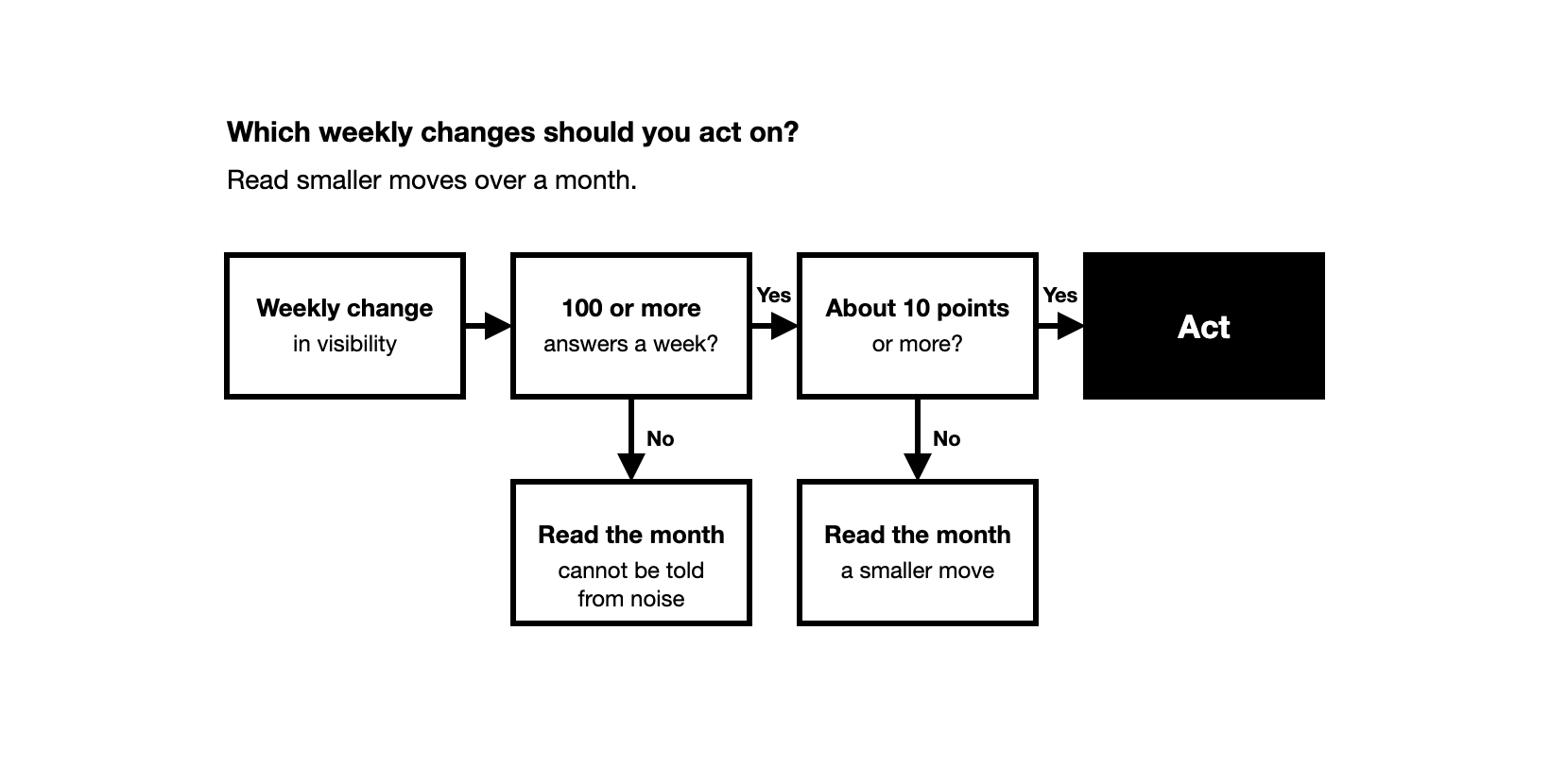
So act on a weekly change of about 10 points or more when the set has 100 or more answers a week, and read smaller moves over a month. Below 100 answers a week, a weekly change cannot be told from noise. Twenty prompts run daily on one engine already give more than 100 answers a week.
For alerts, a daily jump is noise too, because one day carries few answers. A useful alert fires when something goes from zero to one, such as a page of yours cited for the first time after a quiet baseline. Our platform, for example, emails you when that happens.
How do you prove your work moved your AI brand mentions?
Watch the pages you created or earned, on your own site, on third-party sites or in communities. The clearest sign comes in order: the page is retrieved, then cited, then your mentions follow. For an agency, that is the earliest proof to show a client. If nothing you did is retrieved or cited, the change came from elsewhere.
Compare with your top three competitors on the same prompts too: if everyone rose together, the engine probably changed, most likely in how it finds and picks pages. Untouched prompts prove little, because an engine update can lift some prompt sets and not others.
Frequently asked questions
Is it possible to track brand mentions in AI search? Yes, for the prompts you choose: you run them on each engine and count how often the answers name you. No engine reports your brand mentions to you. Search Console's generative AI report, open to all sites since August 2026, counts impressions of your pages in AI Overviews and AI Mode, not your brand being named.
Can you monitor brand mentions in AI answers in real time? Not as a live feed. No engine shares the answers its users get, so a tool runs your prompts on a schedule. Once a day is the useful rhythm, and an alert can tell you the next day when one of your pages is cited for the first time.
Should you check AI bot logs instead of monitoring brand mentions? No, they answer a different question. A log shows that an AI agent fetched your page: when people ask ChatGPT something, it may visit pages as ChatGPT-User. A fetch does not show whether the answer used your page or named your brand. Check server access only if none of your pages is ever retrieved.
What does a 50% share of voice mean in AI answers? Half of all the mentions of the brands you track were yours. Say three tracked brands are named 50, 30 and 20 times across your answers: your 50 is half of 100. It does not say how often you appear at all; visibility % does. Your share also depends on which competitors you track.
Which competitors should you compare your AI brand mentions with? The brands AI actually names for your prompts, not only the ones you expect. Scan your answers for the names that keep coming up, and track the top three next to you. If rivals you expected never show up, your prompts may be too generic. If they never appear while you show up near the front again and again, you are winning those prompts.