What Is Prompt Volume in AI Visibility Tools?
Prompt volume estimates how often people ask AI engines a prompt, usually extrapolated from Google keyword volume: only the engines have real counts.
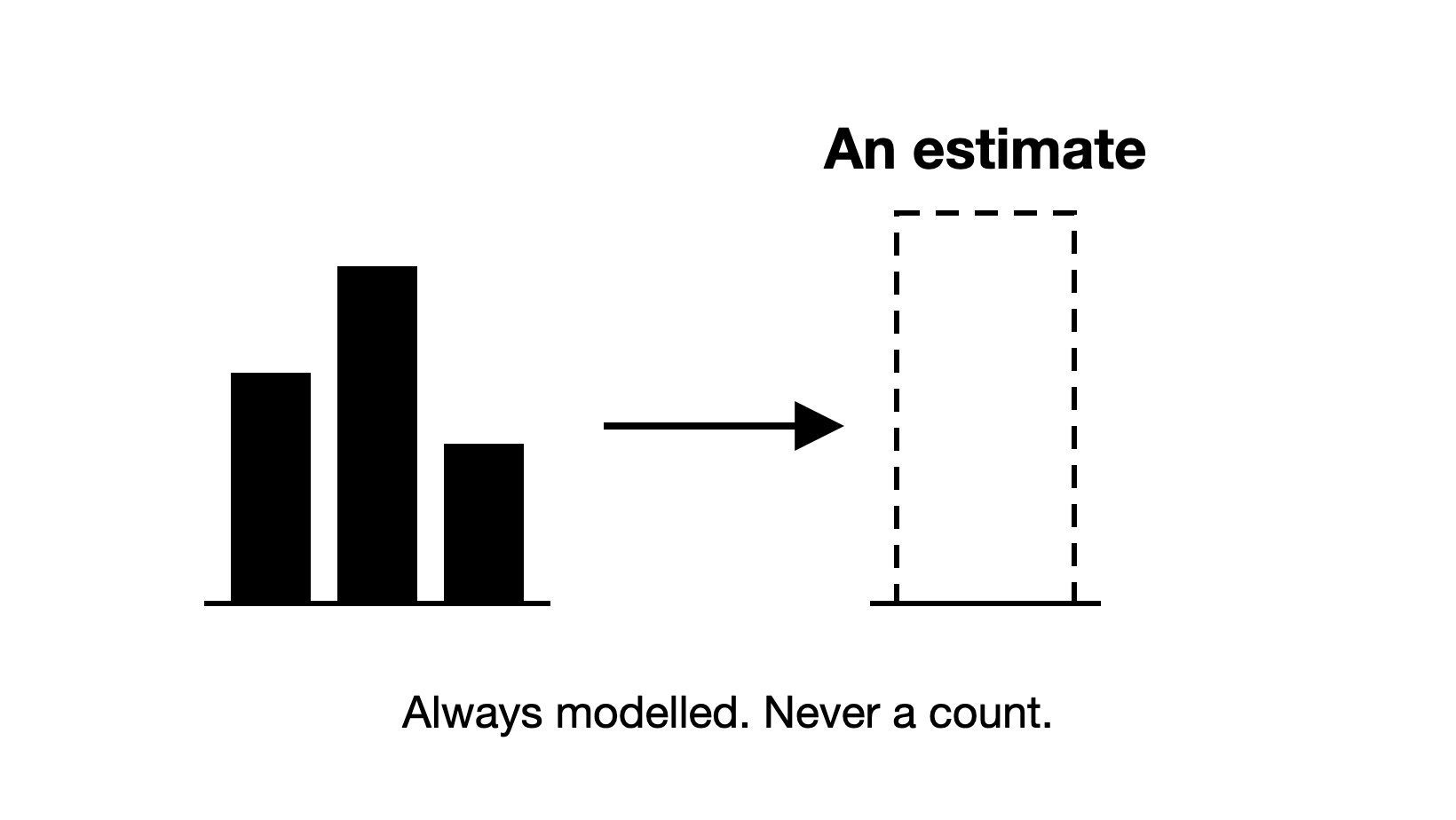
Prompt volume is an estimate of how often people ask AI engines a given prompt, usually extrapolated from Google keyword volume, because only the engines themselves have the real counts.
What is prompt volume?
Prompt volume is the demand figure an AI visibility tool shows next to a prompt or a topic. It does the job keyword search volume does in SEO: it suggests which questions have people behind them.
AI visibility is how often AI engines such as ChatGPT, Gemini and Google AI Overviews name your brand when buyers ask the questions you care about. Prompt volume helps you decide which of those questions to measure first. Our guide on how to measure AI visibility covers the measuring itself.
The figure is always modelled. As of November 2026, the engine owners do not publish how many times people ask a given prompt. So every tool builds its number from other data it can get. That is why two tools often show very different numbers for the same prompt.
This does not make the number useless. It gives you a fair sense of how much a prompt might be asked, which is enough to set priorities. Read it as a rough guide, never as a count.
One naming trap: "prompt volume" is also used for the number of prompts you track. In this article it always means demand.
How is prompt volume different from keyword search volume?
Keyword search volume starts from search engine data. Google reports your own site's queries in Search Console. Keyword tools model their volumes from Google's ads data and clickstream panels (people who let a tool record the websites they visit). Prompt volume has no such source, because no AI engine shares its prompt logs.
The questions also look different. A Google search is a few words that thousands of people type the same way, such as "best CRM software". A buyer asking ChatGPT describes a situation: "We are a small B2B sales team moving off spreadsheets. Which CRM is quick to set up and works with Gmail?" Almost nobody types that exact sentence again.
So a tool cannot count one exact prompt the way a keyword tool counts one exact keyword. It groups similar prompts into a theme and gives the theme a number. Prompt volume describes a topic, not a sentence.
| Keyword search volume | Prompt volume | |
|---|---|---|
| Where the data comes from | Search engine data (ads data, Search Console) and clickstream panels | Models built on other data: keyword volume, or opt-in panels (people who share their AI chats with a tool) |
| What is counted | One exact keyword | A theme of similar prompts |
| What the query looks like | A few words, often repeated | Full sentences with context, rarely repeated |
| How far to trust the number | A good estimate of searches | Useful to compare themes, not to count people |
How do tools estimate prompt volume?
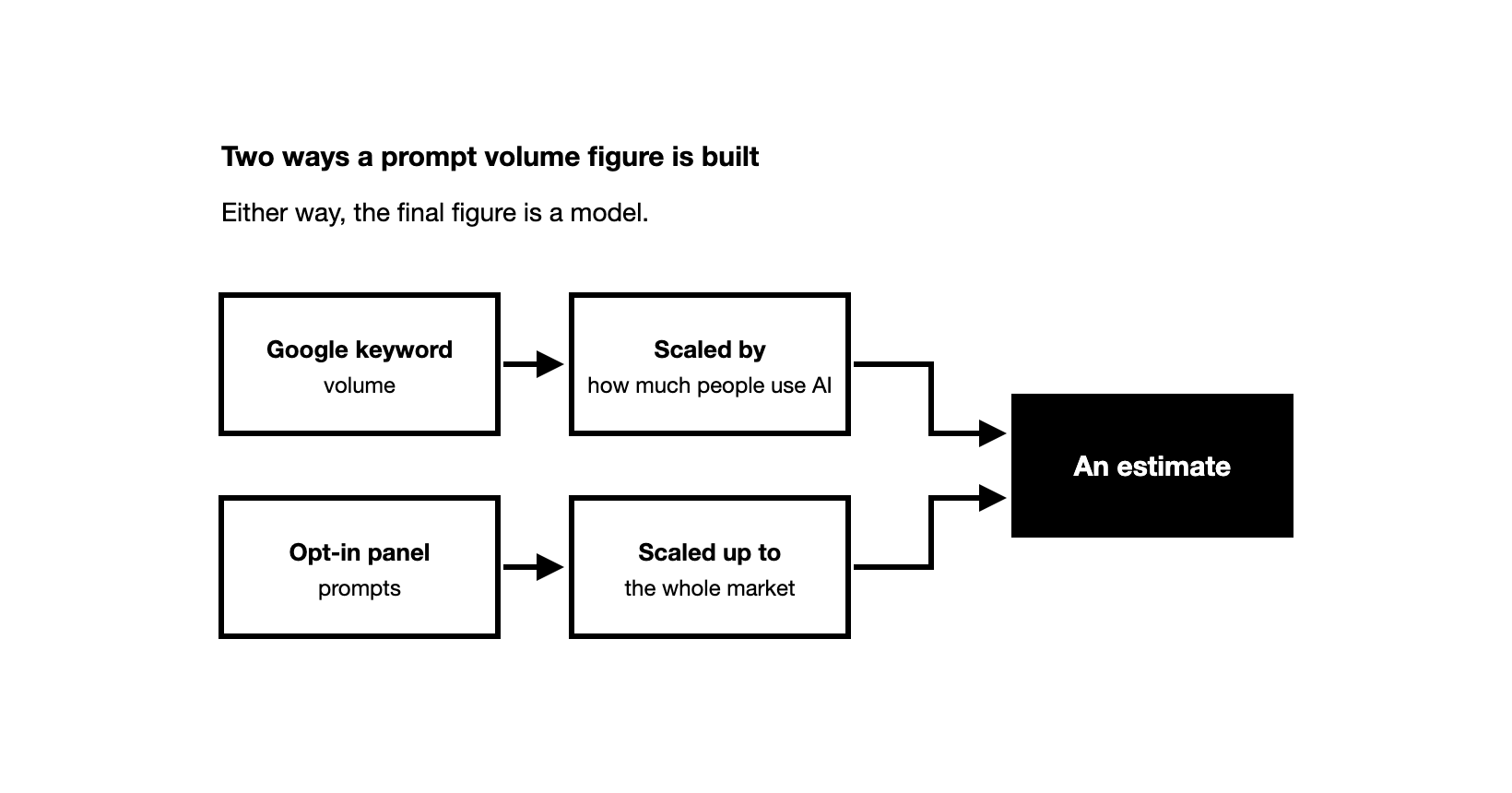
Typically, the tool takes the volume of the related keywords and scales it by how much people use ChatGPT compared with Google. Some tools also feed in question-style searches from Google, such as People Also Ask (the box of related questions in Google results).
Other tools use opt-in panels: people who agree to share their AI chats, often through a browser extension. The tool groups the panel's prompts and scales that sample up to the whole market. Either way, the final figure is a model built on something other than the engine's own records.
Can you see the real prompts people type into AI?
No. No AI engine publishes its prompt logs (as of November 2026), and no tool, Zadoosh included, sees the conversation your buyer had. Panel tools see prompts from the people in their panel, who may include none of your buyers.
What tools do is run chosen prompts on the engines and show what the engines answer today. The exact answer a buyer got stays unknown unless the buyer shares it.
You can still get close to the questions your buyers ask. These sources work, and you have all of them already:
- Sales calls. Ask new leads how they found you. Their answers give you real buyer language to write prompts from.
- Search Console and Bing Webmaster Tools. Look at the long, question-like queries in your search reports. They are a good clue to what people ask AI.
- Your ideal customer profile. Write down the segment you sell to, the roles that research and decide, the buying stage and what changes their priorities (price, setup speed, integrations).
- Google keyword data. Category keywords show which topics have demand. Turn them into questions.
Then write each prompt the way a buyer asks it. A short category prompt is a fine start. Adding the buyer's role, company, need and constraints shows whether you appear for the segment you actually serve. More words alone do not help; context that fits your buyer does.
Our guide on how to choose which prompts to track covers the full method.
Which AI engines does a prompt volume figure cover, and how often is it updated?
It depends on the tool. One tool may report ChatGPT, Gemini, Claude and Perplexity; another may report ChatGPT, AI Overviews and Perplexity. Some refresh weekly, others monthly. Before you trust or compare a figure, check which engines and which country it covers, and when it was last updated.
Also ask the vendor whether the number comes from scaled keyword volume or from a panel. Each method misses different people, as the next section shows.
How many people ask AI about your brand?
No tool can tell you. A "branded prompt volume" figure is built the same way as any other prompt volume, so it is an estimate too.
Read these signals instead. None is a count, but together they show whether AI is sending people your way:
- "How did you hear about us?" Add the field to your demo and signup forms, and ask it on every sales call. Watch whether answers naming ChatGPT or another AI engine rise over time.
- Referrals from AI engines. A click on a citation (a link to your page in the answer) may show up in your analytics as a visit from the engine, for example chatgpt.com.
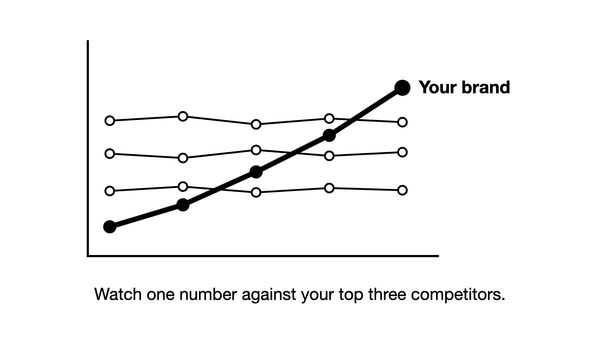
- Branded search and direct traffic. Many people who see your name in an AI answer come later by searching your brand or typing your address. That traffic cannot be tied back to one answer, but a rise next to a rise in AI visibility is a useful sign.
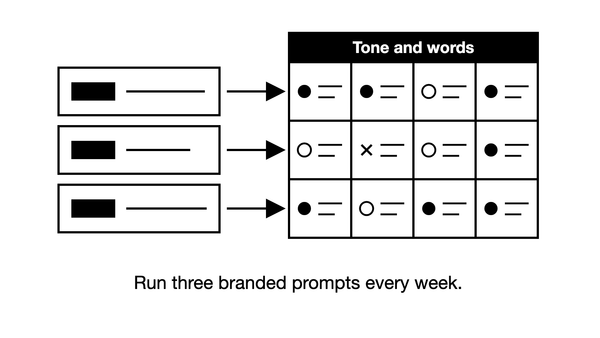
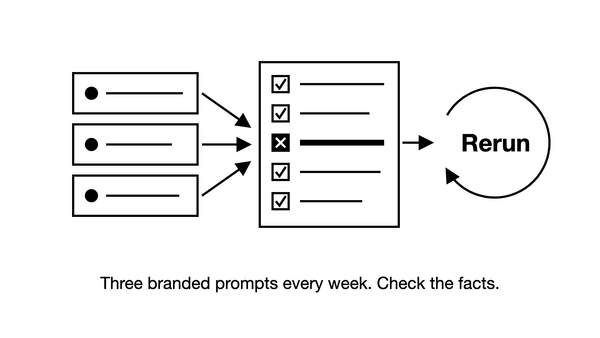
Branded prompts have a different job. "What is [brand]?" or "Is [brand] good for [use case]?" shows how AI describes you. That is a positioning check, not a measure of demand. Keep these prompts out of your visibility number, because a prompt that names you puts your name in the answer by default.
How accurate is prompt volume?
Each method has a blind spot. Browser-extension panels miss people who use the mobile apps. Keyword-based models miss questions that never show up as a Google search.
Two uses do not work. The figure cannot forecast traffic: many AI answers solve the question with no link to click, so there is no click rate to apply. And figures from two tools cannot be compared, because each tool builds its number a different way.
What should you use prompt volume for?
To put your prompt list in order, never to build it. Build the list from buyer data first: start with 20 to 30 prompts from sales calls, search reports and your ideal customer profile, then grow it. When two prompts matter equally to your buyers, the one with more volume goes first.
Inside one tool, a theme that scores well above another is probably asked more, since one method's errors tend to push every theme the same way. A theme that climbs in that tool month after month deserves a closer look.
Frequently asked questions
Can I see what kind of company asked a prompt, so I only count buyers who fit my ICP? No. No tool sees who asked a prompt, so prompt volume cannot be filtered by company type. Do it the other way round: write your ideal customer into the prompt itself. Name the segment, the role, the buying stage and what matters to them. Engines take what they know about the person into account, so a prompt with that context is the closest simulation of the answer a buyer like yours gets.
Why do two tools show different prompt volume for the same prompt? They build it from different data. One scales Google keyword volume, another scales an opt-in panel. They may also cover different engines and countries, and group prompts into themes differently. Pick one tool and read the order and the trend, not the number.
Does a low prompt volume mean nobody asks that prompt? No. Long prompts with buyer context rarely match a keyword with much Google volume, so their estimates come out low. The question can still be one your buyers ask before they buy. Check it against sales calls and your search reports.
Is prompt volume the same as AI visibility? No. Prompt volume estimates how often a question is asked. AI visibility measures how often AI engines name your brand when that question is asked. The first helps you decide what to measure first; the second is the measurement.