What is Omnichannel AEO?
Omnichannel AEO is the practice of building consistent, independent brand evidence across multiple trusted channels simultaneously (Reddit, authority publications, listicles, brand mentions, and PR) so AI engines like ChatGPT and Perplexity recommend your brand.
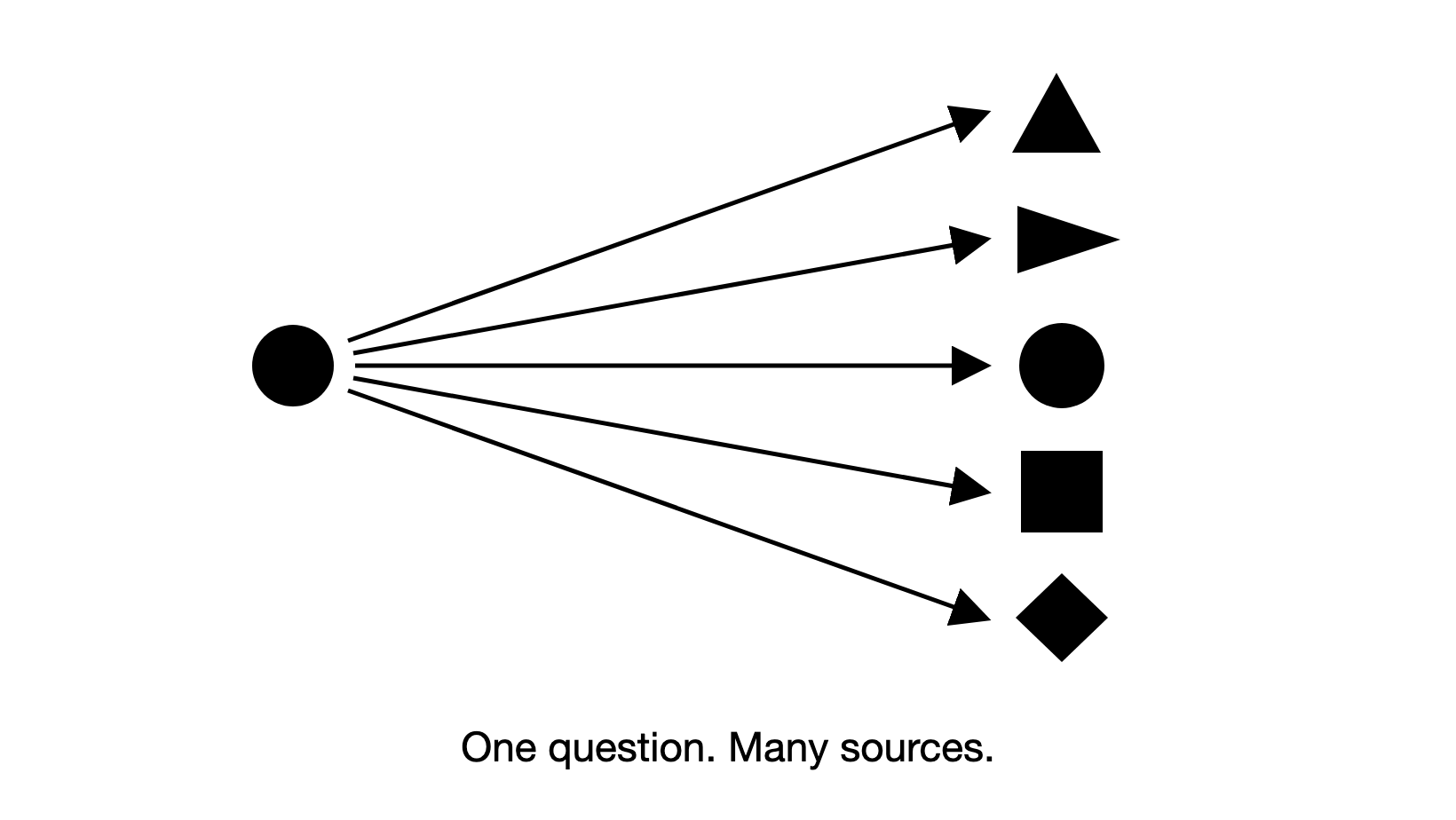
Omnichannel AEO is the practice of building consistent, independent evidence about a brand across multiple trusted channels at the same time: community discussions, authority publications, listicle placements, distributed brand mentions, and PR. When that evidence is in place, AI answer engines like ChatGPT, Perplexity, and Google AI Overviews consistently cite and recommend the brand.
The term combines two ideas. AEO (Answer Engine Optimization) is the discipline of getting a brand into the answers AI engines generate, rather than into a list of blue links. Omnichannel describes the method: instead of optimizing one channel and hoping it carries over, you coordinate several independent channels so they validate each other. The approach was developed at Zadoosh and is documented openly in The Omnichannel AEO Method.
The core premise in one sentence: AI models do not reward any one strong channel. They reward consistent, independent evidence across multiple trusted source types simultaneously.
Why does AEO need to be omnichannel?
Because of how answer engines actually retrieve and decide what to recommend. Two mechanisms matter.
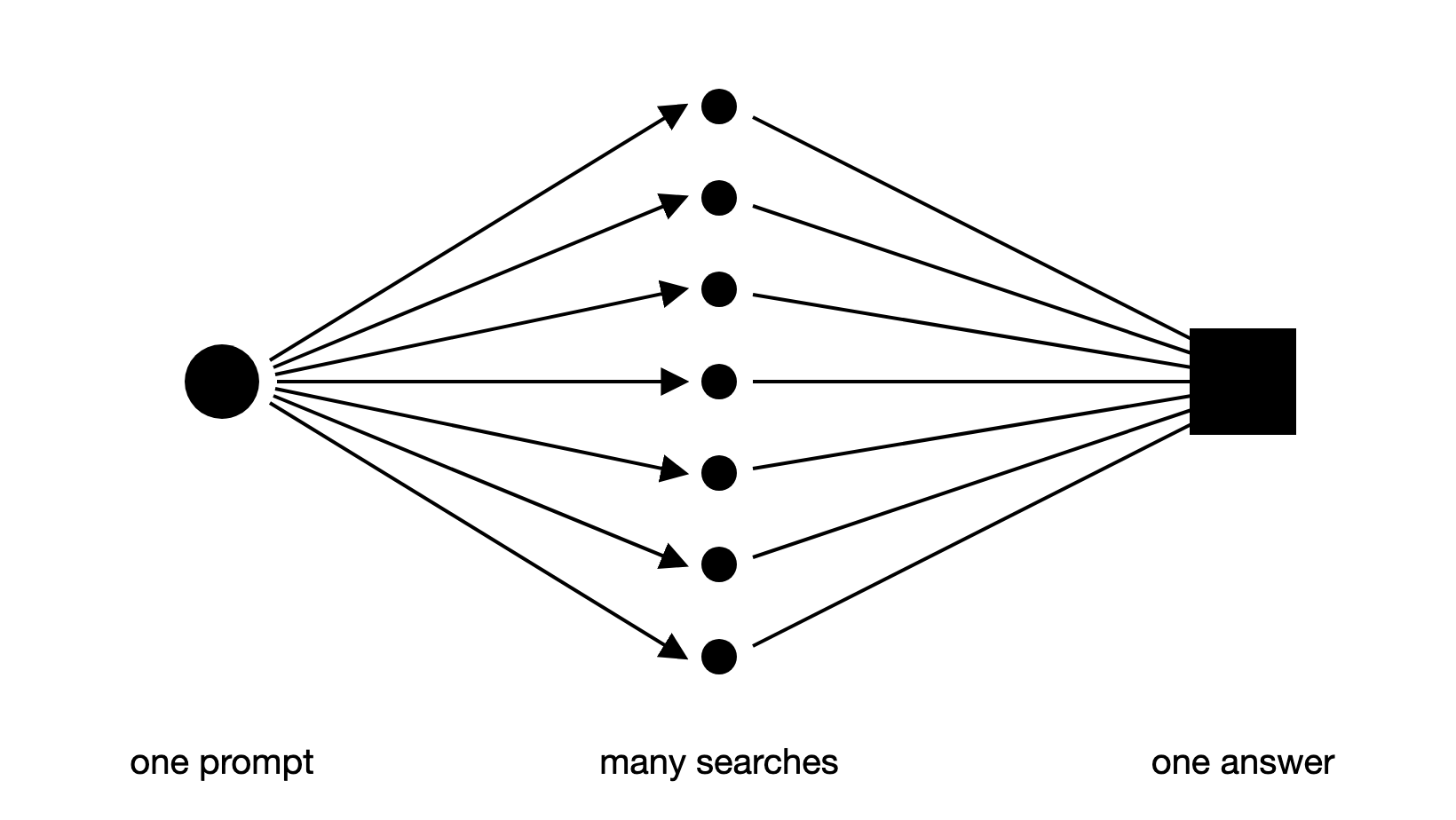
The first is query fan-out. When someone asks an AI engine "what's the best [category] tool for [use case]?", the engine doesn't run that one search. It expands the prompt into many related sub-queries: comparisons, alternatives, "best X 2026" recency checks, and implicit questions the user never typed. It then retrieves results for all of them in parallel before fusing everything into one answer. Ahrefs documented a single shopping prompt fanning out into 420 separate searches. Each of those sub-queries surfaces a different slice of the web: one pulls community threads, another pulls editorial listicles, another pulls comparison articles, another pulls news coverage. A brand that lives in only one channel can be retrieved in only a few of those branches, and a brand that's absent from most branches gets averaged out of the final answer. A brand with presence across channels keeps reappearing, branch after branch, and the fusion step rewards exactly that.
The second is cross-source validation. Before the engine puts a brand in its synthesized answer, it looks for independent agreement. It is effectively asking:
- Are real people discussing this brand in communities like Reddit?
- Do authoritative third-party articles and industry publications mention it?
- Does it appear in "Top X" lists and comparisons written by different authors?
- Has it earned press coverage or industry news mentions?
- Do multiple sources, none of which are the brand itself, agree it belongs in this category?
A brand that is strong in exactly one of these places looks, to an AI engine, like a single data point. A brand that shows up in several of them looks like a consensus. That difference is proof density: consistent, independent signals about a brand across multiple high-authority sources simultaneously. Query fan-out is the mechanism; proof density is the strategy that wins under it. Together they explain why proof density separates brands that get cited from brands that stay invisible.
The single-channel trap
When AI search started disrupting Google, most marketers picked one channel and went all-in. After analyzing hundreds of AI search results across B2B SaaS categories, the same failure patterns kept appearing:
- Reddit-only: months spent building karma and community presence, while remaining invisible in ChatGPT, because no third-party publication ever validated the brand.
- Content-only: dozens of "AI-optimized" blog posts on the brand's own domain that never got cited, because answer engines discount what a brand says about itself.
- SEO-only: strong classic Google rankings that simply didn't translate, because answer engines weigh different signals than the ten-blue-links algorithm did.
Each of these channels works, but only as part of a system. None of them works alone. That's the single-channel trap: real effort, real budget, and no AI visibility to show for it.
How is Omnichannel AEO different from traditional SEO?
The headline number: only 12% of AI-cited sources also rank in Google's top 10. Ranking well in classic search and being recommended by AI engines are overwhelmingly different games.
| Traditional SEO | Single-channel AEO | Omnichannel AEO | |
|---|---|---|---|
| Goal | Rank pages in search results | Get cited from one source type | Get recommended in AI answers |
| Where the work happens | Your own website | One channel (e.g. Reddit, or your blog) | Multiple independent channels, coordinated |
| Core signal | Links and on-page relevance | Presence in that channel | Proof density across channels |
| Who's talking | You, about yourself | Mostly you | Multiple independent voices |
| Typical result window | 6-12 months | Inconsistent, fragile | 60-90 days to first AI citations |
The deeper shift: SEO optimized pages; AEO optimizes the brand's evidence trail. An answer engine assembling a recommendation behaves less like a search ranker and more like a careful buyer doing due diligence, and no careful buyer trusts a single source.
The five steps of the Omnichannel AEO Method
The method, as practiced by Zadoosh and published openly:
- Channel audit. Map the brand's current presence across Reddit and community discussions, authority publications, listicles, brand mentions, and press. Identify which channels are empty. Those gaps are where AI invisibility comes from.
- Strategic positioning. Define the differentiation and the specific queries where the brand should appear in AI answers. "Best X for Y" questions are won by brands that decided in advance which Y they own.
- Coordinated content creation. Build authentic Reddit engagement, strategic articles on relevant publications, and listicle placements that reinforce the same positioning: simultaneously, not sequentially.
- Proof density building. Accumulate multiple independent sources that validate the brand for its target queries, until engines encounter agreement wherever they look.
- Continuous optimization. Test the actual buyer prompts across ChatGPT, Perplexity, Google AI Mode, Google AI Overviews, and Claude; track which placements get cited; reinvest in what works. Engines differ: what ChatGPT says is not what Perplexity says.
How long does Omnichannel AEO take to work?
Faster than classic SEO, but the curve is different. Early on, individual placements may produce nothing visible, because answer engines need to encounter a brand several times across independent sources before it crosses the threshold into answers. Then results arrive in jumps: a brand goes from absent to recommended once proof density crosses that line.
In coordinated programs, first AI citations typically appear within 60-90 days, versus the 6-12 months a content-only approach takes, if it works at all. The brands that win treat it as an ongoing system rather than a one-time campaign, because proof density compounds, and because most companies give up exactly one channel short of the threshold.
Frequently asked questions
Is Omnichannel AEO just doing SEO on more websites? No. The unit of optimization is different. SEO improves pages you control; Omnichannel AEO builds independent, third-party evidence that you mostly don't control directly, which is precisely why answer engines trust it.
Does my own website still matter? Yes, as the anchor: it's where engines verify what the brand claims to be. But it can't carry AEO alone, because self-description is the least trusted signal in an answer engine's mix.
Which AI engines does this apply to? All of the major answer surfaces: ChatGPT, Perplexity, Google AI Overviews, Google AI Mode, and Claude. They differ in sources and weighting, which is why per-engine prompt testing is step five of the method rather than an afterthought.
What does proof density actually look like in the data? You can see it live in the Zadoosh AI Index: real AI answers by category, showing which tools engines recommend and which sources they cite. The cited sources are consistently a mix of community threads, editorial listicles, and third-party articles. A brand's own site alone is rarely enough.
Can a company do this without an agency? Yes. The method is published openly. The hard part isn't understanding it; it's executing several channels in coordination, consistently, for long enough. That execution gap is why Zadoosh exists.
Omnichannel AEO is the framework behind Zadoosh's work getting B2B SaaS brands recommended by AI search engines. Read the original open letter at omnichannelaeo.com or explore live AI answer data in the Zadoosh AI Index.